Charles Hoskinson’s Midnight network goes live, with early support from Google Cloud and MoneyGram.
Cardano founder Charles Hoskinson has debuted a new Proof-of-Stake blockchain called Midnight, which is built around “programmable privacy.”
The network launched its mainnet with its genesis block on Monday, March 30, after years of research and development, and it is meant to support apps and assets that “require the ability to protect sensitive data,” the project wrote in a March 30 post on X.
Commenting on the network’s launch, Charles Hoskinson said:
“Satoshi gave us good money; Ethereum gave us programmability; Cardano brought the third generation of interoperability, scale and good governance. Midnight gives us our identity and privacy back.”
How Midnight Works
Midnight is using Compact, a TypeScript-based language that is meant to make privacy-preserving apps easier to build without deep zero-knowledge expertise, according to the project’s tech documentation.
Its token model splits the job between NIGHT multi-chain tokens, which have been minted on the Cardano network and handle utility and governance, and DUST, the rechargeable resource used to pay for transactions on Midnight.
“DUST regenerates over time until it reaches capacity based on the amount of NIGHT held. It takes seven days for a DUST address to reach full charge, whereas partial recharges take proportionally less time,” the announcement clarifies.
Who Controls the Network
At launch, Midnight is running with a federated group of node operators such as Worldpay, Bullish, MoneyGram, Google Cloud, and others. The project pledges to move toward a more decentralized setup over time.
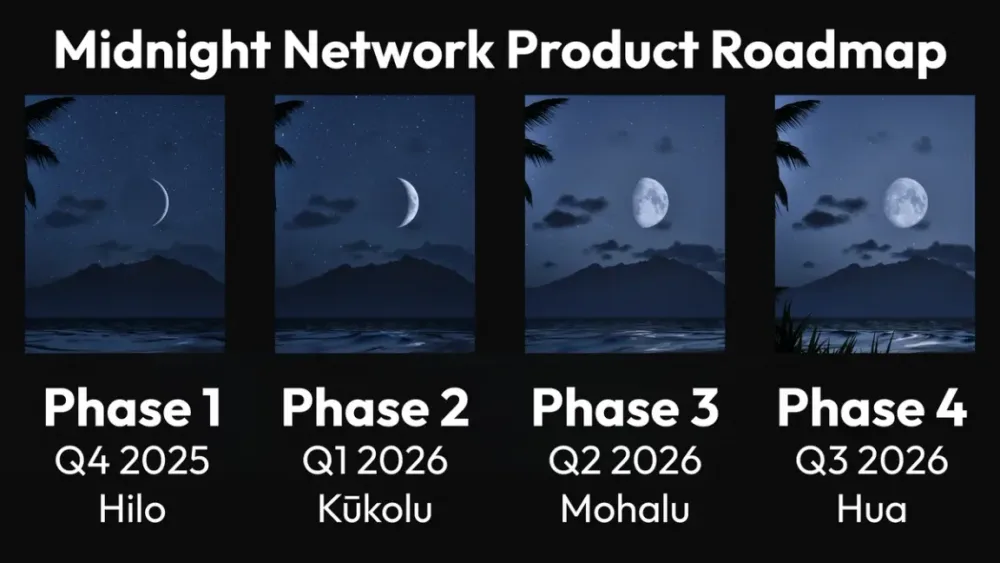
In a November 2025 blog post, the Midnight Foundation laid out a four-phase rollout for the network, with the final phase, called Hua, set for Q3 2026 and aimed at completing “the journey to delivering Midnight as a decentralized, privacy-first network built for long-term resilience.”
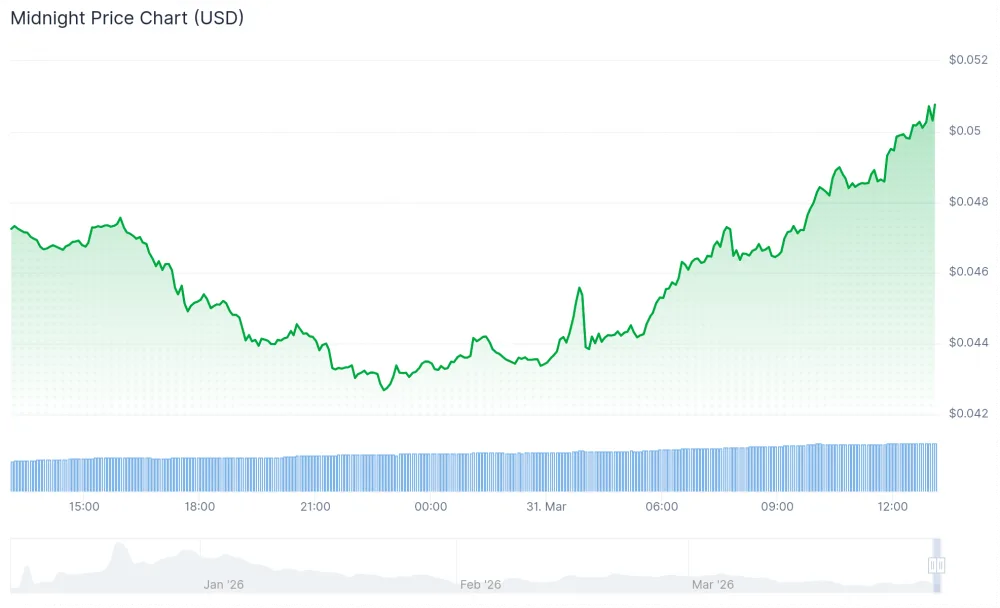
Following the launch, NIGHT surged 7.6% and is trading at $0.05, giving it a market cap of $839.8 million, according to CoinGecko data.