Liquid restaking tokens have become one of the most watched yield categories in Ethereum DeFi. They let users restake ETH▲$2,518.27 or liquid staking assets, keep liquidity through a tokenized position, and potentially earn extra rewards from restaking networks.
In 2026, the debate around the top liquid restaking tokens is no longer just about yield. It is also about liquidity, integrations, risk controls, depeg history, operator selection, and how each protocol handles a more competitive restaking market.
Ether.fi, Renzo, and Kelp are three of the best-known names in this sector. Each gives users access to restaking, but each does it with different trade-offs. Ether.fi focuses heavily on non-custodial ETH restaking and broad DeFi integrations. Renzo positions itself as a restaking strategy manager with ezETH. Kelp offers rsETH and aims to simplify exposure across restaking opportunities.
This guide compares the top liquid restaking tokens for 2026, explains how LRTs work, and breaks down what users should check before choosing one.
Contents
- What Are Liquid Restaking Tokens?
- Why LRTs Matter in 2026
- Top Liquid Restaking Tokens Compared
- Ether.fi: Strong DeFi Reach and Non-Custodial Restaking
- Renzo: Restaking Strategy Through ezETH
- Kelp: rsETH and Broad Restaking Access
- Ether.fi vs Renzo vs Kelp: Quick Comparison
- Main Risks of Liquid Restaking Tokens
- How to Choose the Best LRT in 2026
- Best Use Cases for LRTs
- Are Top Liquid Restaking Tokens Worth It?
- Final Verdict
- FAQ
What Are Liquid Restaking Tokens?
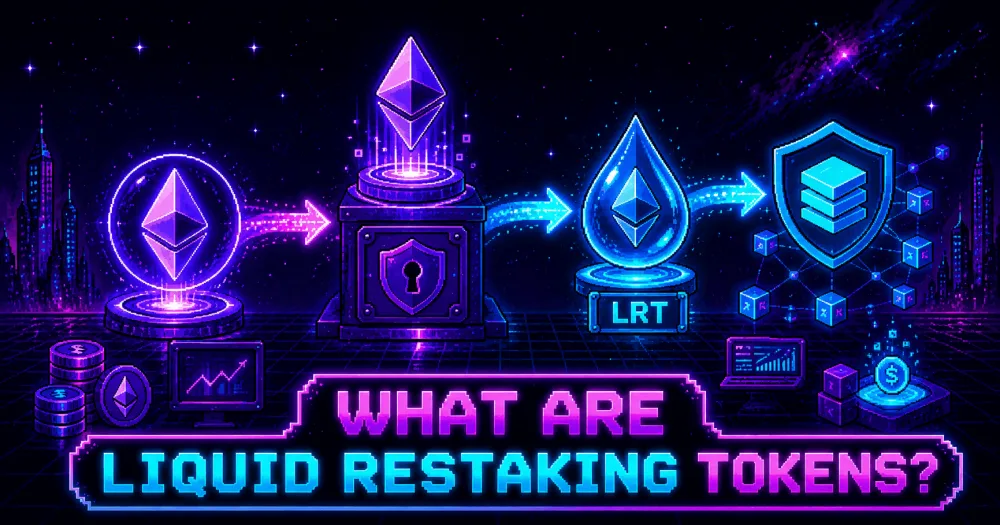
Liquid restaking tokens, or LRTs, represent restaked crypto assets. Instead of locking ETH directly and losing flexibility, users receive a token that can move across DeFi while the underlying asset participates in restaking.
In simple terms, LRTs try to combine three things:
- Staking rewards
- Restaking rewards
- DeFi liquidity
That makes them attractive, but also more complex than regular liquid staking tokens. A liquid staking token normally represents staked ETH. A liquid restaking token can represent ETH or an LST that is also used to secure additional services through restaking systems such as EigenLayer.
This added layer is the reason top liquid restaking tokens can offer more upside than basic staking, but also carry more risk.
Related: Restaking Risks: Slashing, Smart Contract, Centralization
Why LRTs Matter in 2026
By 2026, liquid restaking has moved from a niche DeFi experiment into a serious market category. Users want yield, protocols want security, and restaking platforms need capital that can support new networks, data layers, bridges, or application-specific services.
LRTs matter because they solve a practical problem. Direct restaking can be difficult for casual users. LRT protocols package the process into a simpler product. Users deposit ETH or supported assets, receive a liquid token, and can then hold, trade, lend, borrow, or use that token across DeFi.
For DeFi users, the appeal is obvious. Capital does not sit idle. It can earn staking yield, restaking incentives, and extra DeFi rewards. For protocols, LRTs help attract liquidity and distribute restaking exposure more widely.
Still, “more yield” is not magic. It usually means more moving parts.
Top Liquid Restaking Tokens Compared
Here is a simple comparison of Ether.fi, Renzo, and Kelp as three top liquid restaking tokens in 2026.
| Protocol | Main LRT | Core Focus | Best For | Main Risk |
|---|---|---|---|---|
| Ether.fi | eETH / weETH | Non-custodial ETH liquid restaking | Users who want deep DeFi integrations | Smart contract and restaking risk |
| Renzo | ezETH | Restaking strategy management | Users who want managed restaking exposure | Liquidity, strategy, and depeg risk |
| Kelp | rsETH | Simplified restaking exposure | Users looking for broad LRT access | Bridge, contract, and liquidity risk |
No option is automatically “best” for everyone. The right choice depends on the user’s goal. Some users want the most integrations. Others want a simple restaking wrapper. Some care most about liquidity. Others care about security, audits, or conservative protocol design.
Ether.fi: Strong DeFi Reach and Non-Custodial Restaking
Ether.fi is one of the most visible liquid restaking protocols. Its main assets include eETH and wrapped eETH, often seen as weETH in DeFi. The protocol’s pitch is simple: users can stake and restake while keeping exposure through a liquid token that works across many DeFi platforms.
The biggest strength of Ether.fi is ecosystem reach. weETH has become widely integrated across lending markets, liquidity pools, yield platforms, and structured DeFi strategies. That matters because liquidity is one of the biggest practical concerns for LRT holders. A token may look good on paper, but if it is hard to trade or use, the position becomes less flexible.
Ether.fi also emphasizes non-custodial design. For users who care about control and transparency, that is a meaningful selling point. The protocol has also expanded beyond a narrow restaking product, building a broader yield and crypto account ecosystem.
Read more: Best Crypto Staking Platforms 2026: A Tested U.S. Review of Rewards, Fees, Security, and Risks
Ether.fi Pros:
- Strong brand recognition in liquid restaking
- Wide DeFi integrations
- Liquid token format through weETH
- Non-custodial positioning
- Useful for users already active in Ethereum DeFi
Ether.fi Cons:
- Restaking adds risk beyond normal staking
- DeFi integrations can increase exposure to external protocols
- Yield can change over time
- Large protocols can attract more attacker attention
- Users still need to monitor liquidity and depeg risk
Among the top liquid restaking tokens for users who want deep DeFi utility and broad market recognition, Ether.fi is a strong candidate. It is not risk-free, but it has one of the clearest positions in the category.
Renzo: Restaking Strategy Through ezETH
Renzo is another major LRT protocol, best known for ezETH. The core idea is to simplify restaking strategy. Instead of making users manually choose every operator or restaking path, Renzo offers a managed approach to restaking exposure.
That makes Renzo appealing to users who want access to restaking but do not want to micromanage the technical side. In a market where restaking networks, operators, and reward rules can shift quickly, strategy management can be useful.
The trade-off is that users rely more heavily on protocol decisions. If a strategy manager chooses weaker integrations, faces liquidity stress, or experiences a depeg event, users can be affected even if the basic idea of restaking remains sound.
Renzo’s ezETH has played a major role in the LRT market, but users should pay attention to liquidity depth, withdrawal mechanics, and where ezETH is used across DeFi.
Renzo Pros:
- Simple access to restaking exposure
- ezETH is a known LRT in the sector
- Strategy-manager model can reduce user complexity
- Useful for users who do not want to choose every restaking route manually
- DeFi integrations can add extra utility
Renzo Cons:
- Strategy decisions matter
- Depeg risk can affect exit value
- Liquidity can vary by venue
- More abstraction means users must trust protocol design
- Restaking rewards are not guaranteed
Nonetheless, Renzo belongs in any comparison of the top liquid restaking tokens because it helped define the LRT market. It may suit users who want managed restaking exposure, but it requires careful attention to liquidity and protocol risk.
Kelp: rsETH and Broad Restaking Access
Kelp offers rsETH, another recognized liquid restaking token. Its goal is to make restaking more accessible while giving users a liquid asset they can use across DeFi.
Kelp’s main appeal is simplicity. Users deposit supported assets and receive rsETH, which represents their restaked position. This can be easier than managing separate staking, restaking, and DeFi steps manually.
However, Kelp also shows why LRT risk needs to be taken seriously. Liquid restaking protocols often rely on multiple systems: smart contracts, bridges, operators, oracle feeds, liquidity pools, and partner integrations. When one layer fails, users can be affected even if the rest of the system works.
For rsETH users, the key questions are liquidity, security history, integrations, and whether the reward profile justifies the extra moving parts.
Kelp Pros:
- Simple rsETH exposure to liquid restaking
- Useful for users who want a straightforward LRT
- Fits users exploring several restaking products
- Can be integrated into broader DeFi strategies
- Makes restaking more accessible than manual setup
Kelp Cons:
- Users must watch bridge and smart contract risk
- Liquidity can be thinner than larger LRTs
- DeFi composability can create secondary exposure
- Reward expectations may shift
- Security assumptions are more complex than simple staking
With that being said, Kelp still deserves a place among the top liquid restaking tokens, but users should be especially strict about checking security updates, liquidity conditions, and protocol communication.
Ether.fi vs Renzo vs Kelp: Quick Comparison
| Category | Ether.fi | Renzo | Kelp |
|---|---|---|---|
| Main Token | eETH / weETH | ezETH | rsETH |
| Main Advantage | Broad integrations | Strategy-managed exposure | Simple restaking access |
| Best User Type | Active DeFi user | User seeking managed LRT exposure | User exploring broader LRT access |
| Liquidity Profile | Generally stronger | Depends on market venue | Can vary by pool |
| Complexity | Medium | Medium-high | Medium |
| Key Watchpoint | External DeFi exposure | Depeg and strategy risk | Bridge and contract risk |
For many users, Ether.fi may feel like the strongest all-around option because of its visibility and DeFi reach. Renzo may appeal to users who like a strategy-manager model. Kelp may fit users who want rsETH exposure and are comfortable monitoring added security layers.
The top liquid restaking tokens are not interchangeable. They may all sit in the same category, but their risk profiles are not identical.
Related: Best Web3 Wallets 2026: Secure Picks for DeFi, XRP and Beginners
Main Risks of Liquid Restaking Tokens
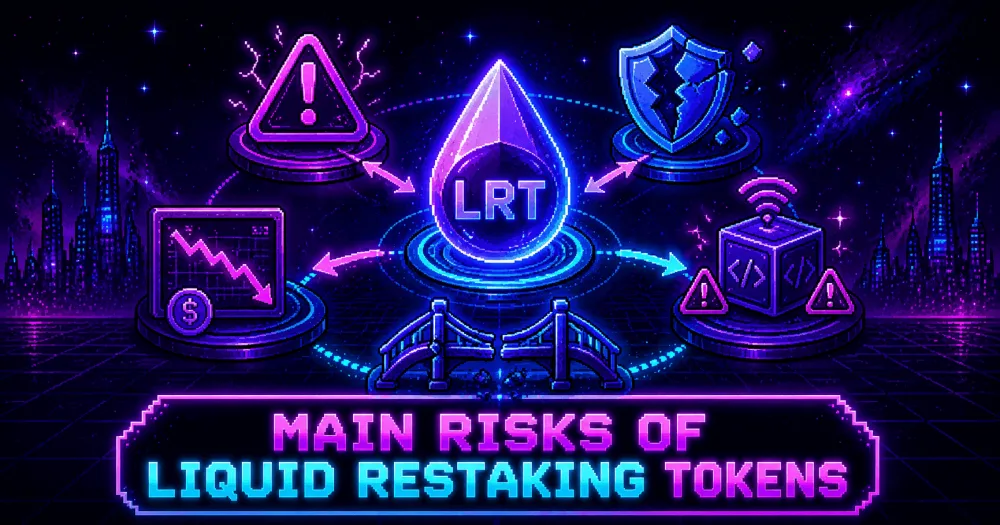
LRTs can be useful, but they are not simple ETH replacements. Users should understand the risks before chasing extra yield.
Slashing Risk
Restaking can expose assets to penalties if operators or secured services behave incorrectly. Slashing rules may differ across systems, and users may not fully understand which risks they are accepting.
Smart Contract Risk
LRT protocols rely on smart contracts. Bugs, logic errors, bad upgrades, or contract exploits can affect user funds. The more complex the system, the more places something can break.
Depeg Risk
An LRT should trade close to the value of its underlying assets, but market stress can push it below fair value. If users need to exit during a depeg, losses can become real.
Liquidity Risk
A token can be theoretically liquid but practically hard to exit in size. Thin pools, high slippage, or limited exchange support can make an LRT more difficult to manage.
Bridge Risk
Some LRTs move across chains. That can increase utility, but bridges add another layer of risk. If a bridge fails, the damage can spread quickly.
Composability Risk
LRTs are often used in lending, looping, farming, and structured yield strategies. These combinations can multiply returns, but they can also multiply losses. One weak link can affect the whole position.
How to Choose the Best LRT in 2026
Choosing among the top liquid restaking tokens should start with risk, not yield. A higher reward number means little if the token is hard to exit, poorly integrated, or exposed to too many fragile systems.
Before choosing an LRT, check:
- How liquid the token is
- Where the token can be used
- Whether withdrawals are clear
- How the protocol handles operators
- Whether audits are available
- How transparent the team is
- Whether the token has had depeg issues
- Which DeFi platforms support it
- Whether rewards are real, estimated, or promotional
- How much bridge exposure exists
A cautious user may prefer a larger and more liquid LRT with broad integrations. A more aggressive user may look for smaller opportunities with higher incentives. Either way, risk management matters more than headline yield.
Best Use Cases for LRTs
LRTs can make sense for users who already understand DeFi and want more productive ETH exposure. Common use cases include:
| Use Case | Why Users Do It |
|---|---|
| Holding LRTs | Earn staking and restaking exposure while staying liquid |
| Providing liquidity | Earn trading fees and incentives |
| Lending collateral | Borrow against LRT positions |
| Yield strategies | Combine LRTs with DeFi reward programs |
| Portfolio diversification | Spread exposure across restaking protocols |
The danger comes when users stack too many strategies. Holding weETH, ezETH, or rsETH is already more complex than holding ETH. Borrowing against those assets, looping them, and farming extra incentives can turn a moderate-risk product into a fragile position.
Are Top Liquid Restaking Tokens Worth It?
The top liquid restaking tokens can be worth considering for users who understand Ethereum DeFi, accept smart contract risk, and want restaking exposure without giving up liquidity. They are not ideal for users who want simple, low-maintenance ETH exposure.
Ether.fi, Renzo, and Kelp all offer access to the same broad trend, but they do not offer the same product. Ether.fi is stronger on DeFi reach. Renzo focuses on managed restaking strategy. Kelp offers accessible rsETH exposure with its own trade-offs.
For conservative users, direct ETH staking or holding a simple liquid staking token may be enough. For more active users, LRTs can be useful, provided the position size stays reasonable and the exit route is clear.
Final Verdict
In 2026, the top liquid restaking tokens are best judged by liquidity, security, integrations, and transparency, not just by advertised yield. Ether.fi, Renzo, and Kelp each bring something different to the table.
Ether.fi looks like the broadest DeFi-native option. Renzo offers a more strategy-driven route through ezETH. Kelp gives users another major rsETH-based path into liquid restaking.
The smart move is not to ask which token pays the most today. Ask which one you can understand, monitor, and exit without panic. In restaking, the yield is the headline. The fine print is where the bodies are buried.
FAQ
What are liquid restaking tokens?
Liquid restaking tokens are tokenized claims on restaked assets. They let users keep liquidity while their underlying assets participate in staking and restaking strategies.
What are the top liquid restaking tokens in 2026?
The top liquid restaking tokens often include Ether.fi’s eETH or weETH, Renzo’s ezETH, and Kelp’s rsETH. Each has different strengths, integrations, and risk levels.
Is Ether.fi better than Renzo and Kelp?
Ether.fi may be stronger for users who want broad DeFi integrations and a highly visible LRT. Renzo may suit users who prefer managed restaking exposure, while Kelp may fit users interested in rsETH.
Are LRTs safer than regular staking?
No. LRTs are usually more complex than regular staking. They can involve slashing risk, smart contract risk, depeg risk, liquidity risk, and bridge risk.
Should beginners use liquid restaking tokens?
Beginners should be careful. LRTs can be useful, but they are not simple products. Anyone using them should understand how the token works, where liquidity comes from, and what could go wrong.