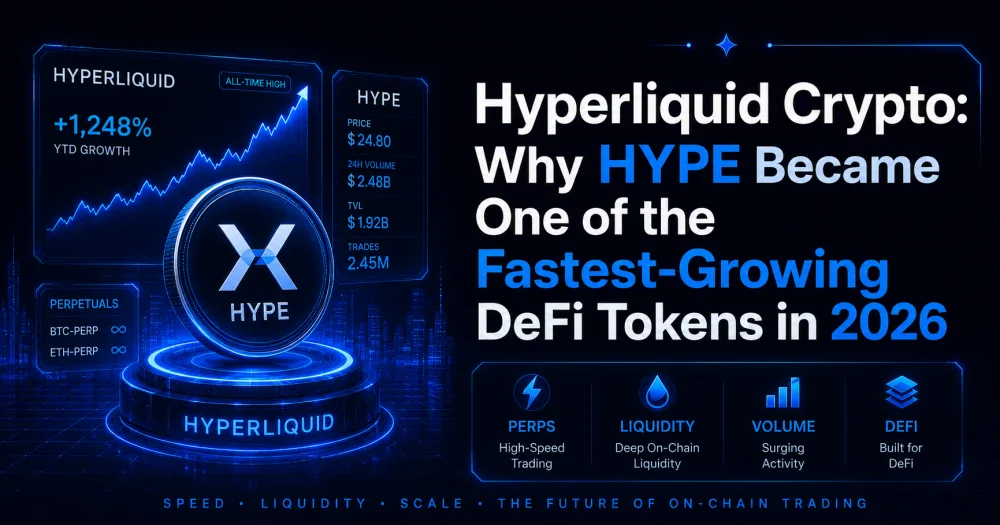
What made Hyperliquid stand out in 2026 wasn’t just noise. Real trading numbers showed up early. Speed mattered – orders filled quicker than most saw coming. Instead of vague promises, tokens moved based on actual use.
Contents
- Hyperliquid Crypto and the Rise of HYPE: Why the Token Is Gaining Massive Attention in 2026
- Who Created Hyperliquid? The Founders Behind the HYPE Ecosystem
- Why Hyperliquid Crypto Is Growing So Fast in 2026
- HYPE Token Economics: What Makes It Different From Other DeFi Tokens
- What Is Driving Demand for HYPE in the Market Right Now
- Why Traders Are Moving From Other DeFi Platforms to Hyperliquid
- Risks Behind Hyperliquid Crypto and HYPE Token Growth
- Is Hyperliquid Crypto Sustainable Long-Term?
- FAQ
Hyperliquid Crypto and the Rise of HYPE: Why the Token Is Gaining Massive Attention in 2026
That spike in HYPE▲$70.78 value? Just what everyone noticed first. Beneath that surface, trades ran directly on blockchain rails. A deep pool of futures and options grew quietly alongside. Activity didn’t slow – it fed itself.
Read more: Hyperliquid Price Falls as Arthur Hayes Dumps HYPE, NEAR
What Is Hyperliquid and How Does the Protocol Actually Work
On its own Layer 1 blockchain, Hyperliquid runs entirely fine – orders settle there, funding flows through it, and liquidations trigger within it. Trading happens directly via an on-chain order book, different from typical automated market makers.
This setup lets people stay in full control of their funds while accessing tools such as limit orders, immediate execution, and margin options. Fast execution comes baked into the system, no outside layers needed. What makes it stand out? Everything unfolds chain-native, start to finish.
HYPE Token Explained: Utility, Staking, and Buyback Mechanism
Hype coin powers everything inside this system. Staking it helps secure the network, while holding it grants voting rights. Fee cuts come through owning HYPE, along with covering transaction costs on HyperEVM. At the center sits the Assistance Fund – the key to how tokens move and behave. Every trade chips away at supply because fees turn into HYPE, then vanish. More usage means more burns, tightening availability over time.
Why Hyperliquid Is Becoming One of the Most Active DeFi Trading Platforms
Speed pulls people into Hyperliquid. Because it moves fast, holds plenty of funds ready for trades, offers strong borrowing power, yet lets users keep control of their assets. Its layout stays clear and simple. This mix draws those already deep in crypto. Big players show up too. Alongside others focused on broad market shifts. They all seek constant access. Away from traditional exchange setups.
Hyperliquid came from a team of builders focused on trading tech. People who shaped the HYPE environment are tied to its core development.
Who Created Hyperliquid? The Founders Behind the HYPE Ecosystem
Jeff Yan and the Origins of Hyperliquid
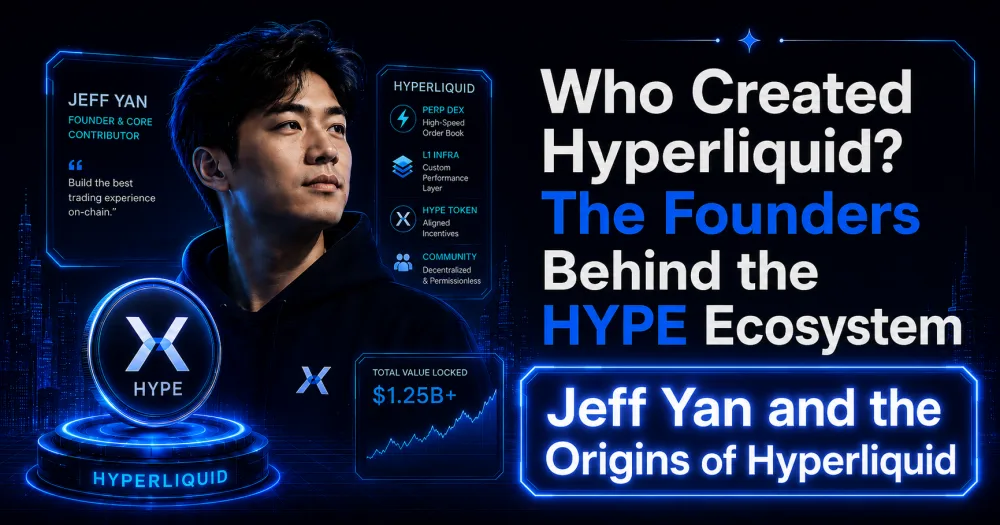
Out of nowhere came Jeff Yan, known as the face behind Hyperliquid crypto. He once worked as a quant trader at Hudson River Trading – an experience that clearly shaped what followed. You can tell HYPE is designed by those familiar with order book mechanics, tight timing needs, how liquidations unfold, along with smooth navigation paths through trades.
Related: Hyperliquid HYPE Current Price June 2026 and Year Prediction
The Role of “Iliensinc” and the Small-Core Development Team
Out there, the effort ties back to “Iliensinc,” a shadowy co-founder who handles much of the tech work. A tight group runs Hyperliquid – that fact now shapes how people view it. Focus and fast progress? That is what fans point to. Others worry about too much depending on just one person. While bigger teams stalled, this compact setup pushed things live without delay.
Why Hyperliquid Was Built Without Venture Capital Funding
Most know how tiring it gets when early investors dominate returns. Hyperliquid skipped that path entirely – no big names lined up before launch. Instead, access opened wide right at the start via HYPE drops. Holders showed up fast, drawn by real stakes from day one. Growth followed quickly, driven not so much by promises, but more by actual use.
Why Hyperliquid Crypto Is Growing So Fast in 2026
Explosive Growth in Perpetual Futures Trading Volume
Something’s pushing HYPE crypto up. Trading activity explains it best. Perpetual futures sit near the top when it comes to earning in digital assets. People lean on these tools for locking in risk, making bets, or chasing small price gaps across markets. That action found a home on Hyperliquid. More trades there mean more fuel for buying back HYPE tokens – which ties right into its value narrative.
How Hyperliquid Competes with Centralized Exchanges
Speed pulls traders toward Hyperliquid (HYPE) tokens just like deep markets and tight spreads do. Ownership stays with users instead of moving to a company vault. Big exchanges keep working with banks plus government rules guide their moves. Their size gives stability that others lack. Yet when it comes to fast trades and total access, many prefer staying in charge. Execution quality becomes the deciding factor.
The Impact of High-Leverage Trading Demand on HYPE Adoption
Volume grows when leverage is high, pulling in crowds along with danger. Traders using borrowed funds tend to act fast, moving constantly through markets, leaving behind a trail of costs they pay just to play. This motion lifts the HYPE token when things swing wildly one way or another. Swings open doors for extra deals, pumping profit channels tied directly to how many hands it shakes across exchanges.
Expansion into New Markets: Equities, Commodities, and Prediction Markets
One step beyond digital coins drives Hyperliquid forward. Moving into goods, stock baskets, shares, startup stakes, and even event-based bets shapes a new focus across crypto spaces. When constant blockchain futures turn into gateways for big-picture risk plays, the platform stops resembling just another decentralized exchange. Instead, it starts feeling like a worldwide stage for financial outcomes.
Table 1: Why HYPE gained attention in 2026
| Growth driver | How it helps Hyperliquid | Why it matters for HYPE |
|---|---|---|
| High perp trading volume | Brings more users and fees to the platform | Supports token demand and buyback logic |
| On-chain order book | Makes trading feel closer to a centralized exchange | Improves speed and user experience |
| No VC-heavy launch | Reduces fears of large insider unlocks | Strengthens community trust |
| HyperEVM expansion | Adds smart contract activity around the ecosystem | Gives HYPE more utility beyond trading |
| Strong trader community | Creates organic liquidity and attention | Helps HYPE stay visible in DeFi |
HYPE Token Economics: What Makes It Different From Other DeFi Tokens
Buyback-and-Burn Model Tied to Trading Fees
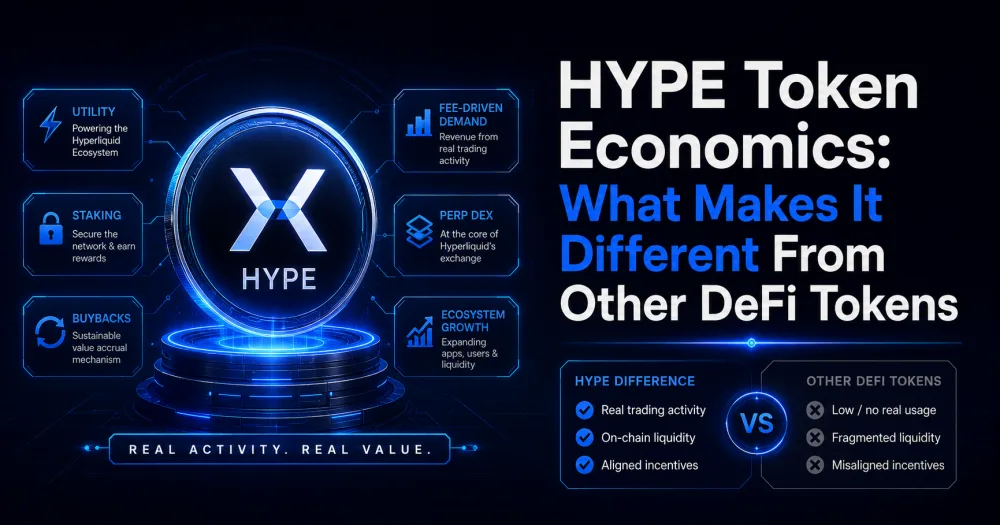
DeFi tokens often fail even when holders can vote. What sets HYPE apart? Fees from the platform power a constant cycle of buying back and destroying coins. Ownership isn’t tied to shares. Still, the numbers make sense here. More revenue means more tokens get burned over time.
One way to get involved? Put tokens aside for staking. Running transactions takes up space – gas tracks that use.
Staking, Gas Usage, and Network Security Role
Why does the HYPE token exist? Staking helps protect the system. Governance decisions rely on it, too. Users spend it to cover transaction costs. Inside HyperEVM, it powers operations like fuel. Should apps grow there – alongside wallets and money-moving features – the need for HYPE might stretch past just futures trading.
Token Distribution and Early Airdrop Structure
What made the HYPE debut different was how much supply went straight to first movers. Unlike crowded spaces where tokens are tightly held, Hyperliquid seemed shaped by its users instead. People getting coins turned into active participants – trading, securing, building, rooting for growth, simply because they had skin in the game.
Why HYPE Is Often Compared to “Exchange Equity On-Chain”
Most folks liken HYPE to on-chain stock due to its tie to a marketplace pumping out fees. Yet the parallel limps a bit. It doesn’t act like company stock nor offer any real claim on assets. Even so, the idea sticks around for a reason – Hyperliquid moves people, trades happen, money flows in, and there’s this token riding right alongside it.
Table 2: HYPE token utility and risks
| Area | Bullish angle | Main risk |
|---|---|---|
| Staking | Users can support network security and earn rewards | Rewards depend on ecosystem activity |
| Governance | Holders can influence protocol decisions | Large holders may have stronger influence |
| Fee mechanics | Platform fees can support buybacks or burns | Lower volume may weaken this effect |
| Ecosystem utility | HYPE can be used across Hyperliquid products | Utility must keep expanding |
| Market demand | Growth attracts traders and speculators | Price can fall sharply if momentum fades |
What Is Driving Demand for HYPE in the Market Right Now
Protocol Revenue Growth and Fee Generation Mechanics
What keeps HYPE moving? Clear income streams show up plainly. Volume shifts, open positions, fee records – burn data, too – all sit out in the open. These figures give traders solid ground when comparing value. While plenty of coins lean on what might happen later, Hyperliquid runs an actual live marketplace today.
Whale Accumulation and On-Chain Activity Trends
Hype around tokens tied to whale moves has fueled the story lately. Big wallet activity grabs eyes – it hints at confidence from those with deeper pockets. Yet numbers alone aren’t the truth. What looks like gathering coins might soon turn into selling, particularly following a sharp climb.
Institutional Interest and ETF-Related Speculation
Now big players are watching HYPE more closely. Instead of just talking in DeFi circles, news about ETFs and official offerings started shaping views. These shifts might bring new buyers into the mix. Yet at the same time, they could push the Hyperliquid price ahead of fundamentals. A faster pace of trading often follows.
Related: Best Solana Tokens to Watch in 2026: SOL Projects With Explosive Growth Potential
Narrative Shift: From DeFi DEX to Full Trading Ecosystem
What’s really pushing HYPE’s growth? A change in how people see it. Not just another crypto perp exchange anymore. Now it hosts spot trading, lets users stake, runs HyperEVM, offers real-world asset futures, and even dabbles in bet-like financial tools. The perception shifted – wider horizons now.
Why Traders Are Moving From Other DeFi Platforms to Hyperliquid
Speed, Low Latency, and On-Chain Order Book Design
Quick trades happen fast because of snappy responses. Because delays are tiny, actions follow right away. Orders sit directly on the blockchain, not elsewhere. This setup keeps everything moving without holding back
Execution upgrades spark shifts among seasoned market participants. Entries, exits, even forced closures – each feels the pulse of velocity. On Hyperliquid, an on-chain order book shapes sharper interactions for engaged traders versus typical AMM platforms, yet locks settlement into view. Precision isn’t hidden; it runs in plain sight.
Liquidity Depth and Perpetual Futures Dominance
What sets Hyperliquid apart? Strong liquidity depth stands out. Big traders move in and out easier when order books are deep. Because of that, market makers show up more often. Better prices follow. With time, solid perp futures trading builds something lasting. Not everyone sees it at first.
User Experience Compared to Solana and Ethereum-Based DEXs
Speed sets Solana’s exchanges apart. Ethereum’s strength lies in layers of connected finance tools. What makes Hyperliquid different? A sharp eye on how traders work each day. Swapping coins isn’t the main draw here. Building detailed trade records matters far more.
Why Professional Traders Are Increasingly Using Hyperliquid
Weekends move fast. Professional traders need access when others go dark. Deep order books matter just as much as speed. Markets shifting on news keep some awake. Hyperliquid opens doors there. Real-time reactions beat delayed responses every time. Volatility waits for no one. Macro surprises hit hard. Crypto never sleeps, so trading should not either.
Risks Behind Hyperliquid Crypto and HYPE Token Growth
High Leverage Liquidation Risk in Perpetual Markets
Leverage kicks things off – right there at the front. When prices swing hard, perpetual futures pull traders under fast. Volume grows, fees pile up, yet that power ties back to big drops just as quickly. A wave of newcomers tasting loss might turn opinion upside down without warning. One bad trade after another feeds the chain reaction until trust thins.
Regulatory Uncertainty Around Decentralized Derivatives
Regulation shows up next. These decentralized derivatives? They blur lines – acting like exchanges, brokers, even gambling tickets. Moving into areas like crops, stocks, or forecasts pulls sharper looks. Drawing borders on maps might slow things down, but it won’t stop the push.
Dependency on Trading Volume for Token Value
What makes HYPE powerful can also drag it down. Tied closely to how much trading happens, its value shifts with the market’s pace. When trades slow, so do earnings from fees. Less fee income means fewer tokens get bought back. That link shapes whether putting money into Hyperliquid feels like a solid move.
Market Cycle Sensitivity and Volatility Exposure
HYPE still counts as a digital coin. When Bitcoin drops, it might drop too – leverage pulling back could drag it lower. If ETF money slows down, pressure builds. A shift toward fresh stories in markets often pushes it aside. Big gains earlier make even tiny letdowns sting harder now.
Is Hyperliquid Crypto Sustainable Long-Term?
Can Buybacks Continue at the Current Scale?
Fees must keep flowing for buybacks to last. Volume drives this, yet so does trader turnover, price swings, fresh trading pairs, and how rivals act. Demand for the token ties directly to activity on the platform. Growth never climbs smoothly; bumps always show up.
What Happens if the Trading Volume Declines?
When trading dips, the upside feels shakier. With less volume, fee income drops along with token destruction. As liquidity shrinks, some market participants pull back, shifting focus to newer opportunities. What really matters is if people remain once excitement fades.
Competition From Centralized Exchanges and New DEXs
Out of the gate, big trading platforms aim to upgrade perpetual contracts while cutting costs. Instead of old ways, they bring tighter rules and sharper control over assets. What sets them apart isn’t just tech – it’s who shows up, how fast things move, and trust built over time. On another path, newer decentralized markets begin mirroring these features. Liquidity tends to pull users more than promises ever could. Their advantage lies in motion, loyalty, pace, and how tokens work behind the scenes.
Key Indicators to Watch for Future Growth
Volume tells part of the story. Open interest adds context, yet it needs more. Fees flow in when activity rises, while burns follow closely behind. Active users matter just as much as on-chain numbers suggest. Depth shows resilience during swings. Validator involvement hints at network strength. Adoption of HyperEVM spreads slowly but steadily. Regulatory news can shift sentiment overnight. Price movements miss most of this picture.
FAQ
Hyperliquid Crypto Explained?
On the blockchain, Hyperliquid lets users trade perpetuals, buy and sell coins directly, plus handle trades like a traditional exchange. The platform runs on a coin called HYPE.
Why Do People Use the Hype Token?
Staking happens through the HYPE token, while voting decisions rely on it, too. Fee cuts come its way, just like lower costs when using gas inside HyperEVM. Revenue from charges fills a pool that buys tokens before removing them. Governance ties into every piece, quietly shaping outcomes behind activity.
Hyperliquid Crypto Price Increase Reasons?
Volume pushed Hyperliquid higher. Fees followed, adding fuel. Institutions started leaning in. RWA markets expanded around it. The buyback story grew louder by midyear. Strength built quietly through each piece.
Is Hyperliquid Investment Worth Considering?
Should things go well for digital asset trading, Hyperliquid might draw interest. Risk stays elevated, though – success ties closely to how much trading happens, what rules change, borrowed funds behave, and broader markets shift.
Hyperliquid DEX: How Does It Work?
On Hyperliquid DEX, orders live right on-chain. Settlement happens quickly thanks to Layer 1 speed. People hold their own keys at all times. Opening trades – perps or spot – works fine with no centralized exchange involved.
Why Is Hyperliquid So Popular in 2026?
By 2026, Hyperliquid stands out due to fast execution along with deep market pools. Ownership stays with users while handling leveraged trades smoothly. Its token system works well behind the scenes. New types of markets appear regularly there.
Next Up for Traders – What Demands Attention Now?
Volume catches attention first when traders scan the market. Open interest follows close behind as a key signal. Fees shape behavior across platforms in quiet ways. Burns shift supply without much fanfare. Staking HYPE grows steadily under the surface. Adoption of HyperEVM spreads through subtle network effects. Real-world assets gain traction inch by inch. Regulation around derivatives evolves slowly but surely.