Talking about a CEX exchange versus a DEX exchange once felt like religion in crypto. Speed mattered here – alongside help when things broke, money from banks flowing in, tidy graphs on screens. Over there, control of your keys took priority, along with free trading access and the elimination of layers between buyers and sellers. Now, in 2026, there is less belief and more weighing of what dangers you face while staying honest about them.
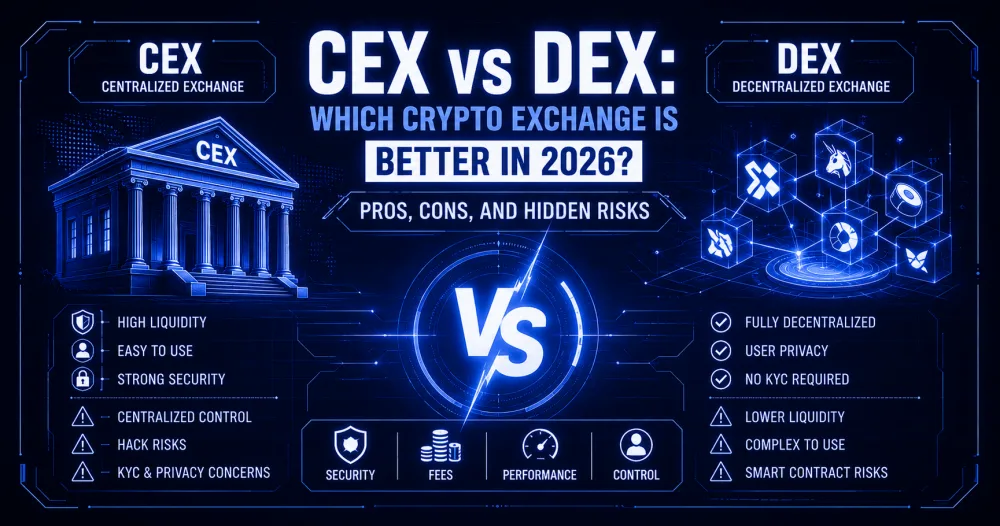
Most people trust centralized exchanges since they resemble banks. Yet some find peace in keeping their keys on a decentralized platform. Comfort does not mean safety here. Hacks might break a CEX, just like empty reserves or blocked access. Poor programming could wreck a DEX, along with counterfeit coins or mistaken permissions. Mistakes happen either way.
Contents
- What Is a Crypto Exchange?
- What Is a Centralized Exchange (CEX)?
- What Is a Decentralized Exchange (DEX)?
- CEX vs DEX: Key Differences at a Glance
- Security Risks of Centralized Exchanges
- Security Risks of Decentralized Exchanges
- CEX vs DEX Fees: Which Is More Cost-Effective?
- Privacy and Regulatory Compliance
- CEX vs DEX for Different Types of Crypto Users
- Common Errors When Choosing a Crypto Exchange
- FAQ
What Is a Crypto Exchange?
A place online lets users trade digital coins using real-world currency. One kind links banking systems to cryptocurrency networks. Another type runs entirely inside blockchain technology, shifting value between personal accounts via coded agreements.
How Crypto Exchanges Facilitate Digital Asset Trading
Inside a firm’s own platform, a central cryptocurrency exchange links people who want to buy with those looking to sell. Trades on a distributed exchange move via smart contracts on the blockchain, often shifting funds straight between personal wallets.
The Role of Exchanges in the Crypto Ecosystem
Where people look, value flows. These platforms shape what moves fast in markets. The speed of access depends on their design. Barriers between traditional cash and crypto live here.
Related: Is Crypto Dead? Fear & Greed Index Hits Critical Lows as Investor Panic Spreads
What Is a Centralized Exchange (CEX)?
Running things behind the scenes, a centralized exchange – often called a CEX – operates under one company’s authority. Think of it like this: people sign up, put money into their account, then buy or sell digital coins using that site. Oversight lands with the firm itself, which holds responsibility for keeping user funds safe.
How Centralized Exchanges Work
Most times, trades move through internal ledgers – speed shows right away on screen. Once money arrives, digital records update without delay.
Key Features of Centralized Platforms
Most people find it easier to add cash through banks on centralized exchanges. These spots often come with phone-friendly programs plus help when things go sideways. Buying right away shows up clearly here, along with betting on price swings or locking coins for rewards. Some even handle number-crunching tasks like tax reports without extra steps. When new users weigh CEX against DEX, comfort wins every time.
Leading Examples of CEXs
Most well-known centralized exchanges are Coinbase, Binance, Kraken, OKX, Bybit, and Bitstamp – though availability shifts by location and what services they offer. Since rules differ, people should review permits, how withdrawals work, available funds, costs, and which company actually handles their account.
What Is a Decentralized Exchange (DEX)?
Trading happens directly between people using code that runs itself, no middleman needed. Your coins stay in your pocket the whole time – no giving them to some firm. Software handles deals once you approve with a digital signature. Ownership stays with you because the record updates right on the blockchain. No gatekeeper watches over funds; rules are baked into the system. You hold keys, make moves, and results lock in publicly.
How Decentralized Exchanges Work
Once linked, a wallet lets the user pick two tokens. After checking the rate, they confirm the transfer when required. Signing off on the trade comes next. Blockchain systems carry out the exchange via decentralized networks. Execution happens once signals pass through nodes.
The Role of Smart Contracts in DEX Trading
Liquidity lives inside smart contracts – these bits of code figure out pricing, send trades where they need to go, and make sure everyone follows the rules. Runs on its own, no old-style middleman needed, yet stumbles hard if a signature fails or a token shows up broken.
Leading Examples of DEXs
Uniswap, Curve, PancakeSwap, Balancer, Sushi, Jupiter, and dYdX stand out among DEXs. Not everyone handles trades the same way – certain ones prioritize basic token exchanges, whereas some build around stablecoin pools, path optimization, or advanced tools for users trading without central oversight.
CEX vs DEX: Key Differences at a Glance
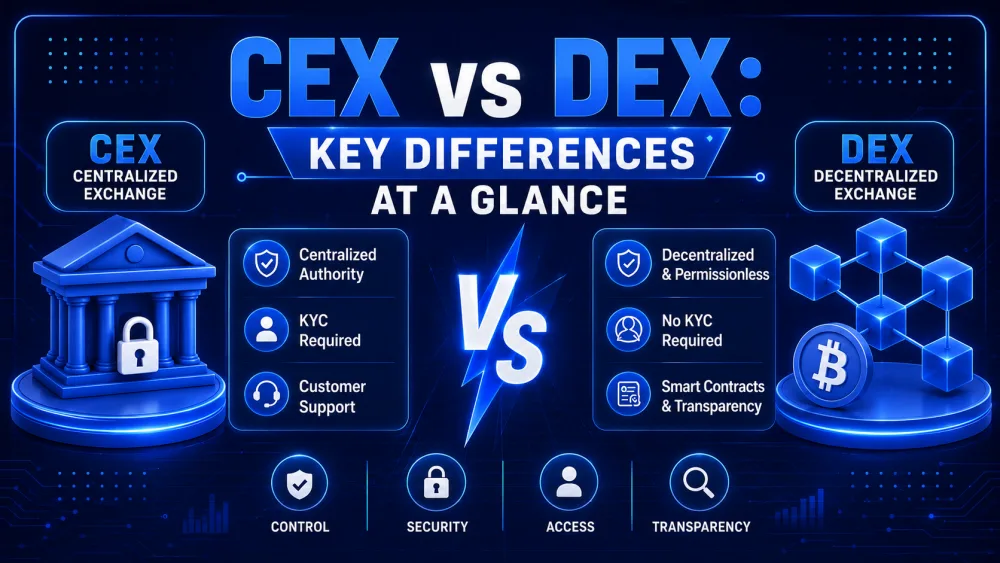
Usage of a centralized vs a decentralized exchange has always been a big choice and controversy. What separates CEX from DEX isn’t just structure – it’s where you place your limits. With a centralized exchange, ease comes along with reliance on others. On the flip side, decentralized platforms hand over authority, yet expect careful habits. Trust shapes one path; personal rigor defines the other.
Read more: How to Get Started Buy Crypto with DEX Wallet: A Beginner’s Guide
Money stays with the platform. Yet you keep keys in your own hands. Logging needs account setup, often with ID checks. While connecting means linking your digital container directly. Markets bustle near popular coins. Though flow depends on how much sits pooled. Costs appear when moving or exchanging. Plus network charges tag along swaps. The main risk depends on who holds the assets. But mistakes can start from clicks or hidden flaws.
| Category | CEX | DEX |
|---|
| Custody | Platform holds funds | User controls wallet |
| Access | Account and usually KYC | Wallet connection |
| Liquidity | Strong on major pairs | Strong where pools are deep |
| Fees | Trading and withdrawal fees | Swap fees and gas |
| Main Risk | Counterparty failure | User and code error |
Custody of Assets
Most of the time, the person who holds the keys decides what kind of exchange it is. A central hub keeps those secrets locked away internally. With a peer-to-peer setup, access stays in your hands at all times.
Account Registration and KYC Requirements
Registration pops up at nearly every centralized exchange, along with ID verification. While decentralized platforms skip the usual sign-up, activity isn’t invisible – blockchain records linger, plus certain interfaces block access by location.
Trading Experience and Ease of Use
Most people find CEX platforms easier because they offer clearer layouts, better help systems, multiple ways to place trades, plus tools that fix mistakes fast. Jumping into a DEX means learning how wallets work, picking the correct networks, allowing token access, managing fees, handling price shifts during swaps, using cross-chain links, and then double-checking every coin before acting.
Liquidity and Market Depth
Most of the time, big coins like Bitcoin move more easily through central exchanges. Ethereum usually follows that pattern too. Stablecoins? They tend to stick close to those same hubs. Newer tokens built for DeFi, though – they show up on decentralized markets before anywhere else. Where a coin lives affects where it flows best.
Available Trading Pairs
Some exchanges only show certain tokens. When trading happens, a decentralized platform might include nearly any asset – opening doors, yet inviting trouble. Liquidity shows up, options grow, danger grows too.
Related: Crypto Exchange Battle 2026: Binance vs Bybit — Where Do Traders Prefer to Trade?
Transaction Speed and Settlement
Most times, CEX deals seem immediate since numbers shift behind the scenes. When using a DEX, each trade waits for blockchain confirmation – how fast that happens relies on traffic at that moment.
| Factor | CEX | DEX |
|---|---|---|
| Custody | Exchange holds user funds | User controls funds through a wallet |
| Access | Account registration and often KYC | Wallet connection, usually no classic account |
| Ease of Use | Easier for beginners | Better for experienced DeFi users |
| Liquidity | Usually deeper on major assets | Depends on pools and network activity |
| Main Risk | Hacks, insolvency, frozen withdrawals | Smart contract bugs, fake tokens, wallet mistakes |
Security Risks of Centralized Exchanges
Security-wise, comparing CEXs to DEXs isn’t straightforward. While one exchange might employ experts in protection, offline fund storage, live oversight, plus regulatory adherence, its pooled user assets create temptation. That central hub? Harder to breach, maybe, yet collapse from one hit.
Exchange Hacks and Custodial Risks
When hackers break into a central exchange, people might get locked out – despite having strong passwords. Solid services lower danger using offline wallets along with tight checks. Yet holding assets together means everyone shares the risk, no matter what.
Insolvency and Counterparty Exposure
Trading platforms might collapse even when no one breaks in. Poor loans here, secret debt there – these eat away at stability. Hidden risks pile up behind the scenes. Affiliates running wild? That turns exchanges into ticking issues. Are reserves too thin? Then trust slips fast.
Regulatory and Account-Freezing Risks
When rules tighten, some platforms block access. Withdrawals might stall without warning. Tokens disappear from trading screens overnight. Rules meant to help can also lock money in place. Protection shifts into restriction – quietly, suddenly.
Security Risks of Decentralized Exchanges
Most danger on DEXs hits close, tangled in code. Even without holding your coins, the system puts full weight on you. Once you approve a deal, nobody waits to undo it. Help desks vanish when signatures lock in.
Smart Contract Vulnerabilities
A system spread across many computers runs using coded agreements, outside data feeds, connection tools, and sometimes guided by human oversight. Checks by experts can spot issues – yet flaws might remain hidden afterward.
Rug Pulls and Fake Tokens
Openness in DEXs allows anyone to create and trade tokens. Because of this freedom, impostor tokens pop up easily – names get duplicated, minting stays concealed, sales are locked, liquidity vanishes overnight. Fake projects slip through without warning, riding on access meant for everyone.
Wallet Security and User Responsibility
With a DEX, your wallet acts as your account. Start by losing the seed phrase, then add signing a harmful contract, maybe toss in linking to a counterfeit page – your crypto is gone just like that. Mistakes stick around when recovery isn’t built in.
Read more: Top 5 DEX Wallets in 2026: Which Crypto Wallet Is Best for DeFi and Swaps?
CEX vs DEX Fees: Which Is More Cost-Effective?
Hidden charges hide behind every corner when comparing CEX and DEX trades. Spreads stretch wider than they seem at first glance. Slippage creeps in during volatile moments. Gas costs rise without warning. Withdrawal fees appear after the main event. Bridge transfers add another layer that most forget. Being trapped in a position carries its own silent toll.
Trading Fees
Pricing at centralized exchanges swings based on whether you’re placing orders or filling them – big traders sometimes pay less. On decentralized platforms, costs come from liquidity pools when swapping tokens. One option beats the other only when the amount traded lines up just right with available market supply.
Deposit and Withdrawal Costs
Most of the time, a centralized exchange adds fees when you put money in by card or take it out. Sometimes specific ways of paying come with extra charges, too. With a decentralized platform, there is no standard way to add cash upfront. However, shifting assets from one wallet to another – especially across different networks – often incurs fees.
Network Fees and Gas Costs
Most people diving into decentralized exchanges overlook gas fees. When traffic spikes, even tiny trades might not be worth it. Cheaper blockchains offer relief – yet bring unfamiliar dangers along. Networks with lower costs aren’t always safer in practice.
Privacy and Regulatory Compliance
Now privacy matters most on crypto exchanges. Because oversight fits better with centralized systems. Even though decentralized ones seem freer at first glance. Yet transparency comes baked into blockchain-ledger always.
Privacy on Centralized Exchanges
Most of the time, a centralized exchange gathers personal info like ID papers, financial records, hardware identifiers, along with logs of past trades. Legal teams might pull that data when needed, yet oversight comes at the cost of anonymity. While safeguards against scams get stronger, private ownership fades behind layers of required disclosure.
Privacy on Decentralized Exchanges
Even without showing ID, most DEX platforms leave traces. Every move shows up on-chain. Firms start connecting dots when money moves in or out. Patterns grow clear across transfers between chains. Ownership of digital items adds another clue. Doing similar things over time makes links easier to spot.
AML and KYC Considerations
Expect stricter checks on cash gateways, dollar-pegged tokens, complex trades, big outflows soon. Behind-the-scenes code might stay live, though user screens could get pickier. Pressure builds where money meets blockchains. Interfaces adapt before engines do.
CEX vs DEX for Different Types of Crypto Users
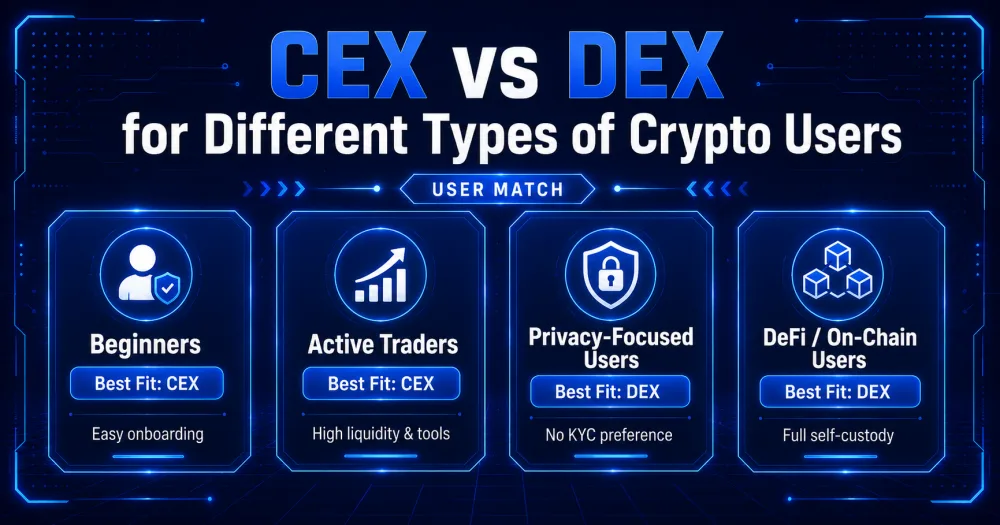
Which works better – centralized exchanges or decentralized ones? That choice shifts per person. New people might lean one way. Traders often pick another path. Folks deep in DeFi tend toward distinct setups. Holders planning years adjust differently. Some of the smartest mix pieces from each world.
Beginners
Most new users find it simpler to begin using a CEX since getting in, navigating around, and asking for help tend to be smoother. Yet trouble often shows up when they keep large amounts sitting there post-purchase.
Active Traders
Most folks who trade a lot lean toward centralized exchanges because getting in and out fast feels smoother. Yet when servers crash, accounts get wiped by sudden price swings, or cashing out hits a wall – those perks fade quickly.
DeFi Users
Most people using DeFi rely on decentralized exchanges – those platforms host loans, rewards, voting tokens, and even new coin launches. Yet even skilled traders might end up losing funds if they trade a counterfeit asset.
Long-Term Investors
Buying things takes different thought than keeping them safe over time. For trades and getting money in, a central platform works fine. When it comes to big amounts, though, better protection makes sense. How you hold matters just as much as what you buy.
Common Errors When Choosing a Crypto Exchange
Skipping steps feels faster at first. A smooth screen, tiny costs, or some shiny coin pulls attention away. Yet those dull safety habits? They’re what keep wallets full. Most slip-ups begin by ignoring them.
Prioritizing Low Fees Over Security
A shaky foundation won’t improve just because costs are low. Look into past breaches before studying pricing charts – where it operates matters, so does proof of funds, how fast money leaves, and what users say.
Ignoring Liquidity and Slippage
Most times, value looks solid until you test it. Pool depth matters more than the number shown on screen. Look at how much was moved recently instead of trusting the display. Order books reveal what numbers actually wait behind. Slippage tweaks expose whether trades hold up when pushed. Real movement hides in the details that few bother to check.
Storing Large Balances on Exchanges
Trading happens on exchanges. Switching currencies works there, too. Moving money in or out uses traditional banking paths. Liquidity stays tied to those platforms. Storing crypto long-term? That belongs somewhere else. When others hold the keys, you do not really own it.
FAQ
Is a DEX Safer Than a CEX?
Most trust moves from exchange to personal control when using a DEX. Yet safety isn’t guaranteed just by that shift. Instead, exposure spreads into how wallets are managed, into code behind contracts, into what tokens are chosen, and also into each choice a person makes on their own.
Can Beginners Use a Decentralized Exchange?
True – beginning with the basics makes sense. Start by getting comfortable with how wallet backups work. Picking the right network comes next, something often overlooked. Checking tokens carefully can prevent costly mistakes. Slippage settings matter more than many think at first. Gas fees pop up everywhere, so understanding them helps. Handling approvals wisely keeps funds safer.
Do DEXs Require KYC?
Not every DEX needs ID checks as banks do. Still, certain websites might limit countries, filter wallet types, or adjust who can join when laws shift. What seems open today could narrow tomorrow. Rules evolve, so access sometimes follows. Even without paperwork, entry isn’t always guaranteed. Oversight grows, and gateways respond. Flexibility exists – until it doesn’t.
Which Fees Are Lower: on CEX or DEX?
Most times, big trades save money on a centralized exchange. Sometimes swapping tokens works out better using a decentralized one – especially when network fees stay low. Spreads play a role. So does how much the price moves during execution. Withdrawal charges matter just as much. Trade volume changes the outcome, too.
Can You Trade Every Cryptocurrency on a DEX?
True, though not always. Decentralized exchanges tend to feature a wider range of freshly launched or lesser-known tokens compared to centralized ones. This expanded selection opens doors to counterfeit assets, shallow trading volume, and greater chances of fraud. While variety grows, so do the dangers hiding within.
Truth be told, picking between CEX and DEX isn’t about loyalty to a team. Centralized platforms shine with easier cash deposits, faster trades, solid customer help, plus stronger order books. Running your own wallet, tapping straight into blockchain tools, jumping into DeFi actions – those tasks favor decentralized setups. In 2026, sharp users pick the tool that fits the job, not just brand names.