It might seem complex at first – yet account abstraction? Just a way to let crypto wallets act smarter, much like today’s everyday software, instead of clunky old tools.
Still, most people use Ethereum via basic wallets – each tied to a single secret key, a single backup line, no room for error. Mess up that line, and your cash. One slip, everything vanishes.
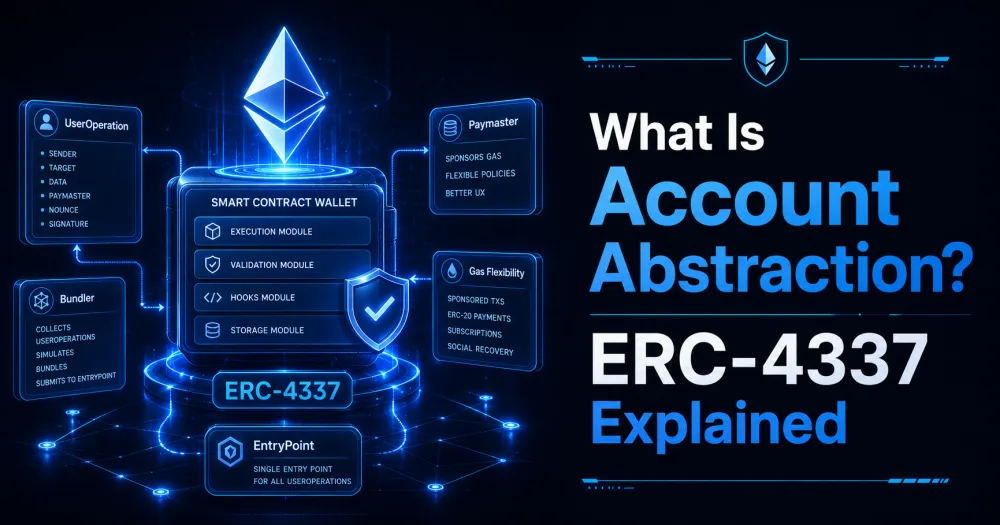
Programmable wallets start here. Instead of fixed logic, they follow personalized conditions built right into their code. Signing transactions shifts through user-defined patterns. Recovery flows adapt based on set triggers. Paying for fees can be outsourced to another party entirely.
Read more: Ethereum Price Falls Below $2,000 for First Time Since March
Spending caps get enforced automatically under certain circumstances. Security layers adjust depending on activity type. This new behavior runs live on Ethereum today. No network split was needed. A standard called ERC-4337 quietly enabled it all behind the scenes.
Contents
What Account Abstraction Means in Crypto
Limitations of Traditional Wallet Models
Out in the open, the old-style Ethereum wallet works hard but feels rough around the edges. A single private key runs an EOA. With that key comes signing power for moves on-chain. Validity gets tested by the system itself. Only when proof passes does anything go through.
Most people find it tough to get started, though the system looks clean on paper. Before doing even basic tasks, newcomers face a wall of terms like seed phrases, gas fees, approvals, and errors that stick once made. The setup works neatly behind the scenes, but trips up real-world use.
Core Idea Behind Account Abstraction
What if your wallet wasn’t tied to keys anymore? Instead, it runs on code that decides how access works. A set of rules lives inside, guiding every move. This changes how identity functions on-chain. Logic replaces signatures. Control shifts from private keys to programmed behavior. The wallet acts, reacts, and follows built-in steps. Not just storage – more like an active agent.
Who signs might depend on conditions written right into the rules. How approval happens could shift based on preset triggers. A guardian regaining control may already be built in. Someone else covering fees? That option fits inside, too. The dApp working with tighter limits also becomes possible. With account abstraction, wallets stop being fixed locks. Instead, they act more like code that responds.
ERC-4337 and Its Role in Ethereum
Why ERC-4337 Was Introduced
Out of nowhere, Ethereum faced a wallet problem – clunky, tricky to use. Fixing it meant touching the core rules, which never move fast. Past fixes wanted big shifts in how accounts work, plus new transaction styles nobody was ready for.
Related: Top 5 Wild Ethereum Price Predictions for 2026: From Realistic to Moonshot Scenarios
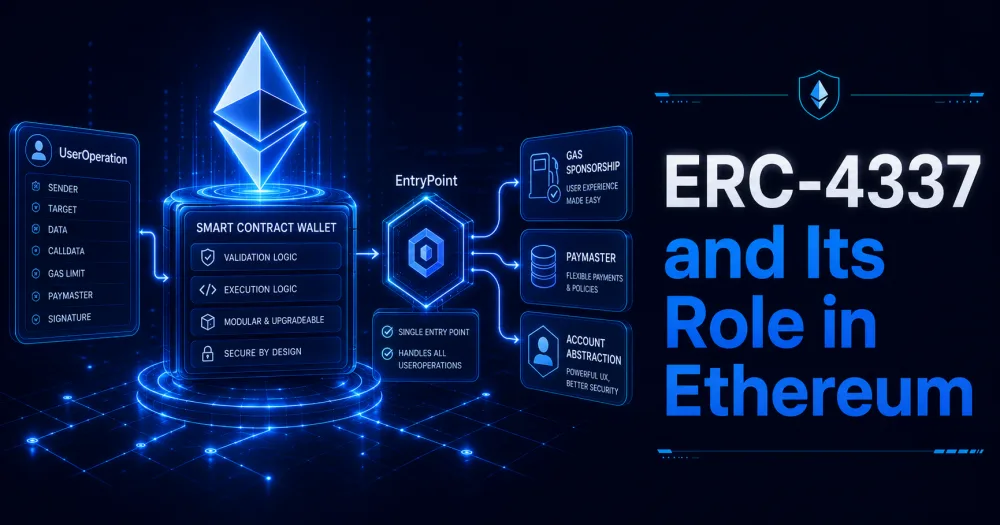
Not long ago, a new method appeared. Rather than tweak Ethereum’s core, this approach built a parallel path for wallet interactions. A user sends something named a UserOperation. These pieces get gathered by bundlers. Then they move onward, arriving at one common EntryPoint. There, each step is checked before anything runs.
How It Differs From Previous Attempts at Account Abstraction
What sets it apart? ERC-4337 runs without altering the base layer of Ethereum. Instead of swapping out standard transactions, it layers new logic on top. This approach wraps existing mechanics into something more flexible.
Today, developers are launching smart wallets alongside paymasters, apps, and bundlers – even as Ethereum sticks to its current transaction framework.
Table 1: Main ERC-4337 architecture components
| Component | What it does | Why it matters |
|---|---|---|
| Smart contract wallet | Holds user assets and custom wallet logic | Enables programmable accounts |
| UserOperation | Describes the user’s intended action | Replaces the standard transaction flow |
| Bundler | Collects and submits UserOperations on-chain | Connects smart wallets to Ethereum execution |
| EntryPoint contract | Validates and executes bundled operations | Coordinates the ERC-4337 process |
| Paymaster | Sponsors or manages gas payments | Enables gasless or flexible-fee transactions |
How Account Abstraction Works
A piece of software living on Ethereum acts like a wallet, but runs through coded logic. Control shifts from a single secret key to conditions set directly into its design.
A single move might need two green lights if the transfer is big. Small moves could slide through with just a passkey instead. If an address looks off, the system simply shuts it down. A trusted guardian steps in when someone loses their way back in.
User Operations Instead of Standard Transactions
Instead of sending a regular Ethereum transaction straight from an EOA, the user relies on ERC-4337. A wallet builds a UserOperation, laying out what should happen, how to pay, along with checks for approval. This operation waits until a bundler picks it up, wrapping it into a real blockchain transaction. Only then does execution move forward.
Bundlers and Transaction Processing Flow
Inside the ERC-4337 system, bundlers take on a unique role. Not every operation makes it through – only those that pass simulation. One by one, they gather user requests before running checks. After verification, approved items get bundled together. These grouped actions then move forward, sent directly to the EntryPoint. What arrives there has already been tested.
Pay comes later, set by what’s written in the task itself, after the bundler covers gas up front. Not every wallet talks directly to chains. That gap? The bundler fills it, carrying purpose into action across the network.
Related: Ethereum Updates 2026: Upcoming Changes That Could Transform the Network
Paymasters and Gas Fee Sponsorship
Gas fees shift smoothly through a paymaster smart contract built on ERC-4337. Instead of ETH▲$1,761.17, people might cover costs using different tokens. Full sponsorship is possible when the system takes charge of expenses. Rules shaped by the application itself guide how payments run. Each transaction follows paths set beyond standard methods.
Here’s one way dApps handle gasless actions. Clicking mint, swap, or claim works even with zero ETH inside. Someone else covers the cost behind the scenes. No upfront payment is needed from the person using it.
What Changes at the Wallet Level
Gas Sponsorship and Fee Flexibility
One way to help cover costs is to let businesses pay for fuel. Sometimes changing how much people owe works too.
Most people overlook how tricky gas fees are in crypto. Even with tokens in hand, someone might get stuck – no movement possible without a bit of ETH tucked away. A tiny detail that blocks big actions.
Now imagine your wallet lets someone else pay to get you started. Fees do not always need ETH anymore. Picture a tool that groups steps, so you just confirm once. Sometimes apps cover costs to bring users in. Payment options open up when rules shift behind the scenes.
Alternative Authentication Methods (Passkeys, Social Login)
Old-style wallets need seed phrases along with private keys. With account abstraction, new ways to verify identity become possible. Passkeys might work instead of the old methods. Hardware tools could take part in access control. Multi-signature setups add another layer below the surface. Session-specific keys appear for temporary use. Logging through social accounts slips in quietly. Custom signing approaches open strange backdoors.
Just because something locks doors does not mean it keeps people safe. Wallet builders might shape tools that fit how folks actually live, rather than pushing every person down the same path built on old recovery words.
Recovery Mechanisms Without Seed Phrases
Most people do not realize how risky seed phrases can be. They act as the only copy of access, also serving as full control. Losing them means there is no way back in most cases. A thief who grabs them walks away with everything inside the wallet.
Backups spread across friends might bring your account back online. Access returns via family alerts when something feels off. Waiting periods pause resets just long enough to stop quick mistakes. Physical tokens unlock entry if memory fails. Rules made earlier kick in automatically under certain conditions. One single secret never holds every door shut or open.
ERC-4337 Architecture Components
EntryPoint Contract
Right where things come together, the EntryPoint contract runs the show in ERC-4337 setups. Batches of UserOperations arrive here through bundlers. Validation gets verified before anything moves forward. Gas tracking happens inside this component too. Only then does it trigger the smart wallet to run the requested task.
What stands out is that the design is directly linked to safety. How safe it feels changes everything about its shape.
UserOperation Structure
A request’s action gets spelled out inside something called a UserOperation. Inside lives who sent it, a number used once, what code should run, how much gas might be needed, payment terms, proof of approval, along with maybe details about who pays. Information packs tight – each piece has a purpose. The structure holds everything needed for execution. Nothing extra shows up here; only what matters makes the cut.
Only after checking the purpose does the process move forward, while packagers get what they need to test outcomes ahead of time.
Bundler Network
Now, picture a system quietly scanning for UserOperations – this is what the bundler network does. It steps in when activity appears, pushing those operations onto the chain. Without steady bundlers ready to act, things stall. Reliability matters simply because users expect their moves to go through. The whole setup holds up only if multiple players stay active and prepared.
Should just a handful of bundlers take control, user experience might shift toward centralization. When those bundlers can’t be counted on, delays or failed transactions could follow instead.
Paymaster Contracts
Gas payment choices depend on what the paymaster contract allows. Sometimes it looks at how much someone has used before, and sometimes it checks if they are allowed in. Token amounts matter, just like whether an address is approved. Rules from the app might block things, too. Spam filters could stop a transaction dead.
A well-built paymaster system holds strength in its simplicity. When put together poorly, it risks high costs or misuse by others.
Smart Contract Wallets
These wallets sit up front for people to use. Rules about signatures come baked right in. Recovery steps? Built into the design. Permissions shape what actions go through. Spending caps live here, too. How things run gets spelled out inside them.
Out here, inside ERC-4337, the wallet runs everything a person does on-chain – like a control center that just works. It doesn’t announce itself; it simply handles what needs doing.
Differences Between EOAs and Account Abstraction Wallets
Ownership and Authorization Model
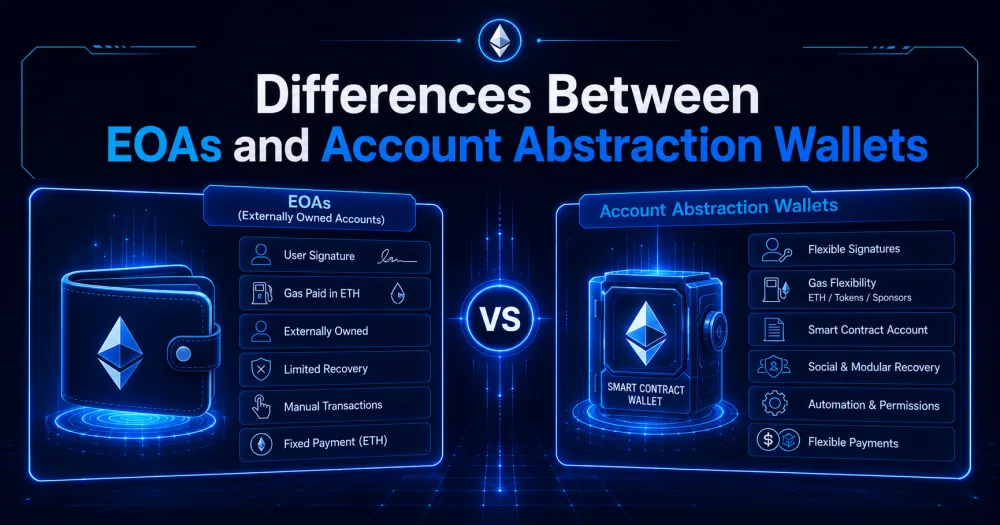
Whoever holds the private key owns an EOA. Inside a smart contract, rules decide control of an account abstraction wallet.
Flexibility shows up in how access works. A single wallet could rely on a passkey, while a different one leans on multisig setups. Some pick session keys when gaming kicks off, yet still demand tighter checks before big money moves.
Transaction Execution Flow
A person using an EOA signs off on a regular transaction and then sends it out directly. When working with ERC-4337, that same action shifts – instead, they sign a UserOperation, which gets grouped by a bundler before moving forward. The EntryPoint steps in once the data arrives, making sure everything checks out prior to running it through.
Click, approve, finish – it seems straightforward enough. Yet inside, pieces move separately, fitting together only when needed.
Security Design Differences
Simple design gives EOAs their consistency – yet one slip brings consequences. Flexibility lives inside account abstraction wallets; that adaptability invites extra code, and with it, new hazards.
Security gets a boost from spending caps, backup access, and control settings in smart wallets – yet shaky code or flawed components open fresh risks. Though features add layers, weak architecture invites trouble instead.
Table 2: EOA wallets vs account abstraction wallets
| Feature | Traditional EOA wallet | Account abstraction wallet |
|---|---|---|
| Control model | One private key controls the account | Smart contract rules control the account |
| Recovery | Seed phrase only in most cases | Social recovery, guardians, or passkeys |
| Gas payments | Usually paid only in ETH | Can be sponsored or paid flexibly |
| Security logic | Basic signature check | Spending limits, multisig, custom permissions |
| User experience | More technical and unforgiving | Closer to modern app-style onboarding |
Use Cases of ERC-4337
Wallet UX Improvements for dApps
Here’s how ERC 4337 works in a single line: apps can now smooth out crypto’s rough edges when people sign up. Instead of showing confusing keys, users get simpler entry points. Behind the scenes, accounts behave smarter. Setup feels familiar, even though blockchains run below. Friction fades without changing what actually happens underneath.
A person might start by setting up a wallet right within the app. Logging in feels smooth, using whatever way they already know. Sometimes, extra gas shows up without cost, backed by sponsors. Moving through tasks becomes possible all at once, linked quietly behind the scenes.
Related: What Is a Crypto Faucet? How Free Bitcoin and Crypto Rewards Work in 2026
Gasless Transactions in Applications
Payments happen behind the scenes. Not magic at work. Validators on Ethereum get rewarded somehow. Flexibility comes through ERC-4337. Someone covers the cost every time.
A single move might shift everything when hidden hands handle payments. Sometimes it’s the system backing up user steps without them knowing. Costs vanish mid-action because someone else took charge behind the scenes. Smooth clicks come from quiet support running beneath the surface.
Programmable Wallet Logic for DeFi and Gaming
Spending limits? That happens now. Risky move needing a second check – built right in. Repetitive tasks run themselves when needed. Clicking around inside games feels smoother with temporary access. Each tap does not need a signature anymore. Apps shaping the wallet experience? Now that works.
Limitations of ERC-4337
Infrastructure Dependence on Bundlers and Paymasters
When ERC-4337 relies on bundlers – plus sometimes paymasters – any fragility shows fast. High costs or central points create friction down the line. Weak links here mean rougher rides later.
Even though the standard skips altering protocols, solid systems both outside and inside the chain remain necessary. Still, without tweaking the core rules, performance leans heavily on external and internal support layers.
Adoption Constraints Across Existing dApps
Most decentralized apps rely on externally owned accounts. For smart contract wallets, things get trickier – extra setup steps pop up, like managing permissions, adjusting signatures, adding compatibility layers, and then running checks.
Even though more people are using it, ERC-4337 doesn’t magically fix everything on Ethereum overnight. For real change, dApps need to build with it directly.
Additional Execution Complexity Compared to EOAs
Picking EOAs means simplicity at low cost. Yet when you want extra features like checking rules before actions or running contracts, smart accounts step in. These extras bring along higher fees on the network. More pieces involved also mean more moving parts to manage.
When moving tiny amounts, using an EOA might just work better. When tasks get tangled, though, abstracted accounts could justify their added setup.
FAQ
What Is Account Abstraction?
Smart contracts take the place of regular wallets when account abstraction happens. These digital accounts follow custom logic instead of fixed patterns. Rules inside decide how actions get approved. Recovery methods change based on settings built into the code. Paying fees doesn’t always need tokens usually required. Permissions shift depending on what the contract allows.
What Does Account Abstraction Mean in Crypto?
Imagine if your digital wallet acted like a smart app. Recovery becomes safer through built-in backups. Logging in adapts to different methods, depending on need. Someone else might cover the network fee when you act. Rules inside each move let actions bend without breaking trust.
What’s ERC-4337?
A different kind of Ethereum rule, ERC-4337, shapes how accounts work by using special actions called UserOperations. Instead of regular transactions, these get grouped by services known as bundlers.
Sitting at the center is a contract named EntryPoint, handling coordination. Support comes from paymasters, which can cover fees under certain conditions. Smart wallets built with code make up the user side, reacting to those operations.
Understanding ERC 4337?
From there, someone creates a UserOperation by signing it. That signed piece gets bundled into a regular Ethereum transaction by a bundler. Once on-chain, the EntryPoint checks if everything fits. Only then does it trigger the smart wallet to carry out what was planned.
Paymaster ERC 4337 Explained Simply?
A person handling payments might cover fees using different tokens instead of just ETH. This setup lets transactions happen without relying solely on standard gas charges.
Will Account Abstraction Replace Seed Phrases?
One way forward might skip seed phrases more often, yet staying safe still falls on you. Expect passkeys alongside physical tools, trusted contacts, and even coded fallbacks down the road.
Why Does Account Abstraction Matter At All?
Because crypto stays stuck when wallets act like code editors. Yet Ethereum could change that. Smoother tools appear once account abstraction steps in. Safety grows. Experience shifts closer to regular apps. Each step forward makes space for real people, not just coders.