The UK’s Financial Conduct Authority (FCA) has published the final version of its crypto market regulations. We break down what the digital asset industry in the UK can expect starting in 2027.
The document brings digital assets under direct FCA oversight and completes the regulator’s long-awaited roadmap. Key elements include mandatory licensing, capital stress-testing requirements, stricter market abuse and insider trading rules, and simplified capital standards for stablecoin issuers.
Hot topic: Bybit to Restrict Access to Global Platform for EU Users
The application window opens September 30, 2026, and closes February 28, 2027. The new regime takes effect on October 25, 2027.
The published regulation caps a multi-year process to build a UK crypto regulatory framework. For companies, it means preparing for authorization before February 2027.
Contents
FCA License Now Mandatory: What Changes for Crypto Firms
The new regulation means UK crypto companies will operate under standards comparable to other financial services providers. Trading platforms, custodians, stablecoin issuers, staking services, lending and borrowing platforms, and certain DeFi firms with an identifiable controlling entity all need FCA authorization.
FCA Executive Director of Payments and Digital Finance David Geale said:
“We’ve created a system that doesn’t force businesses to choose between regulatory certainty and room to grow. This regime gives companies both–a stable and competitive platform for growth.”
Existing AML registration won’t automatically convert to the new license. Companies will need to go through a fresh authorization process.
Read more: Top 5 High-Growth DeFi Projects in 2026 — Where Smart Money Is Moving
Stablecoins and DeFi in the UK Under FCA Oversight
The FCA kept the core stablecoin framework but made targeted adjustments. The regulator lowered the capital requirement for issuers to 1% of issuance volume, down from the previously proposed 2%. Market participants had called the original level excessive.
The FCA also simplified requirements for reserve asset composition, dropped mandatory redemption projections, introduced a trust management requirement for reserves, and allowed up to 5% excess in the collateral asset pool. The regulator will also work with the Bank of England on applying rules to stablecoin issuers deemed systemically important.
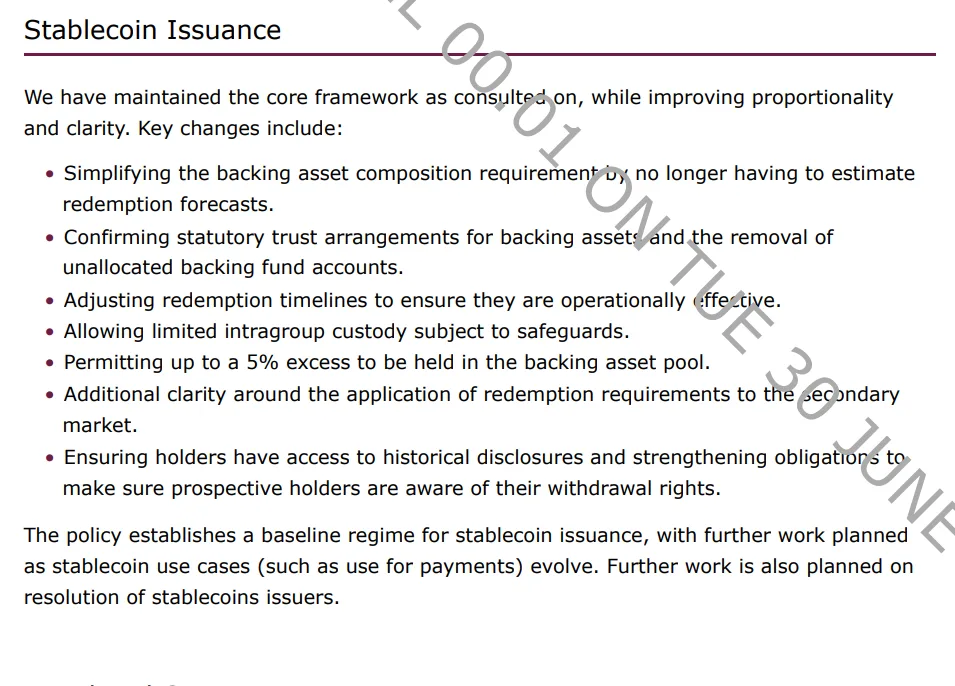
On market abuse, the FCA introduced rules against insider trading and manipulation. For large trading platform operators, the sectoral approach remains, but disclosure and intermediary notification requirements have been clarified. Issuers will be required to provide users with specific withdrawal rights.
By year-end, the FCA will hold a separate consultation on DeFi regulation and operational resilience standards for DLT-using firms. FCA Director of Payments and Digital Assets Matthew Long said the regulator would take a case-by-case approach. “Pure DeFi,” where no identifiable individual is running the activity, will fall outside the regulatory perimeter.
Learn more: How to Pay with Stablecoins — Complete Guide for 2026