Europe could struggle to protect banks and stablecoin issuers in a crypto bank crisis, a UniCredit director warns.
Europe may be less able than the U.S. to deal with a crisis caused by links between crypto firms and financial lenders, Elena Carletti, deputy vice chair of UniCredit and head of the Italian bank’s board risk committee warned.
Speaking at a banking conference organized by Madrid’s IESE business school, Carletti said that Europe may struggle to offer the same kind of broad deposit protection U.S. authorities used during the 2023 Silicon Valley Bank crisis, Reuters reports.
Stablecoins issuers typically hold reserves in bank deposits, Treasury bills or other liquid assets, which means stress at a bank can quickly become stress for the token.
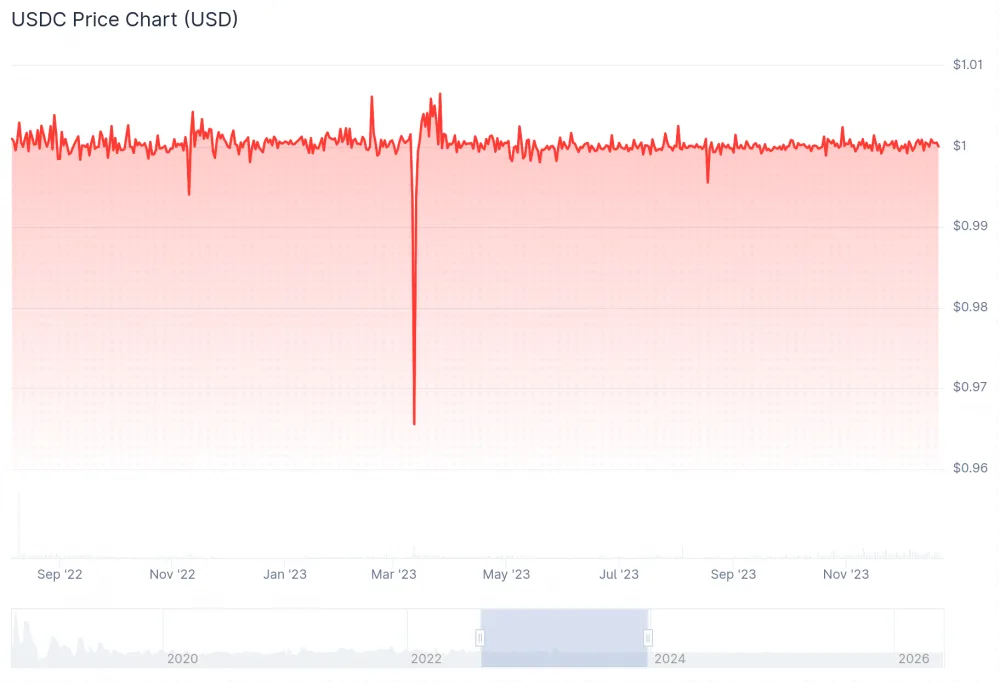
That happened in 2023, when Silicon Valley Bank, a U.S. lender used by tech and crypto firms, collapsed while holding some reserves backing Circle‘s USDC stablecoin.
USDC briefly lost its dollar peg, redemptions surged and the stress spread across parts of the banking system, including Signature Bank, another lender with crypto exposure.
U.S. authorities then used a systemic risk exception to guarantee all deposits at Silicon Valley Bank and Signature Bank, including uninsured deposits above the normal limit.
But as Carletti argues, the same approach “cannot be easily taken in Europe.”
Read also: Tether and Georgia Launch National Stablecoin GEL₮ Pegged to the Lari
MiCA Creates the Dangerous Link
Carletti’s warning is tied to MiCA, the European Union’s crypto regulation, which has applied to stablecoin issuers since 2024.
Under MiCA, euro and other fiat-backed stablecoins are classified as electronic money tokens. Therefore, stablecoin issuers must keep their reserves as deposits in banks, which reduces the gap between the issuers and the banks. However, this approach isn’t universally accepted.
For instance, Tether, the issuer of USDT▲$0.9991, chose not to seek MiCA approval after arguing that the EU’s reserve rules would force too much stablecoin backing into bank deposits. As Tether CEO Paolo Ardoino argued in a Wired interview, having up to 60% of reserves held in bank deposits may result in a shared risk of failure in case of mass redemption requests.
Carletti said Europe “forcing a certain alliance of stablecoin and crypto providers with the banking sector without the possibility of extending insurance in the same way,” which she described as a “double form of weakness.”
Read more: Why Stablecoins Are the New Global Payment Layer in 2026: The Shift in Global Finance