Here is the reality: nearly all major cryptocurrencies do not offer full privacy. Bitcoin, Ethereum, and Solana lay most activity out in plain sight. Public ledgers show when coins move, how much sits in each wallet, when funds shifted hands, and how addresses connect. The one thing you cannot see right away is who actually owns them.
Ghost-like disappearance is not the point. Real privacy matters more: keeping apps, scammers, employers, business contacts, data collectors, and curious strangers from tying your transactions to who you are. To use crypto anonymously, you need strict habits, separate wallets, careful transfers, and fewer accidental data leaks.
This guide walks through practical privacy within legal boundaries. It is not about escaping consequences, dodging penalties, or moving dirty money. Shielding your finances fairly is one thing. Treating secrecy like an escape route is another.
Related: Top 10 Crypto Wallets (May 2026): Hot & Cold Options Reviewed
Contents
What Does It Mean to Use Crypto Anonymously?
To use crypto anonymously means making it difficult to connect your real identity with your wallet activity. Every blockchain writes transfers like notes on a shared board. The actions remain visible, but the aim is to prevent someone from tracing an address back to a real person.
Crypto privacy has three layers:
- Identity privacy: whether someone can connect your wallet to your name, email, exchange account, IP address, phone number, or device.
- Transaction privacy: whether observers can connect deposits, withdrawals, spending, and balances.
- Behavioral privacy: whether your habits reveal patterns through timing, amounts, repeated wallets, or familiar addresses.
Starting clean does not mean staying hidden. Pull money from a known exchange into a new wallet, then move it around constantly, and tracking gets easier by the minute.
Crypto Is Usually Pseudonymous, Not Anonymous
A crypto address may look anonymous at first glance, but every move tied to it can be followed. It works like a mailbox with no name tag: private until something connects it back to a person. After that link forms, each new transaction becomes easier to observe.
Picture a donation link shared online. That address now sticks to your identity. When funds shift from it, trails show up. Using that same address again adds weight to the trail. Each repeat deepens the map others can draw.
If privacy matters, treat every address as exposed data. Each address acts like a public trail anyone can follow.
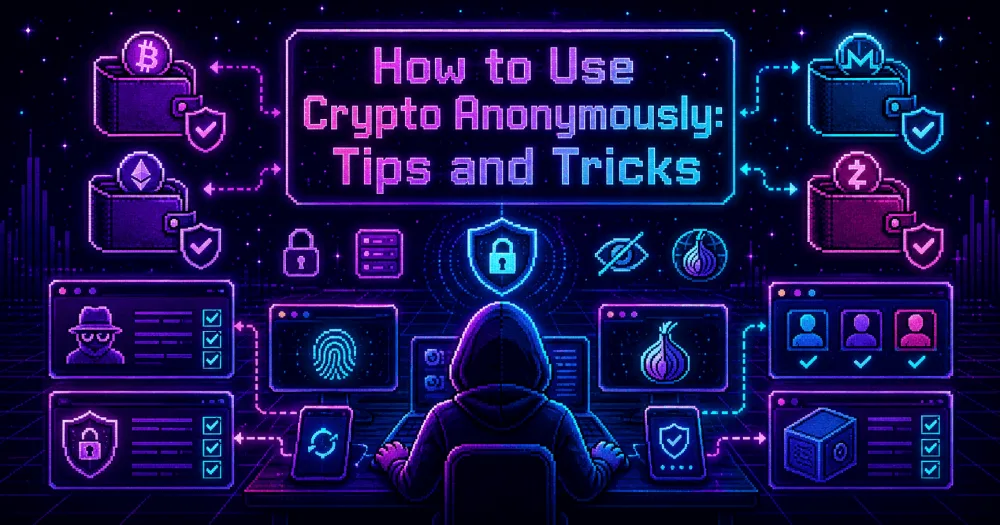
How to Use Crypto Anonymously: Tips and Tricks
Separate Wallets by Purpose
Begin with separate wallets. Handling all transactions through one wallet increases risk without reason. When purposes are divided across wallets, exposure stays limited and monitoring becomes harder.
A practical setup works like this:
| Wallet Type | Purpose | Privacy Benefit |
|---|---|---|
| Long-term storage wallet | Holding main funds | Keeps savings away from regular transactions |
| Spending wallet | Everyday purchases | Limits exposure of total holdings |
| DeFi wallet | Apps, swaps, staking, NFTs | Keeps app risk away from core balances |
| Public wallet | Donations, creator payments, public identity | Prevents public addresses from touching private funds |
| Testing wallet | Unknown software and new protocols | Keeps mistakes contained |
A single breach can spill too much when every key lives together. Keeping wallets apart means harm covers less ground.
Avoid Reusing Addresses
Using an address more than once chips away at privacy fast. Every time money lands in the same spot, someone gets another chance to piece things together. Moving coins from that familiar address over and over leaves traces like steps in fresh snow.
For Bitcoin and similar UTXO coins, use a wallet that creates a new receiving address each time. With Ethereum-like networks, one address often appears across many apps, so use different wallets for different activities.
If you want to use crypto anonymously, treat addresses like one-time passes. They are not names carved in stone.
Be Cautious With KYC Exchanges
Most large trading sites want your ID before allowing trades or withdrawals. Once crypto is bought on such an exchange and sent to your own wallet, that wallet may still be traceable to you.
KYC platforms are not automatically flawed. Usually, they offer the most straightforward legal path into cryptocurrency trading. But privacy seekers should know they are not identity-hiding gateways.
Better practice:
- Use a single wallet only for exchange withdrawals.
- Store primary assets somewhere other than exchange-connected wallets.
- Avoid linking exchange-based wallets to public DeFi platforms.
- Avoid sending funds from public wallets back to verified exchanges if you want separation.
- Keep what you need for taxes and compliance, but avoid unnecessary wallet links.
Skipping exchanges entirely is not always practical. Thinking a withdrawal wipes your tracking trail is where the logic falls apart.
Related: Can Bitcoin Crash to $20K in 2026? What Could Trigger a Historic Crypto Market Collapse
Be Mindful When Using Self-Custody
With self-custody, you are the one calling the shots, though errors land squarely on your shoulders. Privacy gets a boost because no platform tracks every step you take. But that freedom slips away if your key management is weak.
Use wallets you control outright. For bigger sums, use a hardware wallet. For daily spending, use a smaller hot wallet, and for testing new tools, use a separate burner wallet.
Basic self-custody privacy rules:
- Keep your recovery phrase to yourself.
- Do not store seed phrases in cloud notes or screenshots.
- Keep public wallets separate from private wallets.
- Use separate wallets if the network or activity demands it.
- Revoke unused smart contract approvals.
- When something feels unclear, step back before approving.
Owning your keys does not automatically make you hidden online. Small mistakes give things away fast.
Prevent IP and Metadata Exposure
Most people focus on blockchain data, but that is only part of the picture. Wallet apps may track activity. RPC services can record connection details. Websites may store traces of what you do. Analytics scripts and browsers also leave footprints.
A wallet can expose:
- IP address
- Device fingerprint
- Browser data
- Time zone
- App connection history
- RPC endpoint usage
- Linked accounts or extensions
Practical steps:
- Use privacy-focused browsers for crypto activity.
- Avoid connecting wallets to random websites.
- Use separate browser profiles for crypto.
- Consider wallet settings that allow custom RPC endpoints.
- Avoid logging into personal accounts in the same browser session used for wallet activity.
- Be careful when tying a wallet to a single device ecosystem.
Splitting tasks across tools often beats relying on one app, one browser, or one device to keep everything private.
Understand Wallet Fingerprinting
A fresh wallet may still show links based on behavior. What stands out? Transaction rhythm, exact amounts, gas habits, counterparties, tokens used, and apps opened again and again.
Common fingerprinting mistakes include:
- Sending exact amounts from one wallet to another
- Moving funds immediately after an exchange withdrawal
- Using the same rare token across wallets
- Interacting with the same apps in the same order
- Paying the same counterparty repeatedly
- Merging funds from separate wallets later
Start by breaking patterns that tie back to you. Each repeat adds another traceable bit.
Watch Public Profiles
People often hand out wallet IDs without thinking. A screenshot, an NFT flex, a donation link, an ENS name, or one transaction hash in a forum can expose more than planned.
Avoid connecting private wallets to:
- ENS or human-readable names
- Social media profiles
- Public NFT collections
- Discord roles
- Creator donation pages
- On-chain badges
- Public airdrop campaigns
- Public DAO voting activity
Some people tie a wallet to their name on purpose. That is fine when intentional. Trouble begins when it happens by accident. Once personal details stick to an address, pulling them back is nearly impossible.
Privacy Coins Need Careful Use
Privacy coins are designed to hide more transaction details. Monero makes privacy the default. Zcash offers shielded transaction modes. Other networks use different ways to cloak data.
These assets bring tradeoffs:
- Some platforms do not support them.
- Access may be limited depending on location.
- Liquidity may be thinner.
- Wallets can be harder to use.
- Regulatory attention may be higher.
Privacy coins can help people who need more control over financial details, but they are not a full shield. KYC exchange records, careless transfers, and repeated wallet behavior can still weaken privacy.
Know How Mixers and CoinJoin Can Expose You
CoinJoin and similar privacy tools can blur transaction trails. Some legitimate users value that protection. Regulators also watch these tools closely because criminal misuse has made oversight more intense.
Check what is allowed where you are before trying software that promises privacy. Just because something is labeled private does not make it secure. A tool may face bans, surveillance, interference, breaches, or legal trouble.
Most users get better safety from separate wallets, clean address habits, self-custody, and metadata control instead of rushing into controversial tools.
Related: What Is a Crypto Faucet? How Free Bitcoin and Crypto Rewards Work in 2026
Use Amounts and Timing Carefully
A figure showing up twice across separate moves can connect them. Moving 1.237491 ETH▲$1,761.17 at different times may look less random than expected. If transfers also happen at similar times, patterns become clearer.
Basic privacy habits:
- Avoid unique payment amounts when possible.
- Avoid moving funds through wallets in obvious sequences.
- Keep wallet balances separate when possible.
- Keep spending wallets funded with ordinary, limited amounts.
- Avoid exposing your full balance through one route.
Some people believe online privacy should be easy. But amounts, timing, and routines can fit together like puzzle pieces.
Separate Devices and Accounts for Better Privacy
When privacy matters, different spaces make a difference. Owning half a dozen machines is not required. Basic setups can do the job.
Useful separation options:
- One browser profile for personal accounts
- One browser profile for crypto
- One wallet for DeFi
- One wallet for spending
- One hardware wallet for long-term holdings
- One clean device for high-value self-custody activity
The goal is to keep each part of your digital world separate. Nothing should connect automatically by design.
Store Data Privately
Private does not mean messy. Handling your own cryptocurrency means tracking your own activity. Solid records help with taxes, finances, inheritance, and simply knowing what is where.
Track private records of:
- Purchase dates
- Exchange accounts used
- Wallet purposes
- Major transfers
- Cost basis
- Transaction hashes
- Recovery instructions for heirs
Hidden files should stay safe, but still reachable when needed. A mess today becomes a headache later.
How Crypto Users Lose Privacy
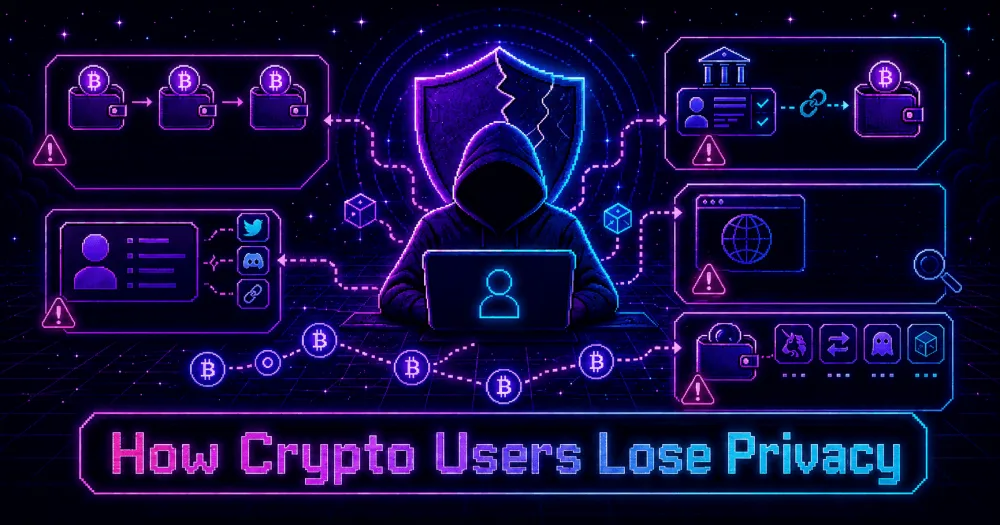
The same errors show up again and again:
- Reusing addresses
- Moving everything through one wallet
- Posting wallet screenshots
- Using public ENS names for private activity
- Connecting the same wallet to every app
- Withdrawing from KYC exchanges directly into public wallets
- Merging separate wallets later
- Signing suspicious transactions
- Ignoring browser and IP metadata
- Assuming Bitcoin is anonymous by default
Most privacy failures do not happen with drama. They grow out of boring mistakes repeated too often.
Easy Privacy Tips for Beginners
A solid starting point looks like this:
- Buy cryptocurrency through a reliable legal platform.
- Withdraw to a private wallet used only for receiving funds.
- Store long-term holdings on a hardware wallet.
- Keep a small spending wallet separate from savings.
- Use a separate DeFi wallet for apps.
- Use fresh addresses when possible.
- Avoid linking wallet addresses to real names online.
- Keep records privately.
This setup will not make someone vanish. It will make random connections tougher to trace, casual tracking weaker, and public exposure less likely.
Can You Use Crypto Without Leaving a Trace?
Complete anonymity is rarely realistic, especially when everyday tools leave traces. Exchanges may log activity. Analytics firms may connect patterns. Wallet apps may collect details. Websites may track behavior across sessions. Public ledgers expose links many users overlook.
Strong practical privacy works better. Reduce what people can see. Split activity across separate spaces. Avoid obvious address links. Stop sharing transaction records freely.
The real way to use crypto anonymously comes from routine, not one perfect tool. Doing the same smart steps every time matters more than chasing a single fix.
Final Checklist for Anonymous Crypto Use
Before moving funds, ask:
- Could someone link this wallet to my identity?
- Have I used this address before?
- Could this transaction expose my full balance?
- Is private money flowing into a public wallet?
- Could the amount or timing connect two profiles?
- Am I using a risky website or app?
- Do I understand what I am signing?
- Are long-term savings separate from spending funds?
- Am I accepting privacy promises without checking them?
When confusion hits, pause. Errors with crypto privacy often last.
Conclusion
Traces often follow digital cash. Visible transactions show up in searches and stay public forever. Stopping connections early beats trying to clean them afterward.
To use crypto anonymously, keep wallets apart, use fresh addresses where possible, hold your own keys carefully, stay alert around exchanges, limit metadata exposure, and keep consistent habits. Privacy coins and specialized tools may help in some cases, but they add complexity and possible legal questions.
The practical path matters more than fancy language. Every wallet can become a trail. Every address might tie back to you. A rushed transaction leaves tracks like steps in fresh snow. Staying sharp about that protects privacy better than chasing buzzwords.
FAQ
Can you use crypto anonymously?
You can use crypto more privately, but full anonymity is difficult. Most ledgers display transactions publicly, so the goal is to reduce links between your identity and wallet activity.
Is Bitcoin anonymous?
No. Bitcoin is pseudonymous. It hides real names but leaves visible transaction records. Address reuse, exchange withdrawals, timing, and patterns can connect activity back to a person.
What is the best way to use crypto anonymously?
The best way to use crypto anonymously is to use different wallets for different purposes, avoid address reuse, keep personal identity away from wallet activity, control your own keys carefully, and limit leaks from apps, browsers, and transaction habits.
Do privacy coins make crypto anonymous?
Privacy coins can improve transaction privacy, but they do not hide everything. Exchange records, wallet behavior, metadata, and user mistakes can still reveal links.
Are cryptocurrency tumblers legal?
It depends on location and the specific service. A tool allowed in one place may be restricted somewhere else. Some services carry sanctions, monitoring, or compliance risk.
What is the biggest crypto privacy mistake?
The biggest mistake is putting all activity into one wallet. Address reuse, public wallet posting, KYC withdrawals, DeFi activity, and personal payments can quickly form a clear map of someone’s crypto use.