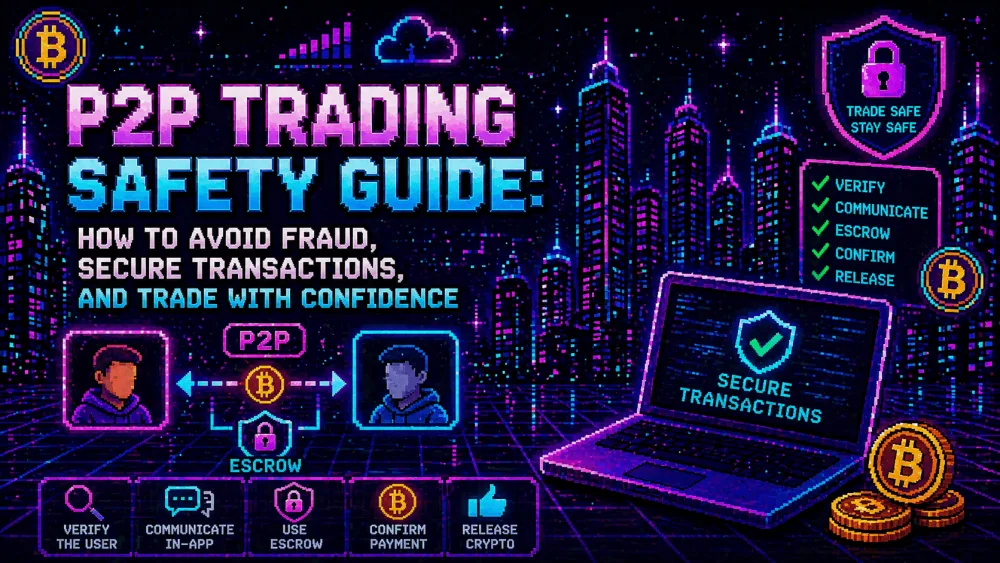
Out here in the shifting world of online money, staying safe while doing p2p trades shapes how well things go. By 2026, trading directly between people will still give wide-open control, yet it will require more attention from anyone taking part. Because of that, knowing what matters most helps each deal stay steady, without risk creeping in where it shouldn’t.
Contents
- What Does Peer-to-Peer Trading Mean and How Does It Function?
- What Peer-to-Peer Cryptocurrency Trading Means
- How Peer-to-Peer Networks Handle Exchanges
- Why P2P Trading Safety Still Matters in 2026
- Most Common P2P Trading Scams to Be Aware Of
- Staying Safe in P2P Trading
- Comparing Binance, Bybit and Other Major Platforms
- Risk Management in Peer-to-Peer Trading
- What To Do After A P2P Trading Scam
- Future of P2P Trading Security: What Is Changing
- FAQ
What Does Peer-to-Peer Trading Mean and How Does It Function?
Getting good at safe peer-to-peer crypto trades means knowing how it really works. Traditional exchanges use automated systems to pair buyers with sellers through order books, yet P2P skips that middle layer entirely. Real people talk directly, set their own terms, and deal face-to-face in digital form. Flexibility shows up right away when rules bend without breaking trust. Each move relies on mutual agreement instead of algorithms running everything behind a screen.
Related: How to Buy Bitcoin (BTC): a Step-by-Step Guide
What Peer-to-Peer Cryptocurrency Trading Means
Most times, people just swap cryptocurrencies face-to-face online, no middleman involved. Picture something similar to auction sites or local buy-sell groups on the web. Instead of waiting for approval, one person talks straight to another. Deals happen through chat, and prices get worked out together. Payment options? Pick whatever feels right. Each step stays between the buyer and the seller. It runs like a handshake deal, only digital.
How Peer-to-Peer Networks Handle Exchanges
Even though it feels like trading straight between people, sites such as Binance or Bybut still step in behind the scenes. These places set up the space where buyers find offers posted by sellers. What matters most – they offer p2p escrow protection. The moment a deal starts, the seller’s coins get stored in a secure hold spot. Only after the buyer shows proof of bank transfer does the release happen. That way, nobody walks away with cash or crypto before fulfilling their part.
Read more: Binance Research: Bitcoin Shifts From Lagging Asset to Leading Indicator
Key Benefits and Risks of P2P Trading
Low costs stand out right away – fees vanish or stay tiny. Reaching buyers everywhere becomes possible through countless payment methods, such as bank transfers, digital wallets, and even physical cash. Yet p2p crypto trades carry heavy dangers too. A real person waits across every deal, opening the door to tricks, fake payments, and sending mistakes. That personal touch powers the system just as much as it breaks it. Seeing this truth clearly marks the beginning of staying safer in peer-to-peer markets.
Why P2P Trading Safety Still Matters in 2026
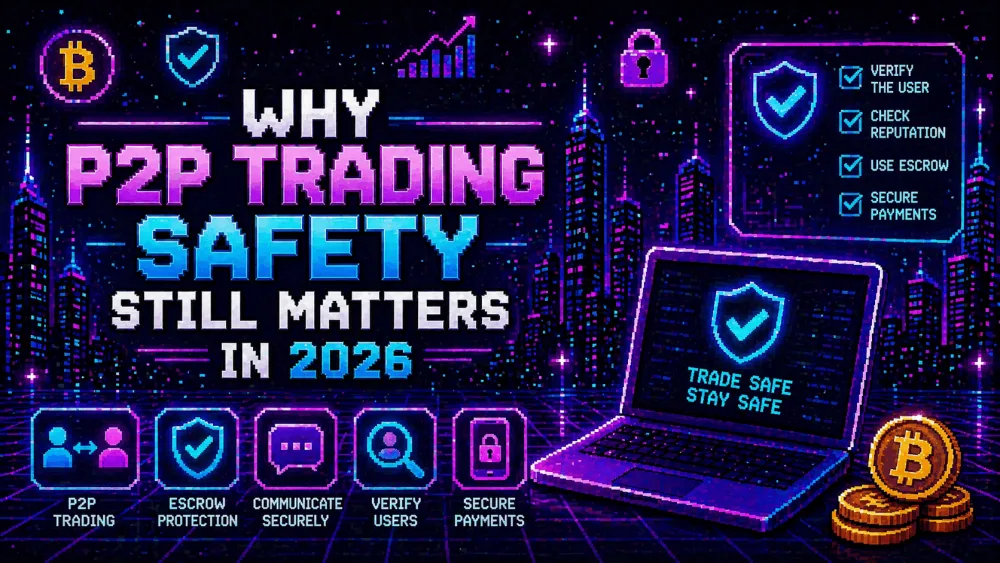
Right now, the risks are bigger than ever before. Because so many people use cryptocurrency, hackers have stepped up their game, so protecting p2p exchanges matters more than it did yesterday.
Rising P2P Fraud and Scam Cases
Out in the open, today’s scams come from teams, not solo players. They lean on bots, fake videos, and stronger tricks than before. With so many trades happening шт 2026, hiding gets simpler for them. Spotting danger early matters more now – long before any deal starts.
The Role of Platform Security and User Responsibility
Even with smart tools watching trades, someone still has to hit “Release” when cash hasn’t landed. Tech helps, yet the final call sits with you. Systems build strong walls around deals, unlocking them depends on your timing. Protection splits down the middle – safety nets come from software, though choices belong to people.
Most Common P2P Trading Scams to Be Aware Of
What guards you most? Awareness does. Spotting these signs fast makes peer-to-peer exchanges safer by far, so stay sharp when things unfold.
Fake Payment Confirmation Scams
A photo shows up more than anything else in these tricks. Someone buys something but sends a doctored image – maybe a tweaked bank screen or a phony message that seems real at first glance. Then they push hard for you to let go of the cryptocurrency right away. What helps when dealing with peer-to-peer trades? Look only at what your actual banking app displays under current funds. Ignore any picture someone hands over
Chargeback Fraud Explained
Payment issues pop up when trading crypto peer to peer. Sellers suffer if buyers reverse payments after getting coins. One common trick involves using services that let users cancel transactions later – some credit cards do this, so does PayPal’s Goods and Services feature. Once the buyer has the digital money, they call the bank, saying it was fraud. That triggers an investigation – and the seller often loses both cash and cryptocurrency. Preventing trouble means picking transfer types that stick: regular wire transfers work well. So can informal send-money tools be used by people who know each other? These choices block surprise reversals.
Related: Crypto Scam Alert 2026: 3 Projects Already Red-Flagged by Experts
Phishing Attacks and Fake Platforms
Fake websites pop up pretending to be Binance or Bybit. An email arrives saying your P2P access is frozen – click here to fix it. That link steals your login details in seconds. Your funds vanish soon after. Spot the real site by checking the web address carefully. Better yet, stick to the actual app on your phone.
Impersonation of Buyers or Sellers
Picture this – someone copies a well-known trader’s photo, grabs a name like “CryptoKing_1” when the real one is “CryptoKing1”. Often, they slip into chats pretending to be help staff. Instead of helping, they ask for your login details. Or say you must send money to unlock your account. Remember: real support won’t ever demand fund transfers through messages. Watch how these fakes twist trust. Notice small spelling tricks. Spotting gaps between legit contact and fake urgency matters.
Escrow Manipulation Tactics
Scammers might say trading off-platform cuts costs. Yet stepping away means walking out on p2p safety nets. When that shield drops, they can vanish with cash before you react. Blocking follows fast – no warning, no return.
Staying Safe in P2P Trading
To maintain secure crypto trading methods, follow these non-negotiable rules.
Always Use the Platform’s Escrow Services
Cancel any deal right away if someone wants to shift it to WhatsApp or push for a direct bank transfer – report that behavior without delay. Your one real protection is the escrow system. That rule stands firm above all when trading crypto peer-to-peer.
Check Buyer’s/Seller’s Reputation and Trade History
Check the person’s page first thing before you choose Buy or Sell.
Most attempts should finish. Target more than ninety-five out of a hundred. Success means nearly all reach the end.
Most activity shows up after two hundred trades are done. A pattern forms when someone keeps trading often. After a while, regular use means reliability grows. Reaching that point suggests consistency matters. Frequent participation hints at experience building over time.
Linger time matters when it comes to trust; long-standing records tend to carry more weight. A history that stretches further back often feels steadier, simply because it has lasted.
Start by checking the bad comments. They might show whether someone takes too long or pays in odd ways. Hold funds until payment is confirmed.
Avoid Talking Outside the Platform
Messages saved inside the app stay visible to support staff when problems come up. When arguments happen later, what was said outside the system gets ignored completely. Talking deals on other apps means there is nothing left to check on the site. Decisions made over external messaging vanish if proof is needed later.
Turn On Two Factor Authentication and Security Settings
Start with a YubiKey or an app like Google Authenticator instead. These work better than text messages because thieves often steal phone numbers to break into peer-to-peer trading profiles. Relying on something you have – like a device – is smarter than trusting texts that can be rerouted. Keeping your account safe begins here, every time.
Pre-Trade Safety Checklist
Start by looking at your connection. Trading while using shared networks brings risks you can avoid. Stay clear of coffee-shop hotspots. A stable private link keeps things safer than open access points.
Start by checking if the person’s name matches what shows up online. When names differ from the bank record, stop right there. Only move forward when both details line up exactly. A mismatch means risk, better to pause than push through.
Then look at the price. When something seems off – like Bitcoin being sold way cheaper than usual – it might not be legit. A big discount could mean trouble ahead.
During the Trade: Watching Key Indicators
Slow down when someone pushes fast. A glitch in the bank app? That story pops up too much. They claim there is no time – ignore the pressure. Breathe first. Rush never helps clear thinking.
Money moves through Sarah while John trades? That raises suspicion. Could be stolen funds at play here. Maybe someone else controls the account. Unusual patterns like this often hide bigger issues underneath.
Post Trade Checks and Records
After finishing the trade, get the receipt saved right away. Write down the transaction ID along with who you traded with – hold on to it for half a year. Banks might check where the money came from, so having these helps when they ask.
How to Pick Safer P2P Trading Sites
Some exchanges aren’t built the same way. Picking one shapes how safe your peer-to-peer trades really are.
Related: How to Find Crypto Arbitrage Opportunities: A Step-by-Step Trading Guide
Comparing Binance, Bybit and Other Major Platforms
Start by spotting sellers with the Yellow Shield – those are trusted users. Binance P2P stands out because it hosts lots of buyers and sellers. Not just anyone can become a pro seller here – it takes meeting tough rules. When trading, pay attention to who you’re dealing with; verified ones are lower risk. Safety comes from knowing the platform checks its top traders.
Start smart when trading on Bybit P2P – its layout feels clear and straightforward. Rates stay tight compared to others out there. Safety clicks best once you tap into the “Verified Advertiser” option. That little check mark makes space between steady hands and unknowns.
Red Flags When Choosing a Platform
When a site skips ID checks or has frozen accounts before, trouble follows. Days pass before help arrives during peer-to-peer conflicts on some services – money waits too long then. Risk grows when answers lag behind problems.
Risk Management in Peer-to-Peer Trading
When it comes to p2p trading, solid safeguards help. Yet staying cautious still matters just as much. Risk doesn’t vanish, even when precautions are strong.
Set Trade Limits and Spread Risk
Spreading your money across several deals always lowers risk. Suppose you’re moving ten grand in USDT▲$0.9991 – try splitting it into five chunks of two thousand. Work with separate trusted sellers each time. Trouble in one deal won’t freeze everything. A snag might drag on, but only part stays locked.
Avoid Risky Payment Options
Payments through Western Union, gift cards, or some e-wallets carry big risks – traceability is nearly impossible, and scams happen fast. Instead, go for real-time bank moves such as SEPA Instant or Faster Payments; there, the payer’s name shows up clearly. What matters? Knowing exactly who sent money.
What To Do After A P2P Trading Scam
When disaster strikes, moving fast matters most.
Immediate Actions to Take
Walk away now. Get out of touch right then. Shut it down before they say another word.
Got a feeling someone else might have your login details? Hit the “Disable Account” option right away to lock things down.
Banks can help when payments go wrong. Should you pay without receiving digital currency, speak up fast. Money moves quickly, yet institutions may step in if tricked. Victims often feel stuck, yet reporting changes outcomes. A call might pause transactions gone sideways. When funds leave hands but goods never arrive, clarity matters most. Financial harm hides in delays. Speak directly to customer teams who handle disputes. Mistakes happen, though protection exists for buyers too.
How to Reach Platform Support
Start by tapping the Appeal option tied to your order. Share the Order ID along with every piece of proof you’ve got. Around-the-clock help is available on trusted sites through peer-based support channels.
Reporting Fraud and Legal Options
Start by reporting big losses to your area’s cybercrime team – like IC3 if you’re in the U.S. or Action Fraud for those in the U.K. The scammer’s banking info should reach them, along with any KYC data held by the service used; law enforcement has ways to pull that through legal requests. Finish only when all pieces are passed on.
Future of P2P Trading Security: What Is Changing
Into 2026, staying safe with p2p crypto means adapting alongside new tech shifts. Though tools change fast, clear habits still matter most when protecting digital assets online.
AI Systems That Detect Fraud
Now, artificial intelligence helps platforms watch how people trade, moment by moment. When someone acts unlike their usual self – say, signing in from a different nation, then rushing to offload assets – the software hits pause on that move until a human can check it.
Decentralized Identity Verification
Out on the open web, old KYC methods are slowly fading. Reputation now sticks to a wallet, showing up everywhere that person goes. Because of this link, scam attempts between users lose ground – actions follow identity without escape. Soul-bound Tokens make sure one mistake isn’t easily left behind. Trust builds differently when every move is visible by design.
Regulatory Changes in P2P Markets
Clearer rules for peer-to-peer trading are arriving through government action. Though extra forms come with it, fairness grows when scams happen because people gain stronger legal backing. Platforms face steeper responsibility now under these updated terms.
FAQ
Is P2P trading safer than using a centralized exchange?
That answer shifts based on how cautious you are. While P2P gives extra control over funds and messages, custodial platforms guard assets automatically. Following clear steps in a p2p protection plan often makes peer trades just as safe.
Start by checking the payment details carefully. A mismatch like this might just be a mistake. Sometimes people add extra for shipping without saying so. Yet it could also signal something risky, worth pausing over. Reach out to the sender only through official channels. Refund any excess promptly when confirmed safe. Keeping funds longer than needed tends to backfire. Better to act clearly and slowly than fast and unclear.
This usually points to a triangular scam at play. Hold off on sending any cryptocurrency just yet. Get in touch with support first – find out how to send the extra money back where it came from.
Can I get my money back from a bank transfer?
Banks often treat transfers as done deals once sent. That is the reason vendors prefer these payments, yet it demands full certainty from you prior to sending digital currency.
How do I know if a merchant is “verified”?
A green tick or small shield beside someone’s name – on platforms like Binance, Bybit, or OKX – means they’ve passed tighter checks. Their presence is backed by a financial deposit held by the platform.
Why is my bank account being flagged after P2P trading?
Most banks watch out for sudden spikes in money moving through accounts, especially when it comes from people you do not know. Instead of mixing everything, set up one account just for digital currency activity. Write down each transaction clearly so there is proof if questions come later.
Staying alert helps. Discipline matters just as much. Rewards come through careful steps, yet risks fade when attention stays sharp. Bad players lose interest if you move with purpose. Safety grows where habits stay consistent. Trade aware.