Some jobs at Coinbase have disappeared lately, roughly one in seven. That shift speaks volumes when you look closely at crypto’s path right now. This isn’t being sold just as saving money on payroll. Instead, leaders point to an evolving vision – driven by artificial intelligence, reshaping how things run.

Smaller groups handling more work, less oversight stacked up high, systems doing tasks once done by people – all meant to speed everything up. How well that works remains tucked inside tomorrow.
Here lies a choice: pause now to prepare for what comes next, yet rush into depending on machines when people once decided. Not just another cut in jobs, these firings at Coinbase echo beyond worker loss, touching those who invest, build, or trust digital money. Sluggish trades tighten profit space; Wall Street eyes grow sharp. Survival might mean acting leaner, even if it costs culture or care.
Contents
What Happened at Coinbase?
Out of nowhere, Coinbase said on May 5, 2026, it was letting go of around 700 workers – nearly one in seven across its worldwide staff. This move should wrap up by mid-2026, give or take a few weeks. Money set aside for the shift? Between $50 million and $60 million, most going toward payouts and support for those leaving.
Certainly, tough times shaped the choice, according to CEO Brian Armstrong, who called it necessary for Coinbase to become leaner, quicker, working better. About 700 people out of 4,951 lost their roles. Pay won’t stop right away – U.S. workers get sixteen weeks minimum, then another fortnight added per year on the job.
What seems like just another wave of job cuts actually hides deeper shifts. Not simply about saving money, this move digs into changing daily operations. Instead of cutting corners, the firm now reshapes routines behind the scenes.
Why AI Took Over the Narrative
What stood out wasn’t the job reduction count. Instead, it was the reason given. Straight from Armstrong, the shift ties to AI use in cryptocurrency systems. Teams now move faster – building, testing, shipping – all because machines help shape outcomes earlier than expected.
So now the Coinbase layoffs feed into bigger talks on machines taking over office jobs. Reports say Armstrong talked up setups like solo workers, slimmed-down chains of command, maybe even using smart software so small crews handle tasks that needed big teams before.
Here’s when things get tricky. Right now, nearly every business claims to be built around AI. Yet claiming your team works better with artificial intelligence isn’t the same as showing it can take over roles in tightly controlled finance settings. At Coinbase, real stakes show up daily – protecting user funds, meeting legal rules, watching for scams, guarding systems, managing what coins go live, holding digital property securely, and working with big clients. Moving fast doesn’t cut it when mistakes carry weight.
Crisis Signal or Strategic Reset?
One way to see Coinbase’s shake-up leans on trouble. Trading in crypto has slowed down lately. The mood among investors feels less excited now. Exchanges still swing hard with market ups and downs. Lower trade numbers mean less income from fees. Seen like that, letting staff go seems like holding back.
One take gives them the benefit of the doubt. Perhaps Coinbase is getting ready ahead of the market shift. Should AI actually cut through red tape, move code faster, free engineers up some, and assist with common customer tasks, then the learner team might still deliver solid returns while keeping innovation alive.
Truth isn’t always one thing. Even if Coinbase stands on solid ground, stress shows up anyway. Faith in artificial intelligence doesn’t stop budget trims when times shift. When the digital coin wave slowed, keeping large teams felt less right.
The Real Pressure Behind the Layoffs
For most of its life, Coinbase has moved with the rhythm of digital coins. Prices climb – Bitcoin, Ethereum, others – and trading picks up. More activity means bigger flows from big investors, too. Revenue follows that pulse without delay. Quiet markets change everything fast. Platforms like this one notice before most.
What sets Coinbase apart from most old-school fintech firms isn’t just how many people use it or how slick its tools are. Instead, the overall feeling around crypto plays a big role. When prices rise, the business seems unstoppable. But when things go quiet, spending stands out quickly.
Here’s the thing – those Coinbase job cuts aren’t just about AI. Sure, artificial intelligence might shape their path forward, yet what’s really pushing them comes from outside. Pressure builds as investor eyes narrow on profit trends. Efficiency becomes urgent when scrutiny looms over staffing levels. Staying ahead means showing control now, not later. Tough choices today aim to quiet doubts tomorrow.
What Coinbase Aims to Be
Picture this. A so-called “AI-native company” isn’t some shiny concept – it just means smaller crews getting further by leaning on smart software. Think developers tapping into AI helpers when writing code. Support groups might skip manual replies, letting systems respond instead. Compliance? They’re scanning actions through pattern-spotting programs. Even those shaping products can try out concepts more quickly than before.
Should things go smoothly, Coinbase might edge toward a tighter way of running operations. With leaders diving deeper into daily tasks, oversight gets real. Smaller groups handling work means less waiting around. When steps in workflows get quicker, momentum builds naturally. Rolling out new products may shift from dragging on for months to wrapping up in just days or weeks.
Yet here’s the catch. Trimming down staff often goes too far. Skilled folks who grasp tricky scenarios might vanish – those aware of rules, user patterns, and system risks. In cryptocurrency, tiny oversights weigh heavily. A flawed launch sequence, a slip in legal steps, or a gap in safeguards can bleed out way more cash than keeping extra hands would ever spend.
Why Workers and Observers Have Concerns
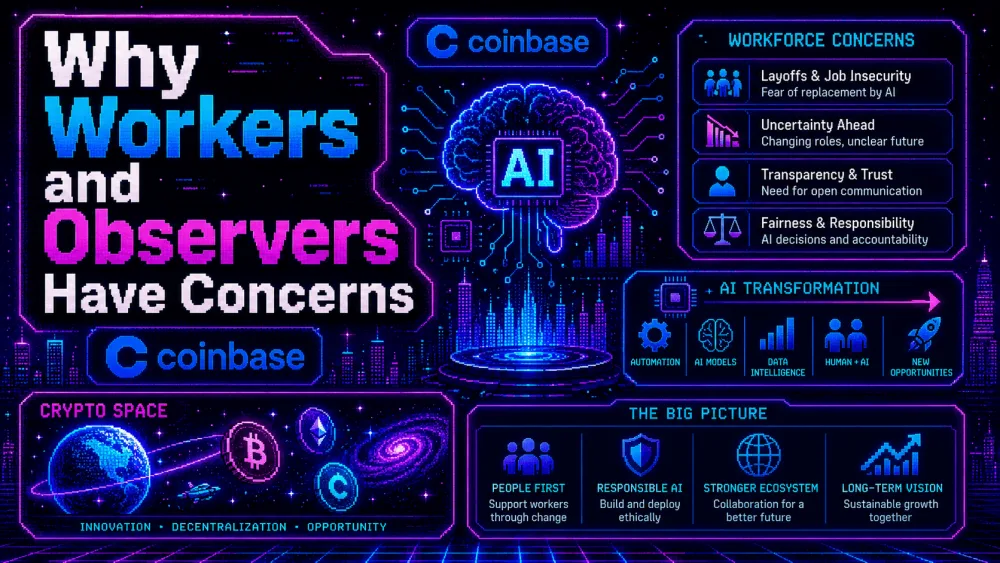
What happened at Coinbase hits hard when you think about real lives affected. Roughly seven hundred workers got let go after leaders said the company must shift how it operates. Though some support was offered, losing a job still shakes everything. It matters more than numbers suggest.
Some people are uneasy about what gets communicated throughout Silicon Valley.
When a big cryptocurrency platform claims artificial intelligence allows slashing jobs by nearly one seventh, it sets an example others might follow just to sound current. That phrase – “AI transformation” – could turn into nothing more than corporate code for shrinking payrolls without saying so outright.
Here’s a different issue – mood. Those still on staff might sense pressure to handle heavier loads without support, all while learning new tech at the same time. This push brings pace, yet often drains energy fast. Thin structure does not mean strong bones.
What This Means for Crypto
One way or another, Coinbase’s move into artificial intelligence might set the pace. Watch closely – smaller trading platforms, digital wallets, data trackers on blockchains, even groups building decentralized finance tools – they’re all paying attention. Public moves around AI staffing aren’t going unnoticed. How do big names adjust teams while adopting smart systems? That shapes quiet decisions elsewhere.
One way or another, faster processes at Coinbase might push the industry closer to using AI across daily tasks. Jobs in crypto won’t stay untouched – some shifts are already in motion. Support work that repeats itself? Likely handled by systems soon enough. Writing standard content, filing reports within companies, even chunks of code for common functions – all are shifting toward machine handling. Compliance steps, too, especially the predictable ones, could run on automation more often than not.
Yet trust remains shaky in the crypto world. People are nervous – about breaches, crumbling platforms, murky rules, and spotty support. When AI trims staff, firms might seem distant, unbothered. Those cost wins may vanish if users walk away.
Related: Top 5 Altcoins That Could Surge 10x–100x Bull Run in 2026: High-Potential Crypto Picks
Investor Response Shapes Market Patterns
Looking at it through an investor’s eyes, the reasoning makes sense right away. Fewer people on staff often leads to less money spent day to day. When teams move quickly, profits tend to grow sharper. Should Coinbase reduce spending without slowing down new features, investors might respond well. One way or another, results will show in how the stock moves.
Yet caution makes sense for those putting money in. Not merely a tech tool, Coinbase operates as an approved marketplace for digital coins. Risks show up in trading shifts, rule adherence, asset safety, and public trust. Streamlined setup holds value only when safeguards remain firm.
What really matters isn’t about how quickly artificial intelligence produces lines of code. Instead, it hinges on whether such technology aids Coinbase in navigating choices amid constant market shifts. Moving fast means little when insight is missing. That kind of rush weakens rather than strengthens.
Crisis Or Blind Faith In AI?

Maybe it’s panic. Or maybe just trust in machines taking over. Truth? Feels like a red flag waving beside a risky gamble.
Coinbase slashing jobs shows things are tough. When markets feel stable, companies do not let go of staff so fast. A drop in user interest has hit hard lately. Trading volumes shrinking put stress on operations. Pulling back now might help it survive later. Hard times call for sharp choices, even at big firms. Rough conditions push changes nobody wants.
Yet here’s the twist: Armstrong isn’t merely cutting expenses. His push reshapes the entire business to run on AI-driven processes from the start. This shift aims at a long-term direction, far beyond number tweaking. A quiet revolution, really.
Overconfidence poses the real threat here. While artificial intelligence speeds up capable teams, wisdom built over time still holds weight – something machines cannot mimic. Judgment and responsibility remain human tasks. Efficiency gains at Coinbase could come with hidden costs. What looks like waste might just be seasoned insight doing its job quietly. Some of those trimmed roles carried more than routine work – they held awareness that algorithms lack.
Long-Term Outlook
For now, what happens next at Coinbase stays unclear. Right away, expenses drop – that much is obvious. A sharper focus on artificial intelligence follows close behind. Investors who want tighter control might like the look of things. The crypto market has been quiet lately, so some see this as a logical move.
Later brings the true challenge. Staying on track with solid offerings – that’s what matters for Coinbase. Trust isn’t built once; it needs constant care from the users’ point of view. Cutting down teams won’t help if rules get tangled along the way. Machines run smarter now, yet staff must not drown in guiding them all day.
Should things go well, Coinbase might stand out as an early example of a big cryptocurrency firm running smoothly on AI-driven processes. When it does not pan out, that 14% reduction could stick in memory – not as progress, but as confusion between efficiency aids and full business strategy.
Right now, Coinbase is saying something obvious. The future of crypto isn’t just tokens, buying and selling, or rules made by governments. Staying sharp matters more – cutting waste, speeding up systems, lasting through messy shifts where machines start doing what people used to do.
FAQ
Why Did Coinbase Reduce Its Staff by 14%?
Facing tough market shifts, Coinbase moved to trim its workforce. Efficiency through AI now guides the path forward instead of old methods. Teams are being reshaped slowly behind the scenes. A tighter structure is taking form as priorities change.
How Many Coinbase Employees Were Affected?
Some seven hundred staff lost their positions – around one in every seven workers at Coinbase worldwide.
Is Coinbase Using AI Instead of Workers?
Some jobs lost at Coinbase aren’t being swapped out for machines. Workers stepping back isn’t always because code took over – sometimes it’s just that fewer people can do more now. Tools shaped by artificial intelligence help tighten up the crew needed to get things done. Speed picks up when tasks stack differently behind the scenes. Not every gap left by a person gets filled by tech, yet the work still shifts around quietly.
What Does This Mean for Crypto Jobs?
Routine work in crypto could fade as machines step in. Instead, staying sharp on decisions might matter way more than before. Think about it – rules, safety plans, big-picture moves – they start standing out when tech handles the rest. A different kind of skill begins to pull weight where buttons used to do everything.
Is Coinbase AI Shift Risky?
True, machines work fast. Still, Coinbase handles money – risky stuff. Cutting corners on supervision might save cash now. Yet poor support or broken rules? That kind of cheap fix bites back hard down the road.