Strategy co-founder Michael Saylor is opposing the BIP 110 Bitcoin proposal, warning that it could set a dangerous precedent.
Michael Saylor, co-founder of Strategy, the world’s largest publicly traded corporate Bitcoin holder, has opposed the BIP 110 Bitcoin upgrade, warning that changing consensus rules to fight spam could set a more dangerous precedent than the spam itself.
In a July 11 post on X, Saylor argued that Bitcoin shouldn’t change its core transaction rules to block data some users consider spam, saying the greater risk lies in deciding which valid, fee-paying transactions the network should accept. He wrote:
“BIP 110 turns a spam dispute into a consensus change that would invalidate some currently valid, fee-paying transactions. That precedent is the danger.”
Read also: Bitcoin Developers Float BIP-361 Plan That Could Freeze 4M Dormant BTC
What is BIP 110 Bitcoin Upgrade
BIP 110, also known the Reduced Data Temporary Soft Fork, would change Bitcoin’s network rules for one year to limit the amount of non-financial data users can include in transactions.
- The proposal would restore a smaller limit for OP_RETURN, a field commonly used to attach data to Bitcoin transactions, and restrict larger data uploads.
- These methods are used by Ordinals, inscriptions and some Bitcoin-based tokens to store NFTs and token records on the blockchain.
Bitcoin nodes that adopt BIP 110 would reject blocks containing transactions that exceed the proposed limits, even though those transactions are valid under Bitcoin’s current rules.
Pros and Cons of BIP 110
Supporters argue that storing images, text and token records on Bitcoin makes the blockchain larger, forcing full-node operators to download, store and relay more data.
- According to Bitcoin Core’s official download page, the software requires an initial download of about 600 GB and adds another 5 GB to 10 GB each month.
Critics say BIP 110 would introduce a form of protocol-level censorship by changing Bitcoin’s rules to reject fee-paying transactions that are valid today.
The BIP 110 specification acknowledges that the proposal would intentionally block data-storage use cases. BIP 110 can lock in early if miners signal support in at least 55% of blocks during a 2,016-block period, below the 95% threshold traditionally used for permanent consensus changes.
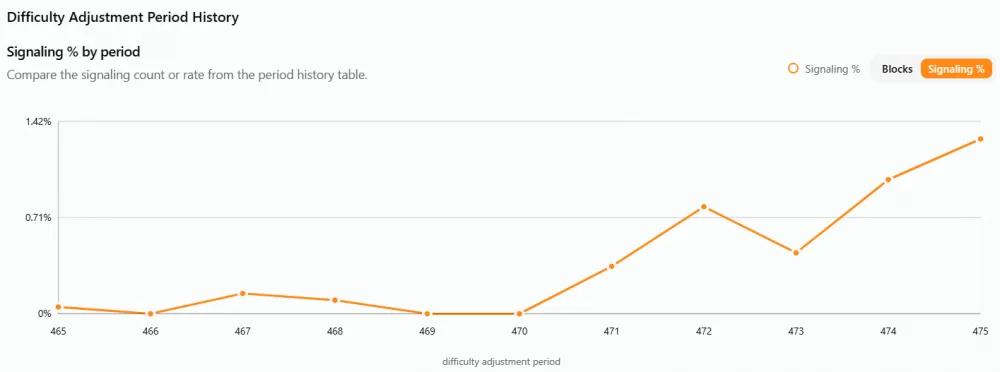
According to the public BIP 110 signaling monitor, miner support stood at just 1.3% as of July 13, while the proposal’s voluntary signaling deadline is expected in August at block 961,542.
Read more: JPMorgan Identifies the Biggest Risk for Bitcoin in 2026