Falling model costs do not reduce overall AI spending. ARK Invest says lower costs widen adoption and push companies to buy more compute, networking, and storage.
The firm now expects annual AI infrastructure spending to approach $1.5 trillion by 2030.
ARK published the report on March 25. It argues that AI demand still outpaces falling costs. The firm says training costs now drop about 75% each year. Inference costs for capable models fall even faster, by about 95% annually. That shift makes more use cases commercially viable. It also raises demand for data centers and accelerated computing.
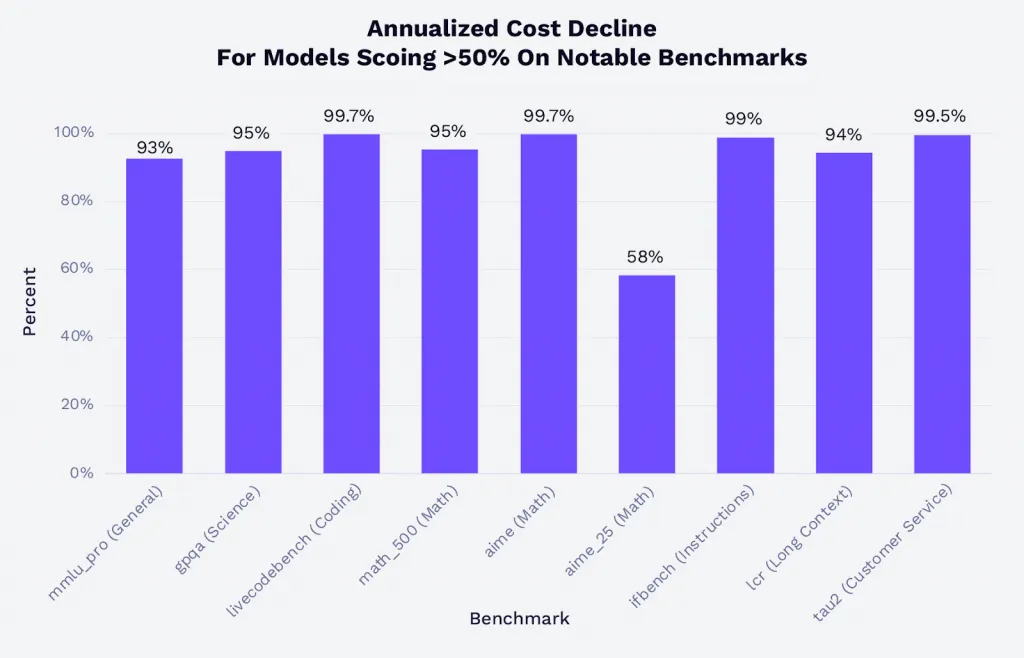
The report links that demand to a sharp spending jump. ARK says global data center systems investment grew 5% annually through 2022. It then accelerated to 30% over the past three years.
The firm expects that market to reach $653 billion in 2026. It also projects AI infrastructure spending will rise from about $500 billion in 2025 to nearly $1.5 trillion in 2030.
Lower costs expand demand
ARK’s core point is simple. Cheaper AI brings in more users. More users create more workloads. More workloads require more hardware.
The firm says AI adoption reached 20% in three years. It says the internet needed more than six years.
Enterprise usage shows the same pattern. OpenAI said in late 2025 that more than 1 million business customers paid for its products. Anthropic said in February 2026 that its revenue run rate reached $14 billion.
Nvidia leads, but custom chips gain ground
ARK says Nvidia still dominates the heaviest AI workloads. It points to Grace Blackwell in large-model inference. At the same time, AMD has narrowed the gap in total cost of ownership for smaller models.
Hyperscalers also push harder into custom silicon. Google continues to expand TPU. Amazon backs Trainium. Microsoft develops Maia.
ARK cites SemiAnalysis estimates that custom chips can cut internal compute costs by 62% versus Nvidia-based systems in some workloads. The report expects ASICs to claim more than one-third of AI compute by 2030.