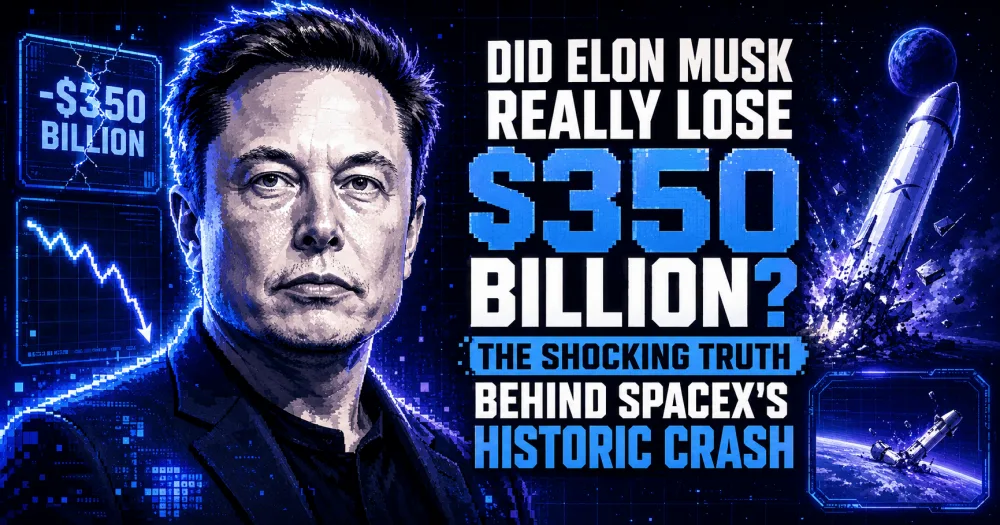
A big number started spreading – $350 billion wiped out from Elon Musk’s name, thanks to a SpaceX rocket failure. Truth bends differently here. That sum never sat in any wallet ready to vanish. Instead, paper worth shifted – the kind built on shares, mainly locked in SpaceX – after markets jerked hard once trading began. Numbers danced downward fast when reality hit post-launch.
Here’s why that difference counts. Stock-based riches grow quicker than money made from actual labor, yet vanish before real spending happens. Elon Musk’s recent losses reveal how these rich lists function. Paper values become net worth overnight, despite zero transactions taking place.
One moment, it seemed like disaster struck. Headlines screamed about Elon Musk losing 350 billion dollars. Others claimed it was his worst financial blow ever. Some even said his fortune had collapsed overnight. Truth? Not quite so dramatic. Rockets did not explode. Banks didn’t call in loans. Wealth shifted because expectations changed. Investors began seeing flaws where they once saw flawless growth. What looked unshakable began to face questions. Confidence dipped just enough to reshape numbers.
Contents
- Did Elon Musk Really Lose $400 Billion? The Truth Behind the SpaceX Crash
- What Actually Happened to Elon Musk’s Net Worth?
- SpaceX Stock Crash Explained
- The Real Reasons Behind the Market Collapse
- How SpaceX Became a $2 Trillion Company in the First Place
- What This Means for Elon Musk’s Financial Power
- Is SpaceX in Trouble or Just Resetting?
- Will Elon Musk Recover the Lost Wealth?
- Key Takeaways: Myth vs Reality of the $400 Billion Loss
- FAQ
Did Elon Musk Really Lose $400 Billion? The Truth Behind the SpaceX Crash
What Sparked the $400 Billion “Loss” Claim?
A number started it all. Down went SpaceX stock after its IPO high, while Musk held plenty. Plugging the new price into his pile made the loss seem massive. A few said thirty-five followed by nine zeros. More guessed four hundred instead. Several blurred his wealth with the company’s overall slide.
Read more: Elon Musk Net Worth More Than Bitcoin — Could Musk Actually Buy Every BTC on Earth?
SpaceX IPO Volatility and Extreme Market Repricing
A stampede of interest hit the SpaceX debut, fueled by tight shares on the market alongside dreams of rocket flights, satellite internet, artificial intelligence, red planet colonies, military deals, and one man’s fame. Momentum pulled in first-day investors. Those who owned early started selling. Traders betting on drops stepped in to challenge the number on the screen. This explains why a plunge after an IPO occurs even when prices stay higher than launch levels.
Why Headlines Are Misleading the Real Story
A wrong idea floats around about the explanation of Elon Musk’s financial loss. Shrinking net worth does not mean money vanished from his pocket. Cash disappears only upon selling something for less than bought for. Headlines paint drama where none exists yet. Value on paper drops – sure – but that is not spent coins. Thinking otherwise mixes up numbers with actual spending.
What Actually Happened to Elon Musk’s Net Worth?
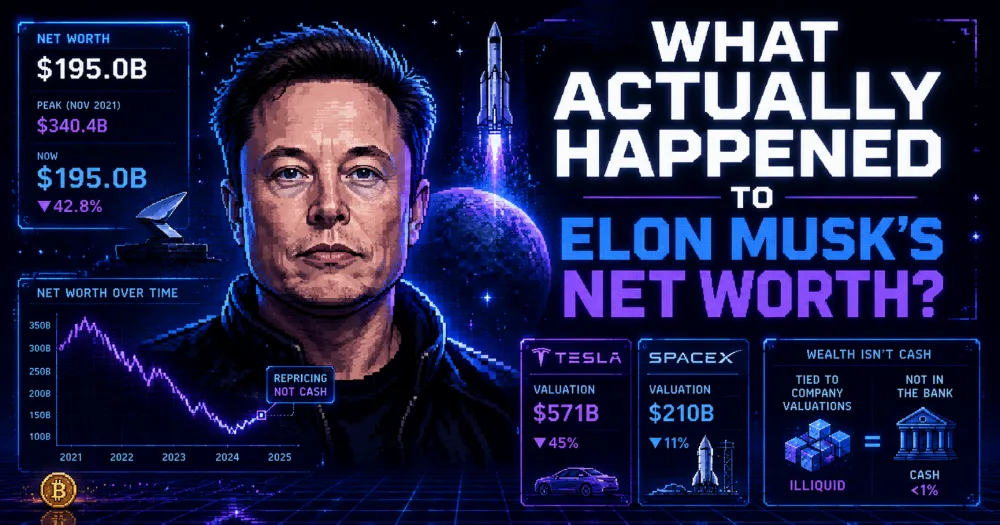
Breakdown of Musk’s Wealth (SpaceX vs Tesla)
Every dollar of Musk’s fortune is tied to company shares. After going public, SpaceX took center stage in his holdings, whereas Tesla held less weight despite its size. So when SpaceX stock shifts, headlines shout about Elon Musk’s daily net worth swing. That moment triggered the multiple Google queries about how Elon Musk managed to lose so much money in one day.
How Much Did He Actually Lose in a Single Day?
One day’s numbers might show more than $150 billion gone, depending on timing. Different tracking tools refresh at separate hours, using their own math. A few see it as part of a wider drop from top to bottom. How much did Elon Musk lose today? That answer shifts based on when you look, how SpaceX ended trading, where Tesla landed, plus which tally of shares counts.
Why the “$400 Billion Loss” Is Not Personal Cash
Most of Elon Musk’s wealth sits in company stock. Shares get priced daily by investors. When SpaceX values go up, so does his net worth. Downward moves pull it lower just the same. That’s what makes asking if he’s still rich seem off track. True, wealth still surrounds him in every measurable way. What matters now isn’t staying alive – it’s access to cash.
SpaceX Stock Crash Explained
Why SpaceX Shares Dropped So Sharply
The excitement gave way to caution as investors started asking questions. Valuation pressure built up fast. Profit-taking followed closely behind. A wider pullback in tech stocks added fuel to the fire. People had flocked to the IPO dream without pausing much. Soon after, questions popped up – does today’s cost rely on perfection tomorrow? This thinking alone explains why the SpaceX share price fell. What changed was simpler than it seems: belief gave way to scrutiny.
The Role of IPO Hype and Early Investor Sell-Offs
Big IPOs usually spark initial buying interest. Because retail buyers seek entry, while big funds aim for positioning, wth news coverage adding fuel. In SpaceX’s case, Musk’s track record deepened it. Alongside how few space stocks exist. Yet soon, profit-taking emerged. Even as others held back, eyeing lower prices. A shifting momentum followed without any warning.
Impact of Valuation Reset After Peak $2T+ Levels
When prices climbed past $2 trillion, SpaceX stopped being seen just as a launch business. Instead, investors treated it like a mix of satellites, web service, military tech, and artificial intelligence. Believing in that idea meant trusting every piece would work perfectly together. A drop in valuation didn’t mean the company lost worth. It simply showed that the old number gave zero margin for late launches, borrowing costs, rivals stepping up, or mistakes in delivery.
The Real Reasons Behind the Market Collapse
AI Bubble Fears and Tech Sector Sell-Off
SpaceX shifted from an outlier in space tech to a piece of a broader financial conversation because of AI. Not long after, people started wondering if spending on AI hardware, computing hubs, and software firms had gone too far. Its push into artificial intelligence pushed the price tag higher at first. Later, that very drive raised doubts about profit size, cash demands, and when things might actually pay off.
High Debt, Expansion Costs, and Cash Burn Concerns
Heavy spending marks SpaceX’s path. Building rockets, satellites, ground stations, securing frequencies, running data hubs, using powerful computers – none come low-cost. Fast growth often hides deep red ink underneath. What really matters now sits buried in the current share value: just how much tomorrow’s earnings are already priced in.
Lockup Expirations and Insider Selling Pressure
Timing shapes how stocks react when insiders might sell. With restrictions still active, few shares move around. Once limits are lifted, supply could rise suddenly. Markets tend to bake in that possibility ahead of time. Rumors about upcoming sales sometimes drag prices down even without proof.
How SpaceX Became a $2 Trillion Company in the First Place
H3 Record-Breaking IPO and Retail Investor FOMO
SpaceX held pieces that could’ve shaped an unprecedented stock debut. A well-known creator stood behind it, alongside worldwide fame, an operational space-based web service, links to state projects, plus visions aimed at what comes next. Public excitement poured more into the mix. People saving money for opportunities like this one had waited years – private status kept them out until now – they noticed chances might open up.
AI + Space Narrative Driving Overvaluation
Just saying “AI plus space” feels like inviting sky-high prices. Tied together, they tap into two powerful market stories. Automation drives one piece. The other looks to build systems outside our planet. Together, those ideas support higher valuations. Yet confusion grows – when Starlink income blurs with AI processing expenses, launch cost realities, and dreams about Mars – the risk of a bubble rises.
Related: Top AI Crypto Tokens June 2026: FET, RNDR, TAO, NEAR, AGIX
Why Early Valuations Were Extremely Aggressive
Big price tags rest on bold guesses. For SpaceX, backers had to buy into fast Starlink gains, unmatched rocket launches, leaps in artificial intelligence, along with industries not fully built yet. Each idea stands within reach. Timing turns the trick. Even solid companies stumble as investments when prices jump ahead of reality.
What This Means for Elon Musk’s Financial Power
Why Musk Is Still the Richest Person in the World

Still near the top, Musk kept his spot despite losing value. Though markets dipped, he stayed well above peers in nearly every list. The tumble mattered less only because he began so high. What changed wasn’t position – but perspective.
How His Wealth Is Structured (Equity, Not Cash)
Most times, when folks talk about Elon Musk’s fortune, they picture some giant treasure chest. Truth is, what he owns looks more like a bundle of heavy bets on certain companies. This setup lets him steer decisions while riding the gains – still, swings in stock prices shake things up fast. Those holdings? You can slice them into loans or sell bits now and then, just not spend them straight out of an account.
Why Net Worth Can Swing Hundreds of Billions Overnight
One dollar up or down hits harder when you hold millions of shares. Big company size turns small shifts into massive swings in net worth. What sets Musk apart isn’t just scale – it’s how closely people watch each flicker in value.
Is SpaceX in Trouble or Just Resetting?
H3 Bull Case: Long-Term Space and AI Dominance
Should profits stick around, today’s drop might just be a pause. Still, SpaceX carries weight – its reach spans launches, global internet, strong design talent, recognizable name, backed by deep funding. A bounce back? Possibly. This stumble could mark a market adjustment instead of a collapse. Clear advantages remain, even amid setbacks.
H3 Bear Case: Overvaluation and Profitability Risks
One concern isn’t whether SpaceX is real. Instead, the price grew faster than what the company actually does. Right now, outside investors want profits, cost control, money coming in – plus proof that AI will make sense here. Some remain uneasy about how things are run. Even though Musk’s grip may help big moves happen, it leaves others with less say.
What Analysts Say About the Correction
Some experts admire the firm but question what it’s worth. Fair enough. Even great businesses can cost too much. Right now, believers need results. Progress on Starlink counts. So do launch profits, earnings from artificial intelligence, how cheap or dear borrowing is, plus moves by top insiders.
Will Elon Musk Recover the Lost Wealth?
What Needs to Happen for SpaceX to Rebound
Should Musk hope to erase those imaginary losses, SpaceX stock must first win back confidence. Not through noise, but steady movement in the market, clear direction from leadership, and proof that expansion leads straight to earnings. The climb back rests on figures – solid ones – that make the case real again.
Role of AI Expansion and Starlink Growth
Now here comes Starlink – real users, steady income, room to grow. Instead of vague promises, it delivers working service. On the flip side, AI opens doors yet drags along heavy bets. Should profits from space internet climb while artificial intelligence budgets stay tight, trust might slowly come back. But when spending on machine learning climbs faster than earnings, questions about worth will surface again.
Historical Examples of Mega-Corrections
Big drops happen often in fast-growing markets. Take Amazon, Tesla, Meta, and Nvidia – each faced steep falls after going public. When hopes run too high, worth shifts like sand. Getting back up means doing what was promised. How well things get done decides the outcome.
Key Takeaways: Myth vs Reality of the $400 Billion Loss
Why the Headline Went Viral
One moment it was quiet. Then came the surge – Musk, a record IPO, and a sum so vast it slipped comprehension. Not only that, but the tale wore a familiar shape. The world’s wealthiest person faced an enormous drop. This version stuck. Clicks followed fast. Money in hand mixed with numbers on screens. Worth shifted without moving a dollar. Estimates changed by dawn.
The Actual Financial Impact Explained Simply
Here’s what happened: when Tesla and SpaceX stock dropped, so did Elon Musk’s total estimated value. Most of that loss wasn’t cash leaving pockets – it stayed on paper. His ability to borrow might feel the effect. Yet nobody took $350 billion from him directly. That question – why his net worth shrank – points to shifts in market pricing. Not spending choices. Numbers changed above zero, below radar.
What Investors Should Really Focus On
SpaceX matters more than where Elon ranks on a rich list. Look at how clean the income streams are, what profit levels look like, if borrowing continues, and how much goes into artificial intelligence work. Subscriber growth for Starlink counts. So does the cost per rocket flight. Quiet moves by company insiders selling shares? Worth noting. Headlines scream about personal wealth swings. Real investing hinges on whether this firm can live up to its sky-high valuation moment. Numbers must catch up to noise.
FAQ
Elon Musk’s $350-Billion Loss Question?
That figure shows up just on paper, not in actual money gone. Depending on which tracker you check, the number shifts slightly. Cash in hand stayed the same. Three hundred fifty billion wasn’t pulled from wallets or banks. Value changed on screen, nowhere else.
Has SpaceX’s Value Changed After the Recent Events?
True, SpaceX dropped in market worth since hitting its highest point after going public. Still, that drop did not pull down actual business earnings by the same number. What shifted was how much buyers felt like spending on each share.
What’s Elon Musk’s Wealth Status Today?
Musk still sits among the globe’s wealthiest people, despite the recent dip. Rankings? They keep him right up there, hovering near number one. Public stock shapes his fortune – that means swings happen fast.
What Can Investors Take Away From the SpaceX Stock Drop?
Here’s what happens: stock prices climb beyond reason, even for solid firms. When excitement drives IPOs, small supply meets big buyer interest. Emotions shift fast if stories sound too bold. A turn comes quietly – no warning signs needed.