The SEC crypto rule proposal is a hot topic in the US digital-asset regulatory space. It covers a range of potential implications for crypto securities, crypto custody and exchange rules, DeFi regulation, as well as disclosure requirements for investors.
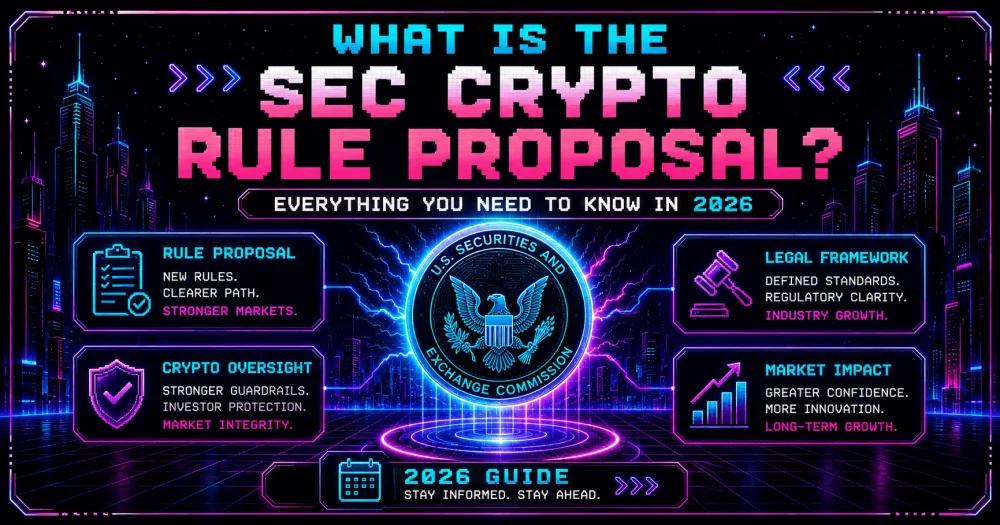
For crypto companies, the proposal has implications for who needs to register with the SEC, what disclosures must be made, and how customer assets should be handled. At the same time, it can affect which tokens investors have access to and how risks are presented to them.
Contents
- 1.What Is the SEC Crypto Rule Proposal?
- 2.Why Is the SEC Changing Crypto Regulations?
- 3.What Does the SEC Crypto Rule Proposal Cover?
- 4.Which Crypto Businesses Could Be Affected?
- 5.How Could the Proposal Affect Investors?
- 6.SEC vs CFTC: Who Will Regulate Crypto?
- 7.How the 2026 Proposal Differs From Previous SEC Crypto Policies
- 8.Industry Reaction to the SEC Crypto Rule Proposal
- 9.Timeline of the SEC Crypto Rule Proposal
- 10.What Could Happen If the Proposal Is Approved?
- 11.FAQ
What Is the SEC Crypto Rule Proposal?
Definition of the SEC Crypto Rule Proposal
The SEC crypto rule proposal is a set of potential regulations that seek to clarify how securities laws apply to cryptocurrencies and crypto-related platforms. The new SEC cryptocurrency rules touch exchanges, brokers, custodians, token issuers, stablecoins, and DeFi protocols. The central question that the proposal seeks to address is: when does a crypto asset constitute a security?
Why the Proposal Was Introduced
The SEC crypto rule proposal was introduced because lawmakers recognized that rapid innovation in the crypto space was outpacing regulation. Before the proposal, many crypto projects had been launched and grown significantly without a comprehensive understanding of how they fit within the existing securities framework. The SEC wants to bring more clarity and investor-protection focus to the industry.
Is It Already a Law or Just a Proposal?
The SEC digital asset proposal is not a finalized law. Some elements of it may take the form of interpretive SEC guidance or formal rule additions, while others may need to go through a lengthy process of public comments, revisions, and approvals before taking effect. Nevertheless, it represents the direction in which crypto regulation is set to evolve in the near future.
Why Is the SEC Changing Crypto Regulations?
Investor Protection Goals
One of the stated reasons for the SEC crypto law changes is the protection of investors. Many retail users interact with crypto platforms without fully understanding the risks associated with a particular token or how custodianship and supply control work in a given protocol. The proposed rules intend to ensure that users are properly informed about risks before investing.
Closing Regulatory Gaps in the Crypto Industry
Crypto exchanges and protocols often operate in a regulatory gray area. A single entity can offer both brokerage services and custodianship, act as a market maker, and launch an exchange for listing digital assets. Moreover, the lines between DeFi protocols and centralized services are being blurred. The SEC crypto regulatory updates are meant to close these loopholes and establish a consistent framework.
The Shift Toward Clearer Crypto Rules in 2026
The shift toward SEC crypto regulation in the US in 2026 represents the transition from an enforcement-driven approach to one that is based on formal rulemaking. In practice, this means that the industry needs to move away from litigation-driven guidance and develop a set of standardized guidelines, registration requirements, and disclosure rules.
Read more: CLARITY Act Blocked Before July 4: Senate Delay Sparks Uncertainty — What Happens Next?
What Does the SEC Crypto Rule Proposal Cover?

Crypto Asset Classification
The core of the SEC crypto rule proposal lies in the classification of crypto assets. A broad range of assets can potentially be impacted, including Bitcoin, stablecoins, NFTs, governance tokens, utility tokens, and tokenized securities. They will need to be differentiated in terms of their economic function and regulation.
Registration Requirements for Crypto Companies
The SEC intends to require crypto platforms to register or seek exemptions from registration if they deal with securities. This applies to a range of entities, including token issuers, brokers, dealers, exchanges, advisers, and custodians. The SEC crypto rules also mention requirements related to audits, net capital, reporting, cybersecurity, and disclosures.
Rules for Crypto Exchanges and Trading Platforms
Crypto exchanges and trading platforms will likely be required to establish listing standards, surveillance systems, order management rules, and surveillance systems if they facilitate trading of crypto securities. In addition, they may be required to delist tokens if they do not meet specific requirements.
Custody Requirements for Digital Assets
The SEC custody requirements are centered around establishing who has control over assets at any given point in time. The SEC wants third-party custody agreements to be transparent and set out what happens to customer deposits if a custodian goes bankrupt. This serves as a safeguard for investors, but it also adds a layer of complexity for crypto exchanges.
Disclosure and Compliance Standards
Depending on the type of asset, protocols and tokens may need to provide information about supply, insider wallets, governance models, and treasury spending. Furthermore, smart-contract disclosure rules, compliance procedures, and record-keeping requirements may be implemented by the SEC.
Which Crypto Businesses Could Be Affected?
Centralized Crypto Exchanges
Centralized crypto exchanges are likely to be the most directly impacted by the SEC crypto rules. This is because they facilitate trading of digital assets, custody funds, and serve as venues for raising capital. If assets that are listed on them are determined to be crypto securities, the exchanges will have to navigate additional regulatory requirements.
DeFi Protocols
DeFi protocols are more challenging to regulate, as many of them are built on smart contracts that execute automatically without human intervention. With that said, The SEC will seek to bring protocols into the regulatory framework, focusing on front-end interfaces, governance, fee collection accounts, and promoter activity. The critical factor is whether there is an entity that has control over a crypto asset.
Stablecoin Issuers
The SEC may subject stablecoin issuers to increased oversight, as they play a critical role in the crypto economy while posing risks to investors. The focus of regulation will be on reserve assets, auditing procedures, and consumer-protection rules. However, payment stablecoins will typically be outside the scope of securities laws, while yield-bearing stablecoins and other products may be impacted.
Token Issuers and Blockchain Startups
Token issuers will need to evaluate how the SEC rules impact their fundraising and disclosure practices, as well as potential liabilities. Projects that launch tokens prior to a network launch or utilize pre-sales to raise capital may find themselves in a more precarious position. In addition, the presence of a meaningful centralized element can increase the risk of being classified as a security.
Crypto Brokers and Custodians
Crypto custodians and brokers are likely to see heightened SEC scrutiny, which may lead to additional requirements pertaining to asset segregation, record-keeping, net capital, and trading surveillance. In particular, custodians will be expected to demonstrate that a client’s assets cannot be covertly used for the benefit of the custodian or other clients. Thus, the SEC cryptocurrency proposal is expected to bring more clarity and protection to users.
Read more: Trump Opposes Bitcoin Tax, SEC Admits ETF Mistakes — What Changes for Crypto Investors in July 2026
How Could the Proposal Affect Investors?
Changes for Retail Investors
The SEC disclosure rules for crypto have the potential to impact a broad range of investors, both institutional and retail. In essence, any person who purchases a crypto asset and holds it in a centralized exchange or custodian is subject to the requirements. In practice, this means that certain assets may no longer be available on US-based platforms due to the inability or unwillingness of the companies to meet the SEC requirements.
Potential Benefits of Stronger Regulation
Stronger US crypto regulation brings several benefits, including improved custody practices, reduced fraud risks, increased transparency, enhanced exchange-level disclosures, and greater institutional adoption. In addition, the establishment of clearer digital-asset regulation helps non-securities tokens that want to operate in the US avoid litigation-driven uncertainty.
Possible Risks for Crypto Users
Stronger regulation can bring additional costs, reduced accessibility, and the potential for market fragmentation, particularly at the jurisdiction level. If the SEC rules are excessively broad, they can fail to account for decentralization and lead to unwarranted intervention in DeFi protocols and blockchain development activity.
SEC vs CFTC: Who Will Regulate Crypto?
The SEC’s Role
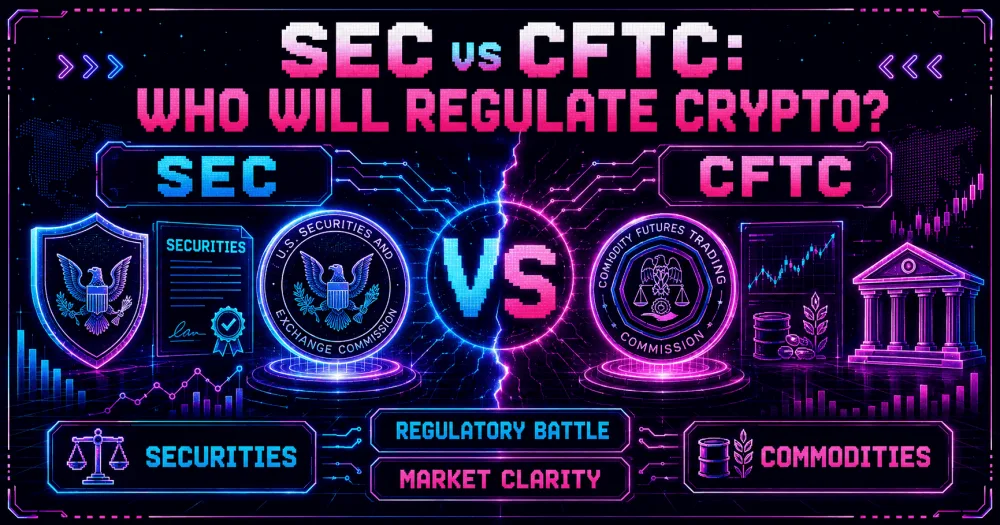
The SEC oversees securities, with a particular emphasis on areas such as investment markets, asset management, and disclosure laws. When it comes to crypto, this includes tokens, token sales, crypto products, and digital-asset platforms that facilitate trading and listing of crypto securities, but without impacting the overall crypto market structure.
The CFTC’s Responsibilities
The CFTC oversees commodities and derivatives markets, and crypto assets such as Bitcoin typically fall under its jurisdiction. The CFTC is set to gain broader responsibilities once the US cryptocurrency legislation passes, and its relationship with the SEC will have to be ironed out to avoid jurisdiction overlap.
Which Digital Assets Fall Under Each Regulator?
A wide range of factors determines which regulator oversees which asset. Bitcoin is likely to fall under the CFTC’s jurisdiction, but the situation is more nuanced for other assets and specific aspects such as tokenized securities and stablecoins. The two regulators will have to establish a clear set of criteria that determine which assets fall under the SEC, CFTC, or both.
How the 2026 Proposal Differs From Previous SEC Crypto Policies
From Enforcement to Rulemaking
The previous SEC crypto rules emphasized enforcement and litigation. The 2026 proposal reflects a shift toward rulemaking and formal adoption of SEC guidance pertaining to crypto asset classification.
Changes Since the Gary Gensler Era
The Gary Gensler era was characterized by a broad approach to crypto regulation that sought to apply securities laws across the board. In contrast, the current SEC crypto rules recognize the need to balance diverse aspects and develop a set of standards that apply to different asset categories.
New Direction Under the Current SEC Leadership
The current SEC leadership has demonstrated a more flexible attitude toward crypto regulation, and the 2026 proposal represents its attempt to establish a set of coherent principles. In particular, the shift toward tokenized securities and custody-focused approaches indicates that the SEC is willing to engage with the industry on a more structured level.
Industry Reaction to the SEC Crypto Rule Proposal
Supporters’ Arguments
Supporters of the SEC crypto rules argue that the framework will bring much-needed stability to the digital-asset space and improve crypto exchange regulation. It will enable the US to compete with other jurisdictions while helping both institutional and retail investors, as well as the overall ecosystem, benefit from increased transparency and reduced fraud opportunities.
Criticism From the Crypto Industry
Critics of the SEC crypto regulation argue that it fails to account for the unique characteristics of crypto networks. They point to the fact that the SEC continues to emphasize securities laws and Wall Street-style oversight despite the innovation that has taken place in the DeFi space. At the same time, critics feel that the industry has been unfairly targeted in the wake of several high-profile crypto failures.
Concerns About Innovation and DeFi
One of the key concerns regarding the SEC crypto rules is their impact on DeFi innovation. If the rules continue to conflate custody with asset control, impose unnecessary requirements on developers, or attempt to apply securities laws to smart contracts, they will fail to acknowledge the decentralized nature of the crypto space. Developers will either leave the US or limit the functionality available to American users, which will reduce the competitive advantage of the US.
Timeline of the SEC Crypto Rule Proposal
Major Milestones
The timeline for the SEC crypto rule proposal involves a number of stages, ranging from guidance and initial recommendations to rule approval and implementation. Different rules about asset classification, custody rules for digital assets, trading platforms, token sales, and DeFi will take effect at different times.
Public Comment Process
The public comment process entails a period during which a broad range of stakeholders can provide feedback to the SEC. These include exchanges, investors, lawyers, crypto developers, banks, and crypto startups that can be impacted by the rules. The input that they provide may shape the nuances of definitions, exemptions, deadlines, and compliance requirements.
H3 Expected Next Steps
The expected next steps pertain to the introduction of additional SEC guidance, including recommendations for crypto exchanges and brokers, updates to custodianship rules, and the development of exemptions for certain token sales activities. Firms that operate in the crypto space should start preparing ahead of final regulations being adopted.
What Could Happen If the Proposal Is Approved?
Impact on Bitcoin and Ethereum
Bitcoin and Ethereum pose fewer regulatory challenges for the SEC, but the rules can still indirectly impact them. The adoption of the SEC crypto regulation proposal would influence custodianship rules for Bitcoin and the evolution of Ethereum-based assets, particularly in relation to DeFi applications.
Implications for Altcoins
Altcoins are expected to be the most directly impacted by the SEC proposal, as many of them lack the institutional infrastructure that makes Bitcoin more attractive from a regulatory perspective. Some altcoins utilize more centralized mechanisms or have characteristics that make them resemble securities. As a result, they can be delisted by exchanges or face additional scrutiny.
How Crypto Companies May Need to Adapt
Crypto companies may need to update their disclosures, adopt new custodianship practices, seek legal advice, and revise their approaches to token sales in light of the new guidance. In some cases, firms that take steps to enhance transparency may be in a better position to navigate the evolving regulatory environment.
FAQ
What Is the SEC Crypto Rule Proposal About?
The SEC crypto rule proposal refers to a set of potential regulations that seek to clarify how securities laws apply to crypto assets, custodians, exchanges, brokers, token offerings, disclosures, and investor protection. They were introduced in 2026 and represent the SEC’s effort to bring more transparency and consistency to the digital-asset space.
Is the SEC Banning Cryptocurrency?
The SEC crypto rules do not ban cryptocurrency or restrict its use in any capacity. Instead, they seek to clarify which crypto assets and activities fall under the SEC’s jurisdiction and what disclosure and compliance requirements apply to them.
Does the Proposal Affect Bitcoin?
The SEC crypto regulation proposal will impact Bitcoin, although it typically poses fewer challenges to the SEC than other digital assets. The rules can have indirect implications for how Bitcoin is stored, traded, and utilized in the United States.
Will DeFi Also Become Regulated?
The SEC crypto rules make it likely that DeFi protocols will be subject to some degree of regulation, depending on the specific activity. Protocols with front-end interfaces, governance tokens, staking rewards, yield offerings, or other centralized elements can encounter additional scrutiny.
When Will the New SEC Crypto Rules Take Effect?
The new SEC crypto rules take effect at different times depending on the specific guidance, although some elements may require extensive public comments and formal approval before becoming fully enforceable.
How Can Investors Prepare for Upcoming Regulations?
Investors should conduct research pertaining to the token classification risk, the jurisdiction in which an exchange operates, custodianship rules, disclosure practices, liquidity, and potential legal challenges that may arise.