The decision overturns a ban that had been in place since 2018.
The State Bank of Pakistan has allowed banks to open accounts for licensed virtual asset service providers (VASPs) and their clients.
Read also: Bitcoin on April 15—Price Pulls Back After Brief Push Toward $76K
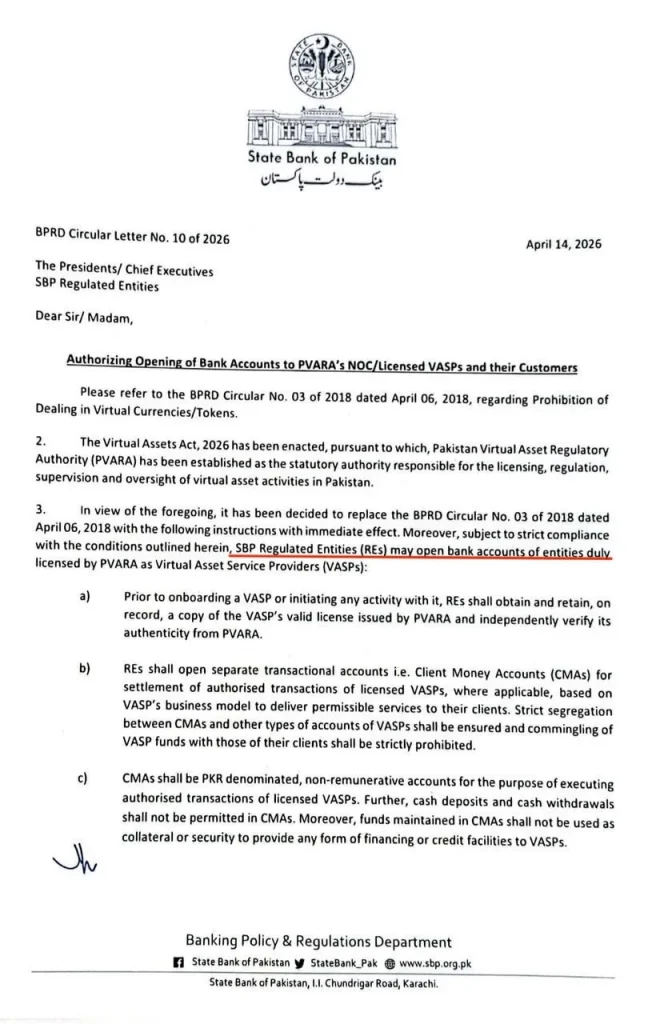
According to a circular dated April 14, banks, microfinance institutions, and payment system operators may now work with companies licensed by the Pakistan Virtual Assets Regulatory Authority (PVARA).
New Rules for Banks
Banks are prohibited from using their own funds or client deposits to invest, trade, or store virtual assets. Separate client money accounts in Pakistani rupees must be opened for settling licensed VASP transactions. Funds in these accounts cannot be mixed with company operating funds, used as collateral, or earn interest.
Banks must conduct enhanced due diligence on VASPs, update their risk assessment models, and perform ongoing transaction monitoring. All suspicious transactions must be reported to the financial monitoring unit.
Read also: Dubai Regulator Issues World’s First Crypto Asset Issuance Guidance
Context of the Changes
The decision follows the March 2026 adoption of the Virtual Assets Act, which created the PVARA regulator and introduced criminal penalties for operating without a license, including fines up to 50 million rupees and up to five years in prison.
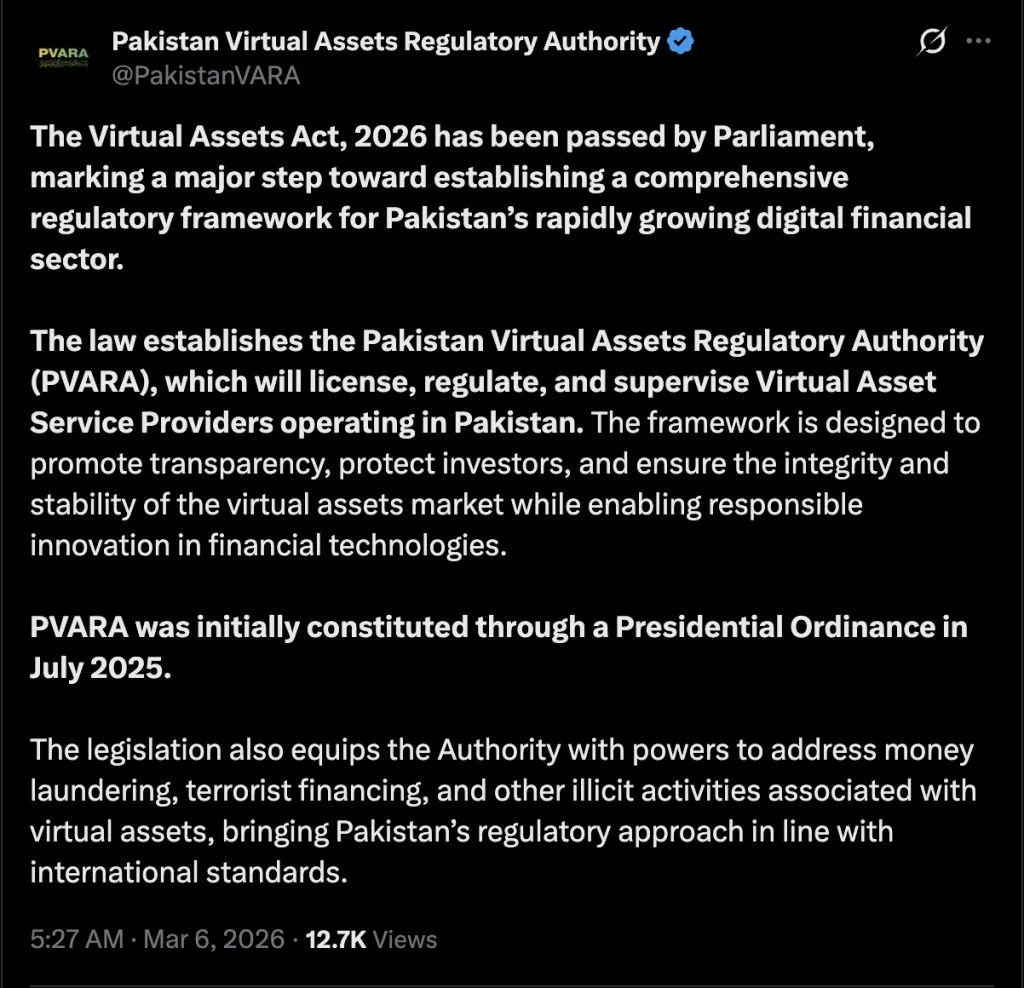
Pakistan previously maintained a strict stance toward cryptocurrencies. Authorities are now gradually transitioning to a regulated model, aiming to attract licensed players and increase market transparency.
Read also: U.S. Banks Push Back Against White House Findings on Yield-Bearing Stablecoins