Picture this: NFTs aren’t just digital pictures anymore. Handling who owns what matters more these days. Moving tokens around needs to work smoothly, too. Characteristics of each item play a bigger role than before. Selling them involves several moving parts at once. Knowing who holds which asset helps track activity. Notifications pop up when changes happen nearby. Neat, consistent info must stretch between blockchains. So here’s the thing – in 2026, how much an API can handle counts way more than its reputation.
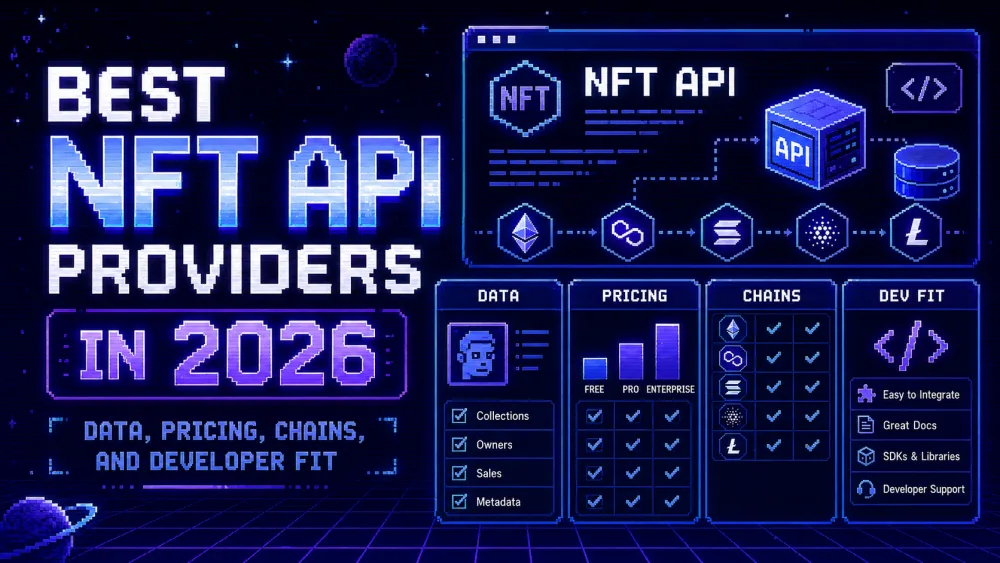
Start strong with an API that handles NFT data, so coders skip rolling their own indexers. Tools like wallets or galleries come together faster when backend work fades into the background. Chain support matters – some networks get priority over others. Price tags differ, sometimes quietly. Freshness of data can lag or snap tight based on source choice. Control levels shift per platform – one might tweak deeply, another barely lets go. Picking boils down to fit, not flash.
Contents
How We Tested The Best NFT API Providers
This look relies on openly available docs, price details, supported endpoints, and how well it suits developers. Claims about secret benchmarks or exclusive SLA insights are not made here.
Related: Best White Label Crypto Exchange Platforms for US Businesses In 2026
Because real use matters, we watched every NFT data API under live conditions. Speed decides who owns what inside a wallet. Marketplaces rely on up to date sale figures plus current price floors. Past trends shape decisions in analytics tools. Big teams demand help when growing their systems.
Scoring Criteria For NFT Data API Reviews
Score one went to reach. Any solid NFT API across chains must handle key EVM systems, along with Solana when it fits. Ethereum is still the starting point, yet builders today expect Base, Polygon, Arbitrum, Optimism, BNB▲$572.56 Chain, plus similar options.
Midway through, the quality of endpoints took center stage. Checking began with metadata, then moved to transfers, ownership details, unique traits, current floor prices, recent sales activity, alongside broader collection questions. Stability in returned fields matters greatly when using an NFT metadata API. Handling absent images smoothly is just as critical.
One thing stood out: how it feels to build with it. Good documentation shows up early – simple guides, working code samples, limits spelled out, errors explained. Promises mean little next to that. Real difference hides in these details by then.
Test Setup For API NFT Latency, Errors, and Docs
A handful of real-world conditions shape a solid testing approach. One active marketplace pairs with a niche set later. A holder packed with digital items joins another flooded with low-value clutter. The process fires up on Ethereum when possible. Polygon handles part, too. Base steps in where it can. Solana takes over if compatible.
Start by tracking how long replies take, along with blank outputs, too-many-requests alerts, slow updates on info tags, and corrupted image links. When setting up NFT API steps, begin using digital wallets’ collectibles, specific data fields, and also verify who owns what.
Best NFT API Comparison Table For 2026
Starting off strong, Alchemy suits projects needing wallet support alongside token access. Coverage includes most EVM networks along with Layer 2 solutions. Pricing begins free, shifting to per-use once limits are passed. Watch out – some functions differ depending on the blockchain used.
Moralis works well when tracking digital asset history or user behavior across chains. It supports Ethereum Virtual Machine systems together with Solana. Plans range from complimentary options up to corporate packages. Be aware that estimating usage helps avoid surprises later. For deep trading insights and holder stats, Bitquery delivers detailed views over time. Multiple blockchains feed into its long-term data storage. You can test first at no cost before signing a tailored deal.
Related: Best NFT Marketplaces 2026 for Buyers, Traders, and Artists
Setting it up requires comfort working with advanced query formats. Ankr fits those focused on efficient NFT handling across compatible ledgers. Its base covers various EVM-style environments. Access follows a credit model where each request deducts units.
Take note – the NFT features need a higher-level subscription status. When RPC performance matters most, QuickNode serves developers by adding extra tools. Functionality is split between core endpoints and separate modules. Subscriptions combine fixed plans with optional store purchases. What you get relies heavily on which extras are switched on.
This one checks how each NFT API lines up in real use. Where things click depends on what you’re doing.
| NFT API Provider | Best Fit | Core NFT Data Coverage | Chain Coverage | Pricing Fit | Main Limitation |
|---|---|---|---|---|---|
| Alchemy NFT API | Wallets, token gating, launches, NFT dashboards | Metadata, ownership, transfers, collection data, floor price signals | Strong EVM and L2 coverage | Good for startups and scaling teams | Some advanced use cases may need extra analytics sources |
| Moralis NFT API | Web3 apps, portfolio tools, wallet views, alerts | Metadata, ownership, transfers, trades, rarity, floor prices | EVM chains plus Solana support | Useful free tier with paid growth plans | Usage cost can rise with heavy wallet or collection queries |
| Bitquery NFT API | Analytics, market data, whale tracking, institutional research | Trades, holders, transfers, floor data, historical NFT activity | Broad multi-chain and historical coverage | Better for data teams and enterprise workloads | GraphQL setup is more technical for simple apps |
| Ankr NFT API Methods | Cost-controlled NFT reads for EVM apps | NFTs by owner, metadata, holders, transfers | EVM-compatible networks | Practical for predictable request-based workloads | NFT features depend on supported premium methods |
| QuickNode NFT API Coverage | RPC-first teams needing NFT add-ons | Token and NFT data through enabled tools and endpoints | Depends on selected network and add-ons | Fits teams already using QuickNode infrastructure | Coverage must be checked before production use |
Best NFT API Providers Reviewed
Alchemy NFT API For Launch, Analytics, and Token Gating
Start here if your crew needs quick setup, clear guides, plus tools that just work. For Ethereum NFTs, the API reaches deep – think wallets, live views, access checks, basic market frames.
Ownership checks flow smoothly with Alchemy, especially if collection questions pop up. Metadata handling becomes simpler, plus tracking floor prices feels natural. Webhooks tie into workflows without friction. Teams relying on Alchemy RPC often find the shift effortless.
One way to look at NFT API costs is by comparing them through Alchemy’s setup – it just makes sense. Development runs smoothly on the free level, yet when growth kicks in, usage-based billing takes over without fuss. When heavy-duty marketplace insights enter the picture, relying only on Alchemy might leave gaps – another tool could step in there.
Moralis NFT API For Metadata, Ownership, and Alerts
For apps linking NFTs to live wallet details like tokens, pricing, or transaction flows, Moralis often works well. Dashboards tracking holdings, wallet views, even alert tools – these tend to run smoothly on it.
Starts with curiosity – what’s inside a wallet? That’s where Moralis steps in. One query reveals every NFT tied to an address. Instead of guessing, devs get clear answers fast. Metadata pops up just as easily as transfer records. Trades show up, too, along with rarity scores sitting nearby. Floor prices appear without extra effort. Marketplace moves follow close behind. Each piece connects through clean endpoints. Speed meets simplicity here. Ownership isn’t hidden anymore.
Here’s why some find Moralis a solid pick for budget-friendly NFT APIs: its free tier supports cross-network trials. Watch out, though – pricing might sneak up on you. Features like gallery displays, syncing collections, or silent updates tend to burn through resources faster than most assume.
Bitquery NFT API For Trades, Holders, and Floor Price
When your product leans more toward data systems than typical applications, Bitquery fits well. Analytics groups find it useful. So do those building trading interfaces or research tools. Real-time and past blockchain information matters here. Teams relying on such data often turn to this platform.
Bitquery tracks how NFTs move between wallets, when ownership shifts hands, and where they’re traded online. Floor price updates appear alongside stats on who holds what across collections. Metadata tags move along with every query, too. Because of these features, using its API fits well whenever someone needs details about NFT activity. What shows up reflects live actions, not guesses.
Most big companies pick Bitquery when they want powerful tools for NFT APIs. Its strength shows in how smoothly it handles GraphQL, real-time streams, or bulk data pulls. Yet that power comes at a price – things get tricky fast. For coders just trying to pull tokens from a single wallet, this setup might feel like using a crane to hang a picture frame.
Ankr API NFT Methods And QuickNode NFT API Coverage
Now picture this: Ankr helps groups save on costs while handling NFTs across any chain that works with EVM setups. Inside its Advanced API live tools tracking who owns what, details behind each item, current keepers, plus movement history between wallets.
Pricing makes sense once you see costs per method. This way, teams can predict what an NFT API plan will run them, depending on usage. When your needs line up precisely with what Ankr offers, performance really shows.
Not every service works like QuickNode. Teams usually pick it when they’re setting up RPC systems and later add token tools or NFT functions via extra endpoints. The NFT API might suit a Web3 project, though checking supported blockchains and call types ahead of launch helps avoid surprises.
Related: Best Web3 Wallets 2026: Secure Picks for DeFi, XRP and Beginners
Production Features That Matter For NFT API Teams
Metadata, Traits, and NFT Collection API Coverage
Hidden details sit inside every NFT, shaping how it shows up online. These bits decide what you see on display walls or market listings. A closer look reveals sorting by scarcity happens here, too. Page after page relies on this underlying layer to work right. Even finding a single piece among thousands ties back to these structured notes.
Expect a live NFT set feed to list its title, blockchain location, token format, individual identifier, current holder info, characteristics, visuals, and linked files. One part covers how updates pull fresh details. From time to time, the system grabs new trait records automatically. Data like image links stays attached through persistent URLs. Ownership proof comes bundled per item record. Standard types such as ERC-721 appear clearly marked.
Each entry carries one unique digital fingerprint. Refresh behavior matters because NFT metadata can change, break, or take time to update across collections. External assets load using stable web paths. Contract origin shows where tokens were minted. Traits arrive grouped by type and value. Updates may trigger on demand or at intervals. Media includes both thumbnails and full-size versions. No gaps in ownership history if available. Metadata cycles ensure accuracy over time.
NFT Minting API, NFT News API, and Platform Signals
Not every tool swaps out the core code. Sometimes it just handles steps like checking invites, moving files, or setting up payments. Even then, rules around cost, access, and total count stay locked in the original setup. Flow gets smoother, sure, yet control remains where it started. What changes is how you move through the process, not who decides what happens.
A fresh update on NFTs doesn’t come through just any data feed. While one pulls raw numbers, another follows posts, drops, chatter online, and shifts in activity. Relying solely on it for proof of who owns what or past transactions misses the full picture.
A single NFT platform API could pull together trading records, user moves, market snapshots, and then layer in collection views. Discovery leans on these clues – yet each one must be checked before trust.
API NFT Decision Tree By Use Case
Start with Alchemy when wallet integration tops your list. A solid pick for squads wanting clear guides plus a fast setup. Opt here for smooth tooling around tokens, NFT lookups, or rollout features. It relies on a steady structure instead of flash. Works well if simplicity matters more than surprise.
For handling NFT details along with wallet activity, token values, pricing, and live updates, Moralis fits well. When building personal finance tools or interactive Web3 platforms, it often works smoothly.
For deep analytics, trade tracking, holder insights, floor prices, and past trends – Bitquery works best when a group runs heavy data tasks. Frontend-only projects? Not its strongest fit.
For focused tasks involving EVM NFTs with clear method needs, Ankr fits. Where request costs must stay consistent, it holds up reliably. When work stays within fixed boundaries, performance tends to align. Specific use cases see better alignment with its structure.
When your crew uses QuickNode day after day, staying there makes sense – especially if adding NFT tracking matters. Tools that work right out of the box help a lot. Having both RPC access and NFT details under one roof? That kind of setup holds up well.
Begin with Alchemy or Moralis when creating an NFT marketplace; fast matters most. If richer details like past transactions or ownership patterns become necessary, bring in Bitquery alongside. While an initial setup favors simplicity, complex insights often require extra tools later on.
NFT-API Risks, Compliance, and Data Accuracy
Something goes wrong, and suddenly the picture is just gone. When metadata shifts without warning, people tend to notice right away. An odd token shows up out of nowhere, cluttering the wallet. Prices on marketplaces start showing mismatched numbers instead. One moment it works, next thing there’s an error staring back.
Related: Best Web3 Games 2026 Ranked for U.S. Players
When it comes to correct data, how things are indexed plays a big role. One provider might update their files quicker than another. Longer past records? Not every service offers that. While some stick strictly to raw blockchain entries, additional ones layer in details from where trades happen.
Checking sanctions screening, plus how abuse reports are handled, falls to compliance teams. Data kept over time must line up with rules. So do agreements made with service providers. These details hold weight when building marketplaces or wallet tools. They matter just as much inside enterprise offerings aimed at regulated users.
Start by trusting nothing from a single source when money’s involved. Instead of assuming, check the blockchain to confirm who owns what. When trades happen, let the ledger decide the truth. Transfers? Same story – reality lives where it’s recorded, not where someone says it is.
NFT API Providers We Do Not Recommend
Start anywhere – some services skip clear guides, then bury their limits. A trail of clues goes missing when support routes stay invisible. Hidden caps on usage appear without warning signs. Details about data updates? Often left unspoken. Clarity fades where answers should be.
Just because it looks like blockchain info doesn’t mean it is. Some NFT APIs pass off collected marketplace details as real on-chain records. Tools that track prices might rely on shaky ground when they use those feeds. Dashboards built on such sources can give misleading signals without clear warnings.
Hidden details about supported blockchains? That’s a red flag. Just calling yourself a cross-chain NFT API provider doesn’t prove anything. What matters instead: clear lists of which chains work, what methods are actually available. Known gaps should show up too, not buried.
FAQ
What Is an NFT API?
A single NFT API opens doors for coders to pull or handle digital collectible details. When triggered, it delivers traits, past sales, current holders, movement history, plus pricing lows and project facts. Sometimes metadata flows out – other times ownership paths appear instead. From one request, multiple data types emerge: who owns what, how value shifts, and which items belong together.
Which NFT API Works Best for Wallet Apps?
Starting off strong, Moralis pairs well with Alchemy when building wallet applications. While one handles user asset tracking, the other manages data structure details alongside token visuals. Each covers typical requirements like proving ownership, organizing info, and showing balances clearly.
Can A Solana NFT API Connect To EVM Blockchains?
Here’s how it looks: a Solana NFT API won’t connect straight into EVM blockchains. That gap exists because Solana handles accounts one way, while EVM systems do it another. Token formats differ too – no shared blueprint between them.
Yet careful field normalization remains key for cross-chain NFT API providers. Still, developers face testing duties when chains behave oddly.
Do NFT Minting APIs Replace Smart Contracts?
True, minting tools help guide users through steps. Yet these helpers cannot stand in for actual code logic. Rules around who owns what come straight from the program itself. Price settings are locked into place by that same system. Access rights? They emerge only when the contract runs. Even how many get made depends on lines written long before any button press.
Comparing Alchemy and QuickNode NFT APIs?
Stack fit decides it. Teams needing solid dev tools often find Alchemy fits tighter than most. One moment you’re stuck on deployment – next thing, their NFT API just works.
Starts off smooth if your crew’s already running QuickNode RPC – NFT tools fit right into that space. Check what extras are available before moving forward.
Where Does an NFT News API or Platform API Fit?
Besides tracking markets, an NFT news API fits best when spotting trends or sending updates. Ownership records stay accurate only through confirmed transactions, never headlines. Feeds may highlight activity – yet they cannot prove a sale happened. Alerts help keep watch, but depend on them alone? That risks mistakes. Real transfers live on ledgers, not articles.
A digital key opens doors for shops, galleries of collectibles, and even personal vaults online. When cash changes hands or entry is at stake, verify through blockchain records instead.
Final Recommendation: Choose The NFT API By Workload
Start by walking through a single task from start to finish before agreeing to anything. Even top-ranked providers might stumble when handling metadata updates, page breaks, or help timing tied to your rollout schedule.
Picking a top choice hinges on the daily needs of the product. When speed in building NFT apps matters, start with Alchemy or Moralis. If detailed data analysis takes priority, Bitquery pulls ahead. Working carefully with EVM functions? Try Ankr. Teams focused first on RPC might find QuickNode fits well.
Picture picking a tool based only on how much it costs. Data kind matters first. Think about which blockchains are included. How recent is the info. Check if guides make sense. See what happens when things break. Only after that, look at money. Price shows up last, not first.
Most teams start by creating the MVP using a single wide-ranging service. When needs around data tracking, rules adherence, or large-scale stability come up, that’s when another option enters.