Solana is a Layer 1 blockchain designed for fast, low-cost transactions. Its native token is SOL▲$82.41, which is used for fees, transfers, staking, and accessing applications.
A simple answer to what is Solana ? It’s a base network for transferring digital value and running on-chain applications.
Solana is often grouped with major crypto projects because it targets payments, financial markets, and consumer applications, all on a single chain.
| Item | Data | Why it matters |
| Network type | Layer 1 blockchain | It processes activity on its own chain |
| Native token | SOL | It pays fees and supports staking |
| Base fee | 5,000 lamports per signature | The fee model is visible and simple |
| Base fee split | 50% burned, 50% to validator | Part of the fee leaves circulation |
| Failed transaction | Fee still charged | Users should review actions before sending |
| Example outage | About 5 hours on February 6, 2024 | Reliability remains part of risk analysis |
A beginner often sees the price first and the network second. That creates confusion. Many search what is solana crypto after seeing SOL on an exchange. In many conversations, solana crypto means the chain, the token, and the app ecosystem at once. It helps to split those parts early. Then the project becomes easier to evaluate with less noise and less hype.
Contents
What Is Solana Coin
The term “Solana coin” usually refers to SOL, the native token. The chain and the token are linked, but they are not the same thing. The network processes transactions and stores state. SOL pays fees, supports wallet transfers, supports staking, and lets users interact with apps. A simple way to see it is this. The chain is the system, while the token is an asset used within it.
This distinction matters when markets get loud. A person can hold SOL without ever touching lending apps, NFT markets, or games. Similarly, an app can run on the chain even as users mostly hold stablecoins. Many people say Solana coin when they really mean the whole project. That shortcut hides how the network actually works for users and developers.
How Solana Blockchain Works
The Solana blockchain records transactions in sequence and asks validators to agree on the result. Its design aims to reduce the waiting time between sending and confirmation. One reason fees often stay low is structural efficiency. Another reason is parallel processing. The network can handle many actions at once rather than pushing each action through a narrow path. That helps the chain stay usable for both payments and apps.
One less-known detail is useful for beginners. Every transaction pays a base fee in SOL, and users can add a priority fee to receive faster handling. The base fee is 5,000 lamports per signature, and fees still apply even if a transaction fails. On Solana, that makes wallet habits important. It also explains why careful review matters before you approve any action.
Expert view. Anatoly Yakovenko, Co-Founder of Solana Labs, explained in a Solana Compass interview that Solana was built to maximize data throughput and reduce latency, because faster information movement creates a more level playing field for both retail users and larger firms. For a beginner, that makes Solana’s speed easier to understand. It is a design choice, not just a headline metric.
Proof of Solana History
Proof of History is a cryptographic clock. It helps the chain show that one event happened before another. That sounds technical, but the idea is practical. Validators spend less time comparing orders, allowing the network to move faster. For a beginner, the point is not the math. The point is that Solana can coordinate many actions without waiting for each node to rebuild from scratch.
A few points make that logic easier to hold:
- It creates a record of the sequence that can be quickly checked.
- It reduces the time spent arguing about ordering.
- It works with consensus rather than replacing consensus.
- It helps explain why speed on the Solana blockchain starts with timing and ordering, not just with bigger hardware.
The Role of Validators and Transaction Confirmation
Validators are computers that keep the chain running. They process transactions, vote on blocks, and help produce a shared record. A beginner does not need deep protocol knowledge, but the basics matter. The Solana network depends on many operators reaching an agreement. Once sufficient agreement is reached, a transaction moves from processed to confirmed, then to finalized. That process is why speed alone does not define trust.
Expert view. Dan Albert, Executive Director of the Solana Foundation, said in Cointelegraph’s coverage of KBW 2024 that the ability to coordinate a patch should not be confused with centralization, because validators still decide what software they run. This is useful context for beginners. Validator coordination can help the network respond to security issues, but it does not automatically settle the decentralization debate.
What Is Solana Used for
The practical answer to what Solana is used for starts with daily utility. People use the chain to transfer funds, interact with apps, trade assets, mint tokens, and test new digital products. Builders also use it because one chain can support payments, finance, games, and social tools. For a regular user, the value appears when an action feels quick, the cost stays small, and the wallet flow feels direct.
The main use cases are easy to group:
- Wallet-to-wallet transfers with low visible cost.
- Trading and lending in decentralized finance apps.
- NFT issuance and secondary market activity.
- Consumer apps and games have many small actions.
- Fast experiments around Solana meme coins, where low fees reduce the cost of trying new tokens.
Transfers and Payments in SOL
Many users try Solana first for transfers. Small fees make direct payments and micropayments more realistic than on chains where costs rise fast. This matters to users who want to send stablecoins or SOL without paying too many fees. It also matters for app builders. A payment flow feels easier to trust when the cost is visible at the start and settlement arrives without a long wait.
DeFi, NFT, and applications
Beyond transfers, the chain works as infrastructure for decentralized services. Users can swap, lend, borrow, mint, and trade through apps built on top of the protocol. The question of what Solana is used for often leads here, because most real activity happens inside products rather than at the protocol layer alone. The same ecosystem also shows how quickly attention can move. Hype around Solana meme coins can grow much faster than durable user behavior.
Expert view Mert Mumtaz, CEO of Helius, argued in a Blockworks discussion that crypto products stand out when they create a new category or a use case that can grow, instead of copying another chain. That framing fits Solana well. Its value lies not only in hosting tokens but also in making low-cost consumer apps, trading tools, and new on-chain formats easier to build and use.
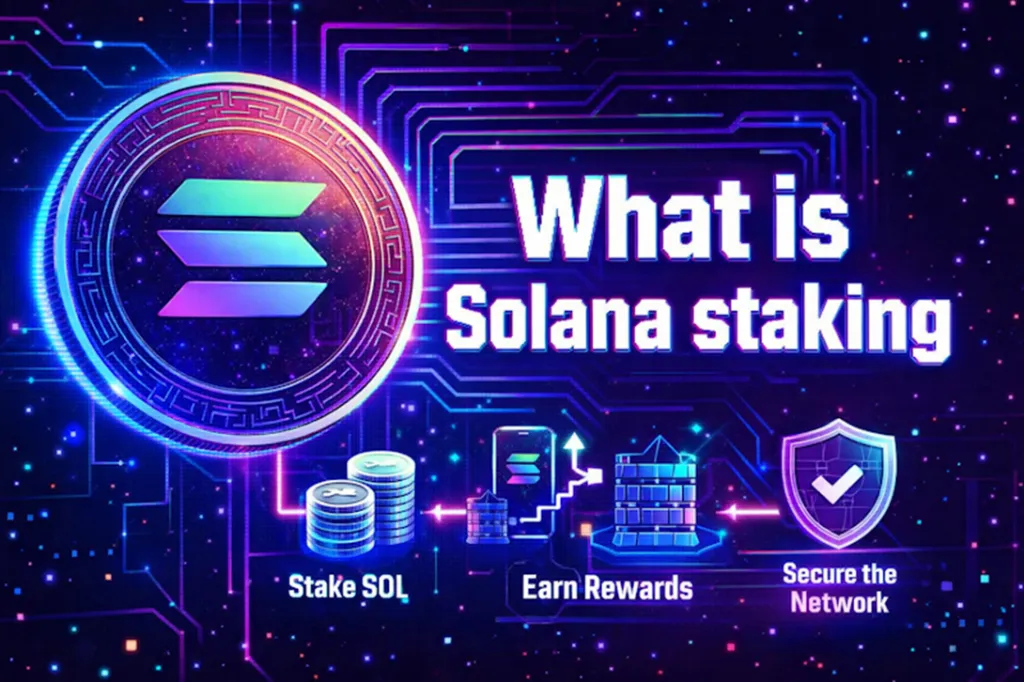
What is Solana staking?
In basic terms, Solana staking means delegating SOL to a validator so your tokens support network security. You still own the tokens, but you assign staking weight to an operator. In return, you may earn rewards if that validator performs well and if rewards remain active. The idea is simple. Users back validators, validators help secure the chain, and rewards are shared through that relationship.
A few practical points deserve attention before anyone stakes:
- Yield is variable and not guaranteed.
- Validator choice matters because performance affects results.
- Market risk remains because SOL can lose value.
- Slashing is possible, but on Solana, it is not automatic in the usual way.
- Users can split funds across multiple stake accounts, which many beginners do not know at first.
Expert view Dan Smith, Data Lead at Blockworks Research, noted in a Blockworks article that issuance shifts value toward stakers and away from non-stakers. That is a useful lens for beginners, because staking is not only about earning rewards. It also affects how inflation and network incentives are distributed across different groups of SOL holders.
Solana Pros and Cons
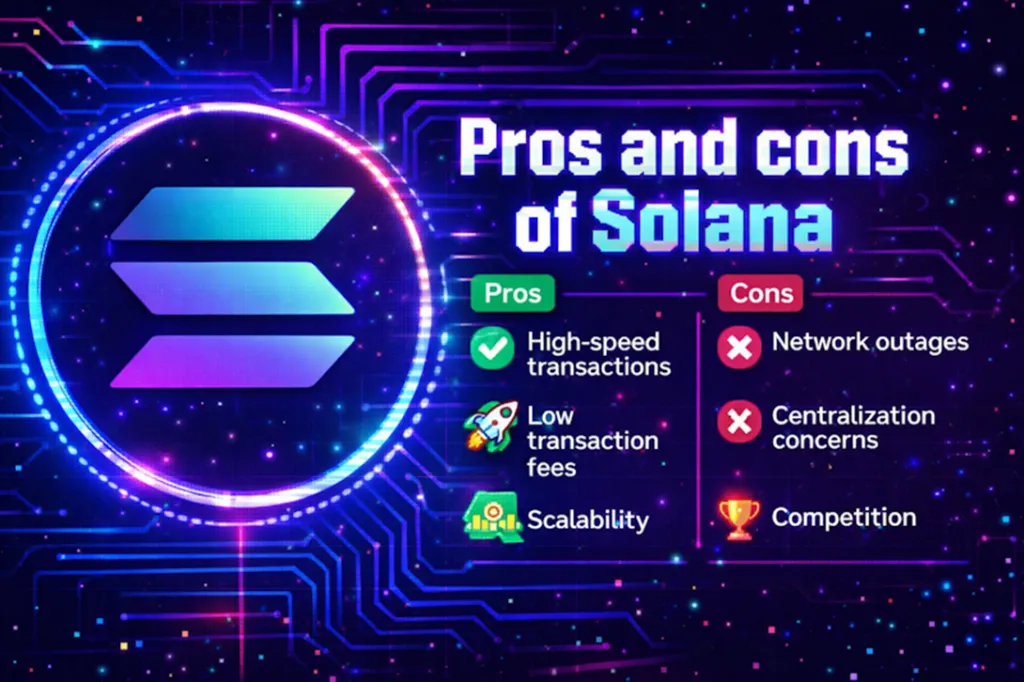
A balanced view of Solana should account for both its strengths and its limits. In practice, Solana is easier to respect when its trade-offs are named clearly. The network aims to keep transactions fast and cheap while supporting a wide range of app types. That makes it easier to imagine large-scale consumer products. The criticism is real, too. Past outages, heavy competition, and speculative market flows still shape how users, developers, and investors discuss the project.
| Area | Strength | Limitation |
| Speed | Fast confirmation flow | Speed loses value during interruptions |
| Fees | Often low for simple actions | Priority fees can rise during congestion |
| Ecosystem | Active app layer | Attention can swing with market cycles |
| Access | Easy for small transfers | Wallet errors still create user risk |
| Narrative | Large public visibility | Hype can distort decision making |
Solana Main Advantages
The main case for the project is practical. Users can try apps, send funds, or test ideas without high friction. That lowers the cost of participation for both builders and traders. Another advantage is breadth. The same chain can support payments, finance, NFTs, and games, which keeps activity on Solana in one place.
Its strongest points are clear:
- Fast user experience for many routine actions.
- Low cost for transfers and app interaction.
- A broad app layer that supports several use cases.
- Better suited to products that require many small transactions.
Solana Main Risks
The risk side deserves equal attention. The network has a record of outages and stalls. One lasted about 17 hours in September 2021. Another lasted about 5 hours in February 2024. It also competes with other layer 1 chains for users, developers, and liquidity. Market heat can add another problem. Interest in Solana meme coins can draw attention to short-term trading and away from durable use.
Other risks are easy to miss at first:
- Ecosystem interest often follows the wider market cycle.
- App quality varies, so user risk never disappears.
- Headlines about a future Solana ETF can move sentiment without changing on-chain utility.
- A Solana ETF filing or launch says more about market access than about the chain itself.
How to Evaluate Solana as an Crypto Asset
A beginner should not judge an asset solely by its technology. Price, usage, supply, market size, and ecosystem activity tell different stories. For analysis, Solana should be read as both a network and a market asset. At times, Solana can see solid app activity while the token falls, or vice versa. This is why market reading needs context. It also explains why wallet growth, app launches, and exchange flows can matter simultaneously.
Expert view Matthew Sigel, Head of Digital Assets Research at VanEck, and Patrick Bush, Senior Investment Analyst, wrote in a VanEck valuation note that one of the most important long-term questions for Solana is whether it can host an application with more than 100 million users. For this section, that point matters more than any short-term price move. A blockchain asset is easier to value when adoption has a real path beyond speculation.
What Solana Market Cap Shows
In market terms, Solana’s market cap is the price of SOL token multiplied by its circulating supply. It helps a beginner estimate the asset’s size relative to other projects. That makes it useful, but limited. A large number does not prove resilience, revenue, or long-term demand. It only shows what the market currently assigns to the token. That is why Solana’s market cap works better as a scale signal than a quality verdict.
How to Read SOL/USDT Chart
A Solana chart shows market behavior, not the full health of the ecosystem. Price can rise due to broad crypto momentum, exchange flows, or headline risk, even when on-chain use changes slowly. Beginners should focus on trends, volatility, and context first. Reading a solana chart well means asking what else moved that day, not only what the candle shape suggests.
Why Solana News Matters
In fast markets, Solana news can change attention before it changes long-term value. Network updates, app launches, staking changes, or outage reports can quickly shift confidence. Broader market events matter too. A custody change, an exchange listing, or a legal filing can affect sentiment around Solana crypto even when the protocol itself has not changed.
The same logic applies to market wrappers. Many newcomers first hear about the chain through trading headlines rather than through product use. Because of that, solana news can reshape demand, narratives, and liquidity before a person opens a wallet. It also helps to separate wrapper stories from protocol basics. Headlines about funds do not answer the question of what Solana crypto is in practical terms.
FAQ
Is Solana Safe?
Safety has two layers. The first is network safety, which depends on validators, software quality, and recovery tools. The second is user safety, which depends on wallet behavior. Many crypto losses stem from bad links, poor seed phrase storage, fake apps, or rushed approvals. The SolanaSolana network can continue to operate even as users still lose funds due to simple mistakes. That difference is basic, but it matters.
What Makes Solana Useful for Daily Transfers and App Actions?
It is built for quick settlement and low visible cost. That combination makes small transfers and repeated app actions easier to handle. For many beginners, Solana becomes useful the first time they send funds without a large fee. The core value is not only speed. It is speed that remains practical enough for regular wallet activity and product use.
SOL is only one part. The token pays fees, moves between wallets, and supports staking, but the chain is the wider system that processes transactions. That is why the phrase solana coin should be read carefully. It refers to the native token, not to every app, validator, rule, or service within the protocol.
Can a Beginner Use Solana Without Learning Deep Technical Terms?
Yes. A new user can start with a wallet, a small transfer, and one simple app. That basic path already explains a lot about what is solana in real life. The main learning curve is not protocol theory. It is safe wallet practice to check addresses and understand which token and network you are using before you send funds.
Is Staking on Solana a Stable Income with Little Downside Risk?
No. Rewards may exist, but yield changes and market risk remain. That is the honest way to view Solana staking. Validator quality matters, token price can fall, and user mistakes can still cause loss. Staking can support the network and provide rewards. However, it should not be treated like a fixed-income product with a guaranteed return.
Why Can the Price Jump Even When the Network Feels Unchanged?
Markets react to liquidity, mood, and headlines. A large move can come from broad crypto flows or exchange activity rather than from protocol progress. This is why Solana chart reading always needs context. The token can rise or fall fast without a matching change in user growth, developer activity, or product quality across the chain.
Should Investors Follow Only Headlines Before Buying or Staking?
No. Headlines help, but they are only one signal. A better process combines Solana news, usage data, valuation context, and risk control. It also helps to separate chain utility from market access products. That is important when terms like Solana ETF or Solana market cap dominate the discussion for a few days.
Disclaimer. This article is not investment, legal, or tax advice. Market cap, ETF narratives, and valuation scenarios are context signals, not guarantees, and forward-looking models may differ sharply from real market outcomes.