Artificial intelligence (AI) in crypto means using artificial intelligence inside blockchain systems, trading platforms, decentralized apps, token economies, and wallet tools. Automation shows up in trading platforms where smart models read patterns. Instead of people clicking every button, software can make choices based on data. Some digital helpers live in apps that run without central control. Others handle money through built-in wallets, swap tokens, strike deals, or react to market shifts.
Not every system runs fully on its own. Some still need checks. But the goal stays clear: reduce how much humans must guide each step. AI in crypto already covers payments for processing power, information flow, models, helper bots, and shared networks. The tricky part is spotting what builds something useful versus what just slaps “artificial intelligence” on a box.
Contents
- What Is AI in Crypto?
- Why AI and Crypto Share Common Ground
- AI Agents in Crypto
- AI Crypto Tokens Explained
- Main Types of AI Crypto Projects
- Practical Examples of AI in Crypto
- AI in Crypto Compared to Traditional AI
- Popular AI Cryptocurrencies and Blockchain Projects
- Benefits of AI in Crypto
- Risks of AI in Crypto
- How to Assess AI Crypto Initiatives
- The Future of AI in Crypto
- Conclusion
- FAQ
What Is AI in Crypto?
Artificial intelligence in crypto is where smart machines meet digital money. One side digs into data, learns patterns, runs tasks, understands language, and predicts what may happen next. The other side lets anyone send value, set ownership rules, reward users with tokens, show transactions clearly, and connect people without central control.
The idea boils down to five things: data, computing power, money movement, digital identity, and group effort. Crypto markets can help organize those resources. Instead of one firm running everything from top to bottom, open systems let people chip in different ways. Tokens connect builders, contributors, machine owners, data providers, and software agents.
Related: Top 5 AI Crypto Coins to Watch in June 2026
AI in crypto usually shows up in five shapes:
| Area | What it means |
|---|---|
| AI agents | Programs acting alone, using wallets, apps, and smart contracts |
| AI crypto tokens | Tokens linked to AI networks, compute, data, models, or agents |
| Decentralized compute | Graphics chips and processing power rented through crypto networks |
| Data markets | Information bought, checked, priced, and shared through open systems |
| AI-powered apps | Wallets, trading tools, risk scanners, security bots, and DeFi assistants |
Why AI and Crypto Share Common Ground
Powerful yet costly — that is what makes AI hard to scale. Heavy computation, vast data, storage needs, ongoing expenses, and complex logistics slow things down. Markets appear where scarcity meets value, and crypto builds those markets well. That is why AI in crypto has become one of the leading stories across Web3.
Blockchain can give AI systems several things:
- Transparent payments
- Wallet-based identity
- Smart contract execution
- Permissionless markets
- Token incentives
- Open data rails
- Global settlement
When machines step in, speed shows up alongside pattern spotting. Software notices things, makes choices, then acts. Each part links without pause.
AI Agents in Crypto
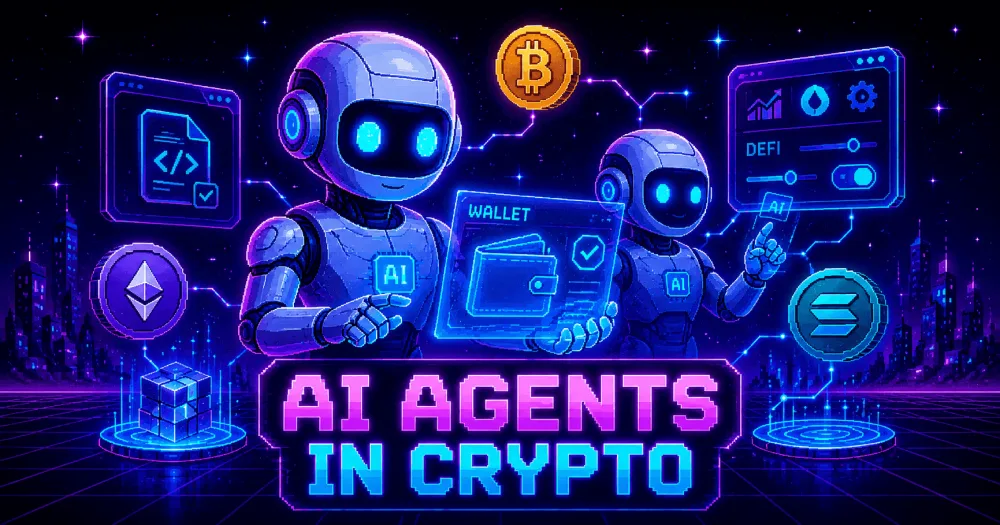
AI agents in crypto are software helpers that step in when users, DAOs, apps, or protocols need something done automatically. They pull live information, watch prices, review blockchain records, connect to tools, and sometimes act after weighing inputs.
A simple crypto AI agent might watch wallet balances, spot dangers, and alert the user. Another kind can move into DeFi actions — shifting assets, tracking positions, or interacting with smart contracts. The wildest version acts alone: it owns coins, spends on purpose, follows rules, and works toward targets.
AI Agents and Wallet Usage
Linking AI tools to digital wallets can be useful, but handing them full access is not wise. Better setups draw clear lines around what these helpers can do. One agent may only check balances. Another may suggest swaps, but only after approval. Even moving small sums should need clear permission.
Most value hides in making things easier. Clicking across ten DeFi screens slows people down, just like reading every governance update or tracking every transaction by hand. AI agents can turn cluttered tasks into clear moves.
AI Agents Compared to Trading Bots
Rules guide trading bots, while AI agents can read and understand wider context. A trading bot might buy when averages cross. An AI agent may look at market patterns, funding shifts, wallet flows, online mood, governance updates, and risk limits before giving a suggestion.
That does not make AI agents flawless. These systems can invent facts, misread information, or choose poorly. When artificial intelligence runs cryptocurrency tasks unchecked, errors happen quickly and often at high cost.
AI Crypto Tokens Explained
AI crypto tokens are digital assets tied to artificial intelligence networks, tools, or infrastructure. Accessing computing power might require one kind of token. Contributors who build models may earn another. Data sharers can get paid when their information fuels training. Validators secure systems while earning token payouts. Some tokens exist mostly because people are talking about AI.
The strongest AI crypto tokens serve a real job inside their platform. Any solid project must answer one simple question: what purpose does the token actually fulfill here?
Common AI Token Models
| Token model | How it is used |
|---|---|
| Compute token | Pays for GPU power or model inference |
| Data token | Rewards data contributors or unlocks datasets |
| Agent token | Helps create, launch, or use AI agents |
| Network token | Supports decentralized AI infrastructure |
| Marketplace token | Moves payments between buyers and sellers |
| Governance token | Lets holders vote on upgrades or funding |
Main Types of AI Crypto Projects
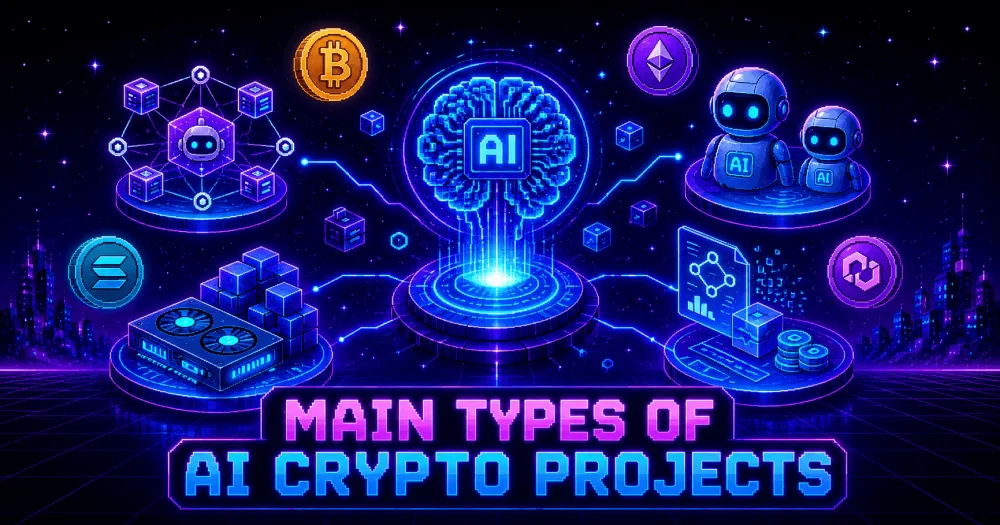
Not every AI coin works the same way. Some projects build foundations others rely on. Others deliver tools people actually use. Then there are those dressed up as innovation but built mostly on guesses.
Decentralized AI Networks
Some AI systems skip central control by linking up tasks like model training, inference, and machine intelligence with digital tokens. Bittensor is one of the best-known examples, using TAO▼$234.48 inside a decentralized network where machines compete and contribute.
Most of these efforts want to move away from big AI firms. The trouble comes when checking whether results are good enough. Open systems need to show they can reward useful output while stopping cheaters. Their path forward depends on whether the output holds up.
Related: Top SOL Tokens Dominating the Market: Solana Memecoins Pumping Again
AI Agent Platforms
AI agent platforms let people build smart helpers that work on their own. These digital workers might write posts, reply to messages, scout deals, manage communities, or connect directly to blockchain programs. Creators can set them loose, track performance, or pass ownership.
Right now, this part of AI in crypto feels like a crowded garage sale — full of noise. Some agent tokens rise because people talk about them, not because they solve problems. Stronger ones will likely be the kind that actually get tasks done.
Decentralized Compute and GPU Networks
Artificial intelligence runs on hardware, so spreading graphics processors across blockchains fits the AI in crypto thesis. People can lend out idle machines or tap into shared processing, using tokens as the key.
Open compute markets may gain value as AI demand rises. This connects AI in crypto with decentralized physical infrastructure networks. The idea is simple: more demand for AI could lift platforms that provide real compute.
Data and Model Marketplaces
Data powers artificial intelligence. Through crypto, new markets can form where information gets checked, valued, traded, and shared. Sometimes creators can drop trained models into digital hubs, opening paths to earn from them.
Privacy stands in the way. For data markets to function, trust must come first — both in safeguarding people and proving information is reliable. Otherwise, what looks like progress turns into hollow collection tricks.
AI-Powered DeFi and Trading Tools
Markets move fast, and machines can learn patterns faster than people do. One tool watches price swings while another spots hidden dangers in code. Strategies can run on their own when conditions match.
Yield routing, liquidation alerts, portfolio shifts, staking reward tracking, and contract-risk warnings can all benefit from AI. But useful things can still cause harm if pushed too far.
Practical Examples of AI in Crypto
Real problems come first. People face issues every day, and the best AI in crypto use cases grow from that ground.
Smarter Wallets
Before users approve a transaction, AI wallets can break down what it really does. Suspicious requests can get highlighted. Contract dangers can show up in plain summaries instead of code talk. Phishing tricks may be caught by spotting odd behavior early. Technical jargon turns into everyday words.
One reason people still lose money in crypto is faulty signatures. That could change once AI helps spot those errors early.
Tracking Blockchain Data and Trends
AI can scan wallet activity, protocol actions, governance choices, token movements, and past transactions. Rather than flipping through dashboards by hand, users can ask what pushed a token’s move or which addresses quietly gathered more coins.
Automated DeFi Management
AI agents can monitor liquidity pools, lending setups, collateral levels, staking payoffs, and cross-chain bridge risks. When boundaries are clearly drawn, everyday DeFi moves can become easier to automate.
Crypto Security
Unusual wallet activity can be flagged by AI, as well as suspicious contracts, fake sites, and scam tokens. Social engineering tricks can find fewer targets when automated checks outpace human eyes.
Payments Between Machines
Machines may handle transactions using digital money built on blockchains. Payments between AI agents can happen quickly when rules are coded clearly. If bots trade information, compute, APIs, or data, stablecoins and tokens can settle tasks instantly. Think of it as automatic value exchange, ticking along quietly.
Related: Find New Crypto Coins Before They Explode in 2026: Signals, Tools & On-Chain
AI in Crypto Compared to Traditional AI
Most traditional artificial intelligence is run by big firms behind locked doors: private systems, hidden data, and tightly held paid access. AI in crypto tries to open parts of that structure through tokens, wallets, and network-based coordination.
| Feature | Traditional AI | AI in crypto |
|---|---|---|
| Ownership | Company-controlled | Token or network-based |
| Payments | Cards, subscriptions, enterprise contracts | Wallets, tokens, stablecoins |
| Data | Closed or licensed | Potentially open or market-based |
| Compute | Big cloud systems | Cloud plus decentralized compute |
| Agents | App-based assistants | Wallet-connected autonomous agents |
| Transparency | Often hidden | On-chain activity can be checked |
Open economic coordination is what locked-down AI systems often miss. AI in crypto is not automatically smoother or better. Usually, it is rougher and full of unknowns. But it is different in a way that matters.
Popular AI Cryptocurrencies and Blockchain Projects
Bittensor grabs attention by pushing machine intelligence across a shared network. Fetch.ai and the Artificial Superintelligence Alliance tie smart agents to open AI systems. Render runs through scattered graphics processors used for heavy compute and rendering. The Graph helps with data indexing, which matters when AI digs into blockchain details. NEAR▲$2.42 often appears in AI-friendly blockchain discussions because of its focus on easier user experience and chain abstraction.
These examples show how broad the group is. Each AI cryptocurrency is not built for the same purpose. One powers backend systems. Another runs autonomous bots. Others are fueled more by story than real-world function.
Benefits of AI in Crypto
Smart software comes from AI. Rules for sharing value come from crypto. One teaches machines to learn. The other builds trust through code. Together, they fit because each covers what the other lacks.
Key benefits include:
- Faster market analysis
- Better wallet security
- Autonomous payments
- Open compute markets
- New agent economies
- More efficient DeFi tools
- Better user interfaces for complex protocols
Machines that learn may simplify digital money for regular people. Digital cash may help learning machines feel less locked down and more adaptable in how they trade value. That is the clean thesis behind AI in crypto.
Risks of AI in Crypto
Here is where things get messy. Hype rides into crypto through AI, bringing scams along with it: vaporware tags, bloated token prices, fake bots pretending to be smart. Some projects slap an AI label on nothing much at all.
Main Risks
| Risk | Why it matters |
|---|---|
| Hype cycles | Promises can outweigh results |
| Hallucinations | Confidence does not mean accuracy |
| Wallet permissions | Too much access can empty an account |
| Token dilution | Weak supply rules can hurt holders |
| Centralization | Decentralized labels may hide central control |
| Agent exploits | Bots can be hijacked or manipulated |
| Weak utility | A token adds nothing if the system does not need it |
Most people get it wrong when they think adding AI to a crypto idea creates value by itself. It does not. Even dressed up in tech talk, a weak token stays weak.
How to Assess AI Crypto Initiatives
Before buying an AI token or using an AI crypto app, ask several questions:
- Does the project have real users?
- What part does the token actually play?
- Does the technology work today?
- Who provides the compute, data, or models?
- Could people game the rewards?
- Is the team transparent?
- Could the project work without blockchain?
- How are wallets and permissions protected?
- What happens if the machine makes a bad decision?
Most shaky AI coin ideas fall apart when tested like this, while stronger projects tend to last through it.
The Future of AI in Crypto
One path ahead for AI in crypto is smarter wallets. Instead of decoding strings of symbols, users could see what each transaction means in everyday words. The shift is from confusion to clarity, one alert at a time.
Another path is more useful AI agents. These tools could handle repeat chores with digital money, settle bills through smart talks between programs, or link actions across apps using logic. Over time, their role can shift to a silent assistant.
Infrastructure will matter more too. Instead of chasing AI memecoins, people may care more about computing power, information flow, privacy controls, and model markets. As appetite for artificial intelligence grows, blockchain systems offering tangible tools could last longer.
Even so, progress will not follow a steady path. Bubbles will rise. Some projects will collapse. Certain tokens will scream too loudly, while sharp drops wait around corners. AI in crypto shows potential, but it still catches crypto’s oldest fever: promising the future before anything stands behind it.
Conclusion
AI in crypto is where machine learning meet digital cash. This field includes AI agents, AI crypto tokens, shared computing power, data marketplaces, trading apps, safer wallets, and payments that move on their own. The idea sticks because AI needs compute, and blockchains can offer open markets where AI agents buy what they need.
Most things here just make a lot of sound. A few may grow into something essential, but many will vanish once attention moves on. What matters is usefulness, token design, security, and whether blockchain even belongs in the setup. To understand AI in crypto, look at how the tool works, why the coin exists, and who actually uses it.
FAQ
What is AI in crypto?
AI in crypto is the use of artificial intelligence inside blockchain networks, wallets, trading tools, decentralized apps, token economies, and autonomous agent systems.
What are AI crypto tokens?
AI crypto tokens are digital assets linked to artificial intelligence networks, compute markets, data systems, agent platforms, or decentralized machine-learning infrastructure.
What are AI agents in crypto?
AI agents in crypto are programs that can study information, connect to platforms, handle jobs, and sometimes interact with wallets or smart contracts under set rules.
Is AI in crypto useful or just hype?
Both. AI appears in useful areas such as wallets, security systems, trading tools, DeFi apps, compute networks, and payments. But many crypto projects use AI branding even when the tech behind them barely exists.
What is the biggest risk of AI in crypto?
The biggest risk is blind trust in automated systems. AI tools can make mistakes, hallucinate, mishandle wallet access, or recommend risky actions with too much confidence.