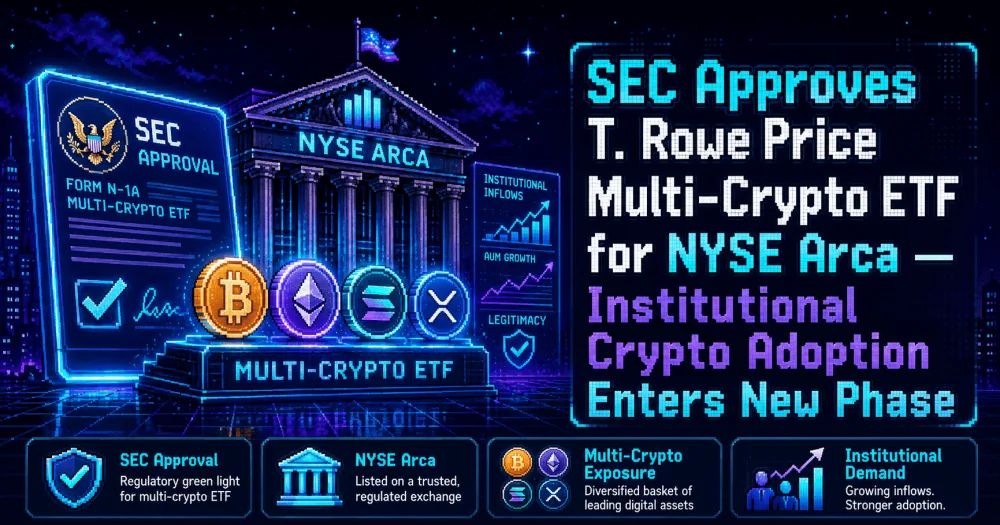
The approval of the T. Rowe Price multi-crypto ETF matters more than yet another fund launch. This shift signals that cryptocurrencies are now fitting neatly into the tools financial advisors actually use. Instead of chasing coins individually, investors get exposure through a single exchange-traded vehicle. Inside that structure sit multiple digital currencies bundled together like pieces of a puzzle meant to work as one. Brokerage platforms can slot this product alongside traditional holdings without extra hassle.
Just because something simplifies entry and updates doesn’t mean it’s secure. Still, smoother processes help organizations feel more comfortable using digital currency.
Contents
- 1.What the SEC Approval of T. Rowe Price Crypto ETF Actually Means
- 2.What Is Inside the T. Rowe Price Multi-Crypto ETF
- 3.Why NYSE Arca Listing Is a Major Institutional Milestone
- 4.How This SEC Approval Changes Institutional Crypto Adoption
- 5.Market Impact of a Multi-Crypto ETF Launch
- 6.Regulatory Evolution: How the SEC Is Changing Its Approach to Crypto ETFs
- 7.Why Multi-Crypto ETFs Are Becoming the New Standard
- 8.Risks and Challenges of Multi-Crypto ETFs
- 9.What Happens Next After SEC Approval
- 10.FAQ
What the SEC Approval of T. Rowe Price Crypto ETF Actually Means
SEC Decision Explained: What Was Approved and Why It Matters
The approval came through when regulators accepted NYSE Arca’s update tied to T. Rowe Price’s multi-crypto ETF. With that green light, trading can now happen on the platform. Because of this step, people refer to it as an SEC-backed cryptocurrency ETF.
NYSE Arca Listing Approval and Regulatory Context
A fresh look at how things unfold on NYSE Arca shows why it counts for crypto ETFs. Getting the green light there isn’t a stamp of trust in every digital coin. Instead, it reflects that safeguards around monitoring, reporting, and market access are held up for review. This detail clarifies just what SEC approval really signals for these funds.
Why This ETF Is Different From Previous Bitcoin-Only Products
One step beyond just Bitcoin, spot ETFs opened doors. Then came Ether funds, bringing another big name into play. Not limited to two names now, this new fund mixes multiple approved cryptos together. Instead of choosing between them, people get a blend shaped each quarter differently. A fresh path appears for those skipping separate Bitcoin and ETH▼$1,746.82 bets.
Key Regulatory Signals for the Crypto Industry
Now things shift as watchdogs edge closer to fixed guidelines. This clarity helps shape expectations around crypto ETFs in 2026, since firms begin seeing where they stand. Holding assets safely, monitoring trades, market depth – these stay key. So does how openly information flows.
What Is Inside the T. Rowe Price Multi-Crypto ETF
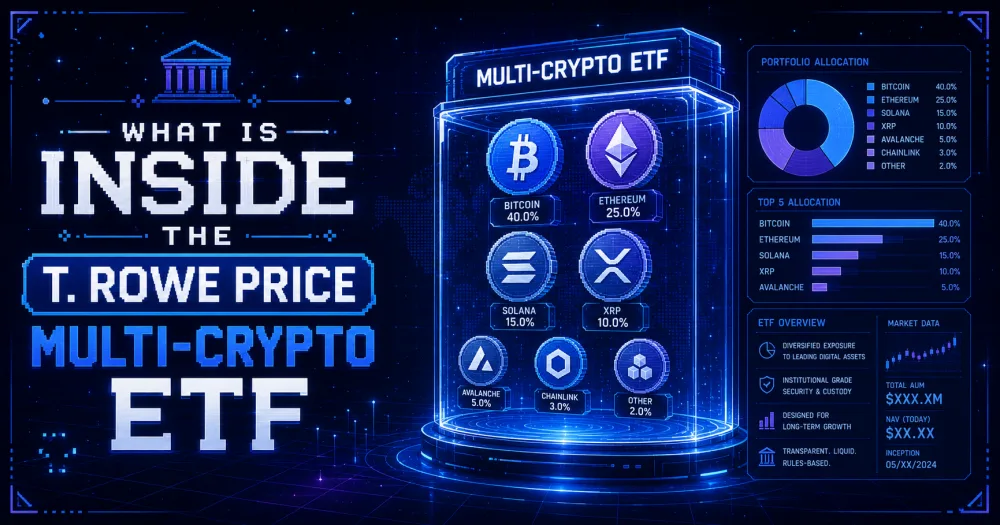
Bitcoin and Ethereum Allocation in the Portfolio
Here’s why Bitcoin stands out: it answers a need to hold value over time. Size matters, plus ready trading access and trust from big players help keep it central. Ethereum brings more tools – think self-running agreements, digital cash pegged to dollars, finance apps without banks, turning assets into tokens, even handling transaction records behind the scenes.
Exposure to Altcoins: Solana, XRP, and Others
Holding more than just Bitcoin and Ethereum might be on the table for T Rowe Price’s new crypto ETF. Solana could find its way in, along with XRP▼$1.18, while Dogecoin tags alongside Litecoin.
Avalanche appears likely to join, Chainlink too, maybe even Stellar gets included. Other digital tokens might show up in the mix as well. Not limited to just two coins, it actually spreads across several. That shift turns it into something closer to a true multi-coin fund.
Active Management Strategy vs Passive Index ETFs
Nowhere near a passive tracker, this fund gets regular tweaks from its team. Depending on how they read the markets, certain holdings might show up more, less, or vanish entirely. Models guide some choices, human judgment others. Room to adapt means room for mistakes, too.
How the ETF Selects and Rebalances Crypto Assets
One reason choices matter is how easy it becomes to move in or out of a position. When prices shift, decisions often follow – not always perfectly. Sometimes old favorites lose favor fast, especially among digital assets. Movement inside a group might not match expectations, even when logic seems sound.
Why NYSE Arca Listing Is a Major Institutional Milestone
Why NYSE Arca Is a Key Venue for ETF Listings
Most folks wonder about NYSE Arca (NYSE stands for New York Stock Exchange) – it runs as a key marketplace where exchange-traded funds buy and sell across America. Being on that platform means an ETF taps into active traders who help keep prices steady, alongside standard broker routes everyone already uses.
Institutional Credibility and Liquidity Advantages
Most big money managers expect secure storage, regular price updates, trade completion, clear records, tight margins, along with smooth share issuance and removal. When crypto enters an exchange-traded fund structure, it fits familiar rules. That shift signals acceptance by traditional finance players.
Comparison With Nasdaq and Cboe Crypto ETF Listings
Out of nowhere, Nasdaq made moves. Cboe followed, not too far behind. Then came NYSE Arca, stepping into the same space. Where this list of funds isn’t just a detail – it adds weight. Yet what stands out comes through slowly: digital assets sit now on shelves next to stock trackers. Alongside debt notes. Besides precious metals’ baskets. Even niche strategy funds built around trends you’d barely name twice.
What This Means for Traditional Asset Managers
Now comes T. Rowe Price stepping into crypto, not because it’s trendy but because big players are reshaping what they offer. Demand pulls them, opportunities guide their moves. This shift means digital assets aren’t just noise – they’re turning into a corner of portfolios. What was once fringe now fits alongside bonds and equities in the long-term plan.
How This SEC Approval Changes Institutional Crypto Adoption
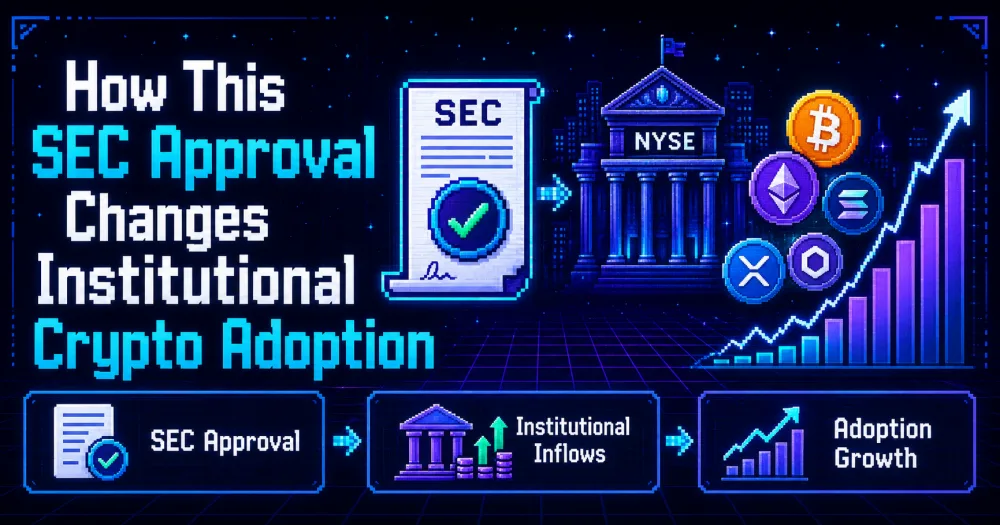
From Bitcoin ETFs to Multi-Asset Crypto Exposure
Bitcoin showed it works inside rules during the first ETF stage. Moving ahead, variety becomes the focus now.
Why Asset Managers Like T. Rowe Price Are Entering Crypto
Markets open up when clients want access, fees make sense, and others stay cautious. Out of the blue, T. Rowe Price leans on its history – picking stocks matters if leaders shift quickly. Research treats crypto like any new terrain – mapped slowly, watched closely.
Impact on Pension Funds, Hedge Funds, and Wealth Managers
Most large investment groups find crypto ETFs simpler to clear through internal checks compared to holding coins directly. Though pension plans often wait long before acting, others like hedge funds adjust quickly – using exchange-traded products for short-term positioning or clearer updates to clients.
Increasing Demand for Regulated Crypto Products
Most people avoid managing wallets, seed phrases, or foreign exchanges – this is why interest in supervised digital asset funds keeps rising. Should you wonder what crypto ETFs actually do, think of them like traditional funds that own assets, letting buyers simply purchase shares via brokerage platforms.
Table 1: What The SEC Approval Changes For Crypto ETFs
| Area | What Changes |
|---|---|
| ETF Structure | Moves crypto ETFs beyond single-asset Bitcoin or Ethereum exposure |
| Market Access | Gives investors access through a regulated listed product |
| Institutional Use | Makes crypto easier for advisers, funds, and wealth managers to review |
| Regulation | Shows a clearer framework for future crypto ETF approvals |
| Competition | May push other asset managers to launch similar multi-crypto products |
Market Impact of a Multi-Crypto ETF Launch
Potential Inflows From Institutional Capital
Day one excitement doesn’t always mean big money rushing in for a fresh ETF. Yet the pool of possible investors stays wide – many advisors and institutional players already treat ETFs like building blocks in portfolios. Provided costs stay low, trading stays tight, and brokers support it well, interest might grow slowly but steadily. The runway exists, even if takeoff isn’t instant.
Effects on Bitcoin, Ethereum, and Altcoin Liquidity
Most assets don’t trade as smoothly as Bitcoin or Ethereum. Altcoins in the basket might feel the real shift. When ETFs draw attention, institutions tend to follow – yet withdrawals hit thinner markets harder.
Could This Trigger a New Crypto ETF Wave?
One step forward might pull issuers into motion – active strategies here, passive flows there, themes spreading wide, staking hooks catching on, baskets weaving through. Chasing what tops the list for crypto ETFs in 2026? A tighter race now, since edge comes from cost, credibility, picks made, and how fast you move.
Short-Term vs Long-Term Market Expectations
For now, news stories could push prices one way or another. Over time, what matters is how fast people start using it, the range of holdings, trading gaps, speed, and whether financial planners back it. An ETF’s appearance doesn’t guarantee success – choices rest with those putting money in.
Regulatory Evolution: How the SEC Is Changing Its Approach to Crypto ETFs
Shift From Restrictive Approvals to Structured Frameworks
Now things shift a bit at the SEC – fewer holdups, more defined rules for listings. Not that they’ve lightened up. Just that companies now grasp what papers to file and how to frame their case. Clarity grows on both sides.
Role of Generic Listing Standards for Crypto ETFs
Meeting clear rules upfront might mean fewer battles over approvals later. When funds fit set conditions, things move faster – especially true for crypto offerings racing to launch. Staying within allowed boundaries cuts confusion. Defined checklists keep creators on track without slowing progress down.
How This Approval Fits Into Broader US Crypto Policy
Out of nowhere, clarity begins shaping up across U.S. crypto markets – approval nudges things along. Not just ETFs getting attention now. Behind them, stablecoins face new rule talk. Classification debates stir around tokens, too. Watchdogs eye exchanges more closely these days. Storage rules tighten without much fanfare.
What Regulators Still Worry About In Crypto ETFs
Worries linger among regulators – manipulation, shaky pricing, offshore platforms, weak oversight of assets, unclear valuations, and investors left guessing. Putting a fund on an exchange won’t wipe these out. Instead, they shift toward paperwork and monitoring.
Why Multi-Crypto ETFs Are Becoming the New Standard
Demand for Diversified Crypto Exposure in One Product
Most people investing their money skip digging into each blockchain, group of validators, cross-chain link, or how tokens are structured. Instead, they look for something broad, covering many areas at once. Think of it like this – a multi-crypto ETF becomes a container holding various digital assets together. Its setup spreads risk across several pieces rather than just one.
Risk Management Benefits of Basket-Based ETFs
One thing stays true. Volatility sticks around even inside a group of assets. Still, relying less on just one system becomes possible. When a single piece drags behind, something else might balance part of that drop. This setup gives advisors room to clarify risk. Clients avoid being pushed toward only one digital token.
Comparison With Single-Asset ETFs (BTC and ETH)
Tracking becomes simpler with single-asset ETFs. Holding just Bitcoin, such an ETF mirrors its market value directly. When multiple cryptos blend into one fund, the scope widens – complexity rises too – for those eyeing several leaders across cycles.
Future of Active vs Passive Crypto Funds
Most people looking to save on costs might lean toward passive funds. Those convinced that picking winners matters could prefer active management instead. What sticks around is what performs well once expenses are taken out.
Table 2: Main Benefits And Risks Of A Multi-Crypto ETF
| Benefit | Risk |
|---|---|
| Diversified exposure in one product | High volatility across several crypto assets |
| Easier than direct crypto custody | Tracking error from active management |
| Familiar ETF structure | Liquidity risk in smaller tokens |
| Exposure beyond Bitcoin and Ethereum | Regulatory uncertainty for some assets |
| Potential institutional inflows | Market manipulation concerns remain |
Risks and Challenges of Multi-Crypto ETFs
Volatility Risks Across Multiple Crypto Assets
Still shaky, crypto swings inside an ETF just like elsewhere. When cash flow slows, or big-picture trends shift, even mixed baskets may drop hard. Faster jumps often hit altcoins compared to Bitcoin. Being on a trading platform does not guarantee value.
Liquidity and Market Manipulation Concerns
Offshore platforms often see trading in certain qualified assets. Questions pop up about price accuracy when that happens. Manipulation becomes harder to rule out. Market makers for ETFs look for ways to balance their exposure. When markets thin out, those gaps between buy and sell prices grow. Wide spreads follow.
Tracking Error and Fund Management Complexity
Most times, an active fund won’t follow a crypto index exactly. When the person in charge makes good picks, that difference works out well. If those choices miss the mark, results tend to fall short. The gap between expected and actual performance? That’s what tracking error really means.
Regulatory Uncertainty for Emerging Tokens
Still unclear where tokens stand right now. A shift by judges, officials, or laws could force changes in how the fund operates. Newer digital assets sometimes collapse, argue among leaders, get breached, or vanish from trading platforms.
What Happens Next After SEC Approval
Expected Timeline for NYSE Arca Listing
Once approved, attention shifts to how well registration works. Ticker symbol gets confirmed next. Seed funding must be in place by then. Market makers come into play at that point. Platform access follows shortly after. Trading does not start right when the SEC issues its order. Official announcements hold the real updates. Watch those closely.
How Institutional Investors Will Access the ETF
Brokers open doors for institutions wanting ETF exposure. Custodians step in where direct access fails. Trading desks handle volume without fuss. Adviser platforms link strategy to execution. Tactical moves show up here more than expected. Retail paths twist through standard brokerage accounts instead. Crypto ETFs slip into portfolios quietly this way.
Potential Competitors Launching Similar Products
Expect others to join. The setup will catch attention from similar players. A few could cut costs with simpler versions. Different ones might chase uses like digital deals, money moves, asset swaps, or markets that trade fast.
Scenarios for ETF Adoption in 2026 and Beyond
Now comes steady money moving in, advisers starting to join. Growth crawls if people already own Bitcoin and Ether funds. A drop arrives when things turn sour. What institutions really mean by crypto investing becomes obvious – rules apply, amounts stay small, steps repeat every time.
FAQ
What Is the T. Rowe Price Multi-Crypto ETF?
This single-traded fund holds various approved digital currencies, picked by managers who make active choices. Performance aims higher than a standard crypto index, thanks to ongoing adjustments behind the scenes.
Why Is NYSE Arca Important for ETF Listings?
One place where many U.S. ETFs appear is the NYSE Arca. When something shows up on that platform, brokers can handle trades using standard systems. Behind the scenes, market makers help keep things moving. Rules set by the exchange guide how it all works. Settlement follows routines investors already know.
How Many Cryptocurrencies Are Included in the ETF?
Most of the time, this fund will keep anywhere from five to fifteen digital currencies. That count might shift now and then.
Is This ETF Available to Retail Investors?
When trading starts, brokers might offer it to regular buyers just like any stock on the market. Not every firm will carry it, though. Which accounts get access depends on the provider’s rules.
Why Is an SEC Approval Important for Crypto Markets?
Getting the green light from the SEC opens doors for exchanges to officially carry the product. Risk still exists, yet oversight helps bring structure and encourages serious players to participate.