Is cryptocurrency dead? That question is floating around again. Mood dips hard when fear grips traders. The index tracking emotions sinks close to its lowest point. Nervous hands pull out money fast. Confidence wobbles under pressure. Sharp drops feed doubt across markets. Hope fades quietly in corners where excitement once ran high. Fewer voices now shout about gains. Silence grows louder than predictions did.
Crypto dead once more? It shows up whenever prices go south. When Bitcoin slips, Ethereum tags along, altcoins crash faster – then social media fills with obituaries. The Fear & Greed Index sits near collapse, nerves tighten across the space, and people wonder if this dip is just routine or the start of real trouble.
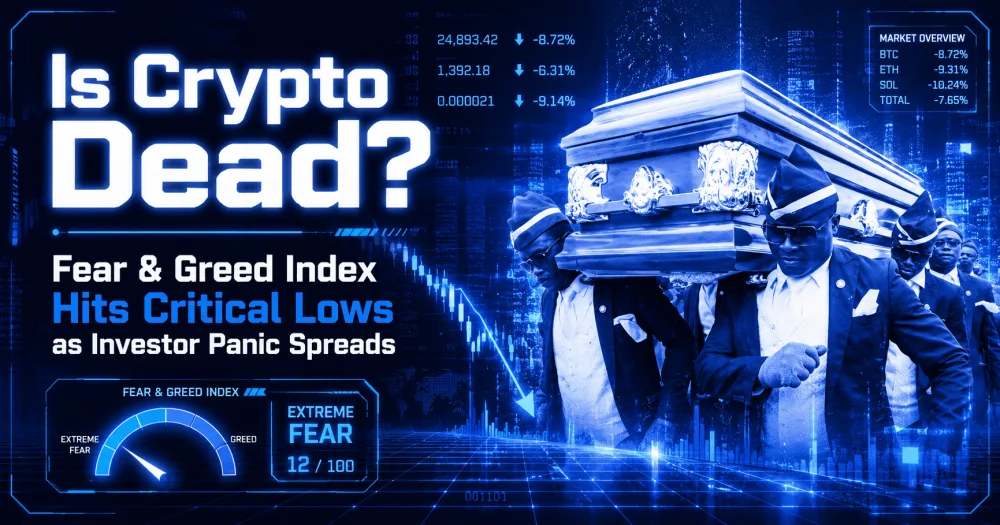
Even so, people have declared crypto finished more than once. Following exchange failures, it was supposedly over; when regulations loomed, the obituary came again. After Bitcoin tumbled, whispers of its end spread anew. Each doomed altcoin cycle brought another round of eulogies. Survival persists even as shaky tokens fade away.
Related: Can Bitcoin Crash to $20K in 2026? What Could Trigger a Historic Crypto Market Collapse
Contents
- Is Crypto Dead? Why This Question Is Trending Again in Markets
- Fear & Greed Index Hits Critical Lows: What It Actually Means
- Crypto Market Crash or Healthy Correction?
- Why Investor Panic Is Accelerating Right Now
- What On-Chain Data Says About the Current Market Phase
- Sentiment vs Fundamentals: Where Is Crypto Really Heading?
- How Media Stories Shape Crypto Price Swings
- Key Signals Traders Are Watching in Extreme Fear Conditions
- FAQ
Is Crypto Dead? Why This Question Is Trending Again in Markets
Nowhere near alive, crypto seems in 2026 as drops pile up across price charts and trust fades fast. Panic glows bright inside that red bar – headlines scream while accounts empty out from forced exits.
Market Sentiment Turns Negative Across Major Assets
Out of nowhere, prices slipped on Bitcoin, then dragged Ethereum down with it. When one goes, others tend to follow – especially the ones few people trade. Tokens tied to games feel it hard, plus those old alternatives sitting around. Artificial intelligence-themed picks? They dive quicker than expected. Most pain shows up where volume is thin, not at the top. Small moves in BTC▲$62,630.00 spark big swings further out.
Why “Crypto Is Dead” Narratives Return Every Cycle
Here we go once more with crypto being declared finished – feelings run the show here. Each round plays out much the same way: gains spark excitement, confidence grows too fast, borrowed money piles up, then a shaky economic hint or cash crunch appears. Out of nowhere, voices start wondering what went wrong this time.
Social Media Reaction and Retail Investor Fear
Loud voices grow during market dips because of social platforms. A single image of an emptied account spreads fast online. Yet another person claims the era of Bitcoin has ended. Every few hours comes a fresh claim that prices can go no lower. Fear spreads fast when prices swing wildly.
People rush out simply because others are rushing out. This motion feeds itself, each exit pushing the next. A loop forms without anyone planning it. Panic grows not from facts but from watching neighbors jump. The crowd’s pulse sets the rhythm, step by shaky step.
Fear & Greed Index Hits Critical Lows: What It Actually Means
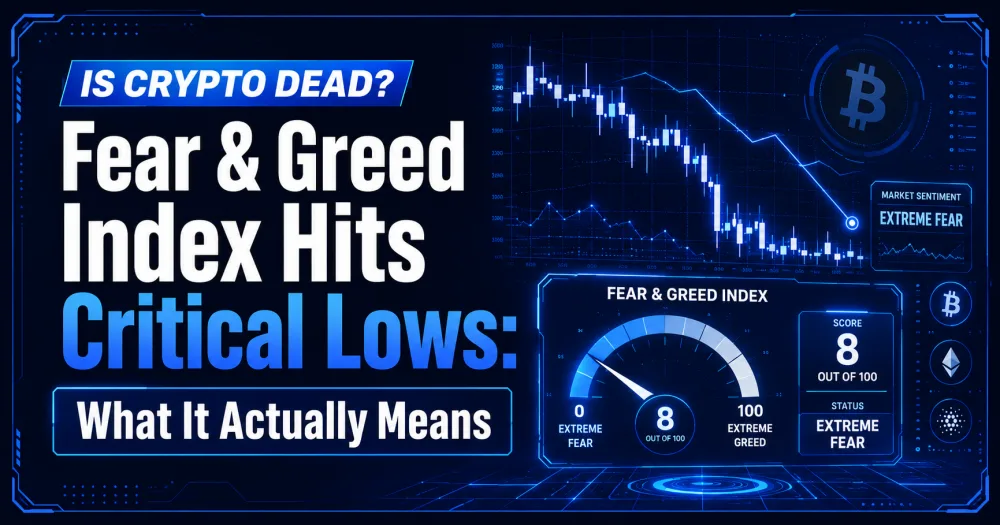
Most people check the crypto Fear and Greed Index to get a feel for how others are reacting. Though numbers matter, emotions push prices just as hard in digital currencies. Instead of calm analysis, you’ll often find excitement or panic shaping trades. This tool maps those feelings – fear, balance, greed – not through stats but behavior patterns.
Breakdown of the Extreme Fear Zone
Betting stops. That jumpy market mood? People hesitate now, prices swing wildly. Not every dip finds a floor right away. When panic selling drags on, dread just sticks around instead of vanishing.
How the Index Reacts to Volatility and Liquidations
Surging prices often lift the Fear & Greed Index, yet sharp dips tend to drag it down just as quickly. Volatility kicks in when panic spreads across traders, nudging sentiment into negative territory. As liquidations pile up, confidence shrinks without warning. One massive sell-off might trigger a chain reaction, pulling more positions underwater. Emotions shift faster than data updates when markets turn choppy. Automated exits add pressure, feeding the sense that everything is slipping at once.
What Historically Happened After Similar Readings
Back then, spikes in fear usually showed up when markets got rocky. Not always a sign things would bounce back fast – sometimes rallies followed. Other times, more losses piled on afterward. Instead of asking if panic means it’s time to jump in, pay attention to what shifts once fear takes hold.
Crypto Market Crash or Healthy Correction?
This moment feels heavy with questions. A drop like this – crash or cleanup after too much heat? Time will shape the answer, not guesses. What holds up reveals what was real.
Bitcoin and Ethereum Price Pressure Explained
When BTC slips past critical points, fear grows louder among holders. Pressure builds on Ethereum as selling picks up, especially if it fails to defend stable zones. Risk-off moves by investors weigh heavily on both assets right now. Altcoin struggles often trail behind Bitcoin’s instability – ripple effects spread fast. Headlines about ETH▲$1,761.17 declines tend to spike once support breaks, feeding further doubt.
Altcoin Market Underperforming the Broader Index
Most times, altcoins drop harder than Bitcoin does. This pattern shows up when markets turn cautious. Risky picks get dumped early by investors. A climb in Bitcoin’s share during dips hints at safety moves. Big coins become shelters while small ones lose appeal.
Is This a Liquidity-Driven Event or Structural Decline?
For now, this drop feels less like a total breakdown and more like cash shifting around. It stings either way. A total collapse would show up as people exiting, coders walking off projects, stablecoins nearly vanishing, and whole systems slowing to silence. What we are seeing ties closer to borrowed money unwinding, bets being pulled back, ETFs driving moves, and markets waiting on the sidelines.
Read more: Why Is Crypto Tanking? Bitcoin and Altcoins Enter Full Panic Mode
Why Investor Panic Is Accelerating Right Now
Panic spreads fast now that pressure builds from every corner. Prices drop while liquidations pile up, dragging everything down with them. Bids show little strength, shrinking when most needed. Headlines turn harsh, feeding fear instead of clarity. The signal grows clearer by the hour – survival means moving before understanding why.
Forced Liquidations and Derivatives Unwinding
Derivatives crank up wild swings in crypto prices. Big bets turn tiny shifts into huge jumps. If the market turns on packed trades, platforms shut them down fast. This domino effect wipes out buyers when things crash, while sellers choke on rallies.
ETF Flows and Institutional Risk-Off Behavior
Bursts of buying often trail big ETF moves, revealing where serious money shifts. Not every dip signals retreat – sometimes caution just spreads through boardrooms. Shrinking appetite at scale removes a key prop beneath digital assets. Absence now? Likely timing, not exit.
Retail Capitulation Signals Across Exchanges
Panic selling sparks when nerves snap. Frustration spills into forums, loud and raw. Accounts drain fast, pulled out in waves. People walk away, trapped by prices they once cheered. Cash needs push some to exit. The sight of falling numbers pushes others. Relief comes only when fresh hands start lifting bids. Without them, the fall just echoes.
What On-Chain Data Says About the Current Market Phase
What folks pay becomes clear when looking at the price. Behavior reveals itself through on-chain movement, not feelings. Coins move in ways that numbers alone cannot hide. What people do shows up where transactions live.
Exchange Inflows vs Outflows
Most times, money flowing into exchanges hints that people might get ready to offload assets. Coins leaving those platforms often means owners take control themselves, possibly lowering chances of immediate sales. Situation shapes meaning – a single big transfer differs sharply from many small ones piling up.
Stablecoin Reserves and Buying Power
Nowhere near every coin stays put when markets shift. When stablecoins pile up on trading platforms, it often means people hold back, watching for dips. Reserves that shrink? That hints at fewer funds ready to jump in. Less cushion usually means less room to push prices higher.
Whale Accumulation vs Distribution Trends
When prices drop, and fear spreads, big holders sometimes step in without notice. A dip might look bad, yet behind it, steady buying can grow. Panic among small traders does not always win – strength hides where few watch. Heavy selling happens even when markets seem calm, especially if buyers are scarce. Quiet accumulation during stress often signals what comes next.
Sentiment vs Fundamentals: Where Is Crypto Really Heading?
Fear grips most traders today. Yet here, a few pockets hold steady despite the pressure. Weaknesses show up clearly in certain areas, even though strengths linger elsewhere.
Disconnect Between Price Action and Network Activity
When prices drop, but network signs hold firm, something else is happening beneath. Activity on the chain might keep humming even as token value slips. Steady usage – fees, logins, moves between wallets – can stand apart from price swings. A dip in cost without slowing engagement often means investors are adjusting expectations. But when both metrics sink at once, trouble runs further down than numbers show.
Developer Activity and Ecosystem Growth Remain Stable
Even when prices fall, construction continues. Builders push ahead with wallets instead of waiting. Real projects advance – DeFi platforms emerge alongside new payment systems. Infrastructure grows quietly beneath the noise. Games appear without fanfare. Scaling fixes take shape slowly. Panic shakes traders, yet code still ships. Progress walks in while doubt shouts at the door.
Related: Best Crypto Faucets in 2026: Top 5 Platforms That Still Pay Free Crypto
Macro Conditions Impacting Risk Assets
Lately, crypto hasn’t been moving alone. Shifts in interest rates tug at it, just like swings in the dollar or stock markets. Liquidity changes whisper through its prices. Geopolitical jitters leave marks, too. ETF money coming and going adds another nudge. Big players adjusting their bets tilt the scale further. Squeeze hits elsewhere? Crypto often stumbles first – seen as risky, it bends quickly when pressure builds. Tough times show it’s tied tightly now.
| Market Sign | Crash Scenario | Correction Scenario |
|---|---|---|
| Bitcoin Trend | Breaks major support levels | Holds key long-term zones |
| Altcoins | Heavy losses across most sectors | Sharp but uneven pullback |
| Liquidity | Buyers disappear quickly | Liquidity returns after panic |
| Sentiment | Fear keeps getting worse | Fear stabilizes after selloff |
| Recovery Signal | Weak bounces fail fast | Spot demand slowly improves |
How Media Stories Shape Crypto Price Swings
Fear spreads more quickly because of headlines, even if reporters did not cause the drop. How folks talk about downturns often starts with a front-page story.
Role of Fear Headlines in Retail Behavior
Headlines built on fear stick around. Like “Bitcoin drops again.” Or “Crypto panic spreads.” Even “Is crypto dead?” These spread quicker than any slow walk through liquidity, leverage, and funding numbers. Speed beats depth every time.
Algorithmic Trading and Sentiment Amplification
When markets get shaky, machines often push prices further. Because they spot gaps in buy and sell levels, their responses tend to pile up fast. Even small shifts gain speed when funds flow oddly, or headlines flash. Without enough traders stepping in, each automated move strikes stronger.
Why “Crypto Is Dead” Stories Always Go Viral
Stories about crypto dying spread fast when drama grabs attention. When prices drop, some see proof they were correct all along. Others who are worried find comfort in headlines echoing their fear. Yet collapse is rarely what happens next. Instead comes adjustment, shedding debt, and sometimes a slow recovery. The cycle turns again, whether believers admit it or not.
Key Signals Traders Are Watching in Extreme Fear Conditions
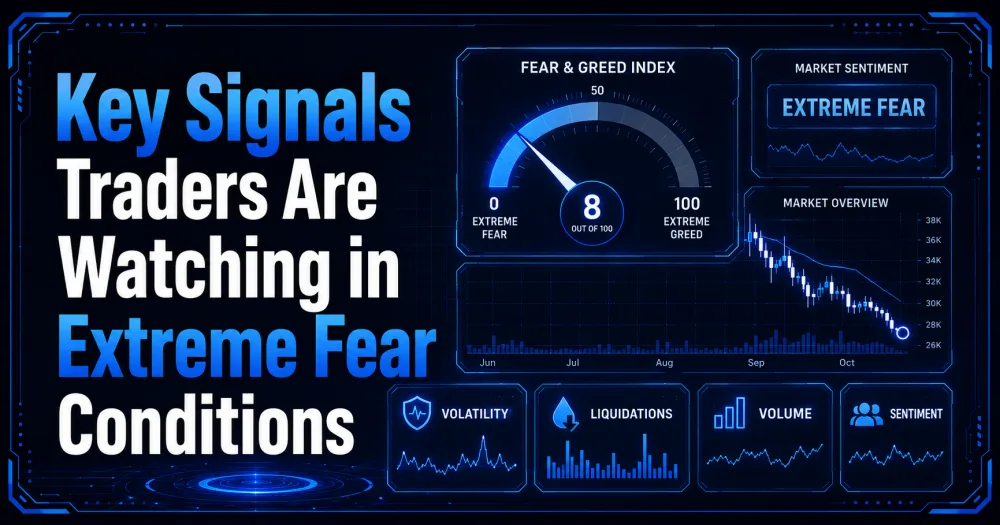
Fear grips some, yet clever traders shift focus to patterns beneath the chaos. Red bars flash, true; however, clues hide in how prices group. A drop might come, still meaning grows clearer when you see the frame. Structure talks louder than color.
Funding Rates Turning Negative
When funding rates drop below zero, those betting down start handing money to people holding positions up. This often hints that too many traders have lined up on the short side. Once the downward move stalls, all those short bets might scramble out at once, pushing prices higher fast. Still, whether buyers appear in the actual market decides how far it goes.
Market Depth and Liquidity Conditions
What you see just around today’s price is market depth – buyers below, sellers above. A shallow setup lets prices jump more easily, needing smaller trades to shift things. When volume builds back after a sharp drop, calm could be returning. Signs like that sometimes come before broader recovery.
Bitcoin Dominance Reversal Patterns
When fear hits, Bitcoin’s share often climbs. A jump means smaller coins lose favor fast. Once that grip loosens – market steady but dominance dipping – it hints at renewed appetite for chance. Not always loud, just subtle shifts beneath. Recovery in those lesser tokens sometimes whispers before it speaks. Calm in Bitcoin tends to come prior.
Early Signs of Market Stabilization
Red candlesticks shrinking could hint at early calm. Liquidations start falling, which sometimes follows big drops. Spot trading picks up a bit by then. Less pressure from forced sellers often shows around this phase. The Fear & Greed number might stop diving here. Not a rally signal – just possible easing of fear.
| Signal | What It Suggests |
|---|---|
| Negative Funding Rates | Short positions may be getting crowded. |
| Rising Liquidations | Leverage is being flushed from the market. |
| Weak Market Depth | Prices can move sharply with less capital. |
| Exchange Inflows | Some holders may be preparing to sell. |
| Stablecoin Reserves | Shows possible buying power waiting on the sidelines. |
FAQ
What Does The Fear And Greed Index Mean?
Out there among traders, fear or greed often sets the pace. When emotions tilt one way, this index tends to reflect it clearly. Though mood shows up well here, guessing the next prices is not really its job. Watching reactions gives clues – yet forecasts stay out of reach.
What Does Extreme Fear Mean in the Fear and Greed Index?
When the Fear and Greed Index shows extreme fear, nerves run high among investors. Volatility spikes at times like these. Demand often shrinks under such pressure. You might spot this reading close to market lows. Then again, it sometimes emerges in sharper downturns too.
Is Crypto Still Around in 2026?
Still ticking past 2026, crypto faces uneven strain across its landscape. Some tokens falter, unable to bounce back from setbacks. Others hold firm, pushing forward despite headwinds. Resilience separates those built to last from fleeting experiments.
Why Does Crypto Keep Falling?
Down goes crypto once more, dragged by heavy borrowing and thin trading volume. Pressure from ETF outflows adds fuel, while big-picture jitters cloud decisions. Fear kicks in fast when markets wobble like this. One cause alone isn’t behind it – each piece feeds the drop. Moves like this rarely have just a nameable source.
Bitcoin Price Falls Amid Market Uncertainty?
What makes Bitcoin fall today tends to link back to traders avoiding risk, forced exits piling up, lack of strong buying interest, followed by automated sell orders kicking in. When trust fades, Bitcoin drags everything down – its moves set the tone more often than not.
Is Crypto Coming Back After the Drop?
After a crash, crypto might come back – yet that comeback hinges on how much money flows in, whether buyers show up, what’s happening in wider markets, plus if Bitcoin stops swinging so wildly. Bouncing for a bit doesn’t mean the whole direction has shifted. What looks like progress could just be noise.