Bitcoin is showing early signs of stabilization after falling from $79,000 but analysts say metrics still point to a more stressed market.
The latest rebound of the largest crypto by market cap is looking less clean under the surface, with more loss-taking showing stress even as sell pressure starts to ease.
In its BTC Market Pulse report for week 22, analysts at blockchain analytics firm Glassnode said Bitcoin‘s price momentum fell 21.7%, reflecting weaker price action and a more cautious market backdrop.
Trading activity also cooled as spot volume on crypto exchanges fell 10%. Meanwhile, futures open interest dropped 3.5%, suggesting traders are reducing speculative exposure. Glassnode said:
“Activity has also cooled, with Spot Volume down 10% and Futures Open Interest declining 3.5%, pointing to reduced speculative appetite and a more cautious market backdrop.”
The analysts added that spot cumulative volume delta and perpetual futures cumulative volume delta rose 77.2% and 35.5%, respectively. This might signal that selling pressure has started to ease and the market is becoming more balanced after the pullback, the analyst say.
Read also: 107 BTC Worth $8.2M Permanently Burned. Who Burns Bitcoins and Why?
Loss-Taking is Back
As Glassnode argues, the net unrealized profit-to-loss ratio declined sharply, while the realized profit-to-loss ratio showed more loss realization than profit-taking. That means more investors are selling coins at a loss, implying their confidence weakens.
As for traditional finance, there has been confusion since the spot Bitcoin ETF MVRV ratio increased by 0.69% in the week, implying ETF holders had more unrealized gains.
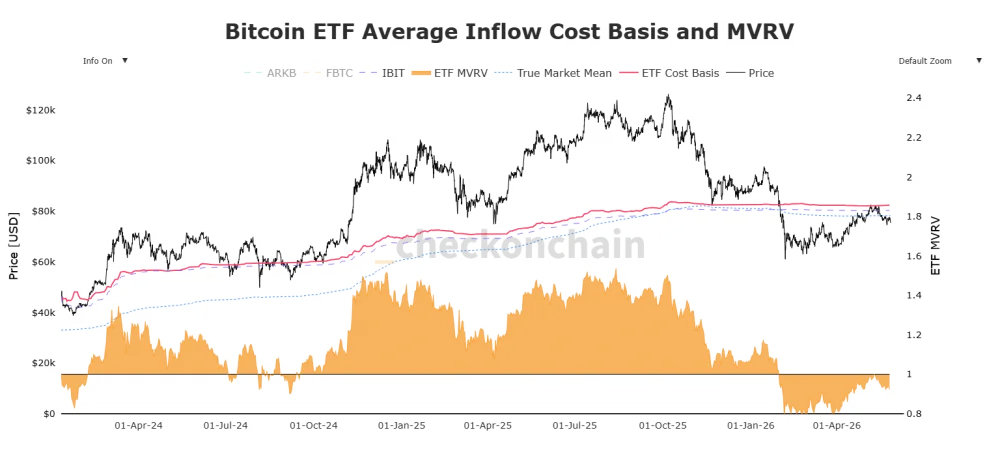
However, trading volumes for ETFs dropped by 22.9%, indicating low speculative activity, so demand is yet to pick up.
Network activity was also down since daily active addresses and adjusted transfers were down slightly:
“From a network activity perspective, the daily active address count and entity-adjusted transfer volume have experienced minor reductions, hinting at a possible consolidation phase or diminishing investor activity.”
There are still signs of risk appetite, though. Long-side funding payments jumped 135.4%, showing demand for leveraged long exposure, while options skew moved higher, pointing to slightly greater demand for downside protection, the analysts say.
Read more: Bitcoin Volatility Hits Nine-Month Low Amid Sluggish ETF Demand