Faston Crypto Etherions – often called EFC – shows up loud but fuzzy. Not quite clear if it’s a network, digital coin, game universe, or if it is just riding Ethereum’s coattails. What matters isn’t just defining EFC. Matters more: what parts of it stand up to testing?
Contents
What Is Faston Crypto Etherions (EFC)?
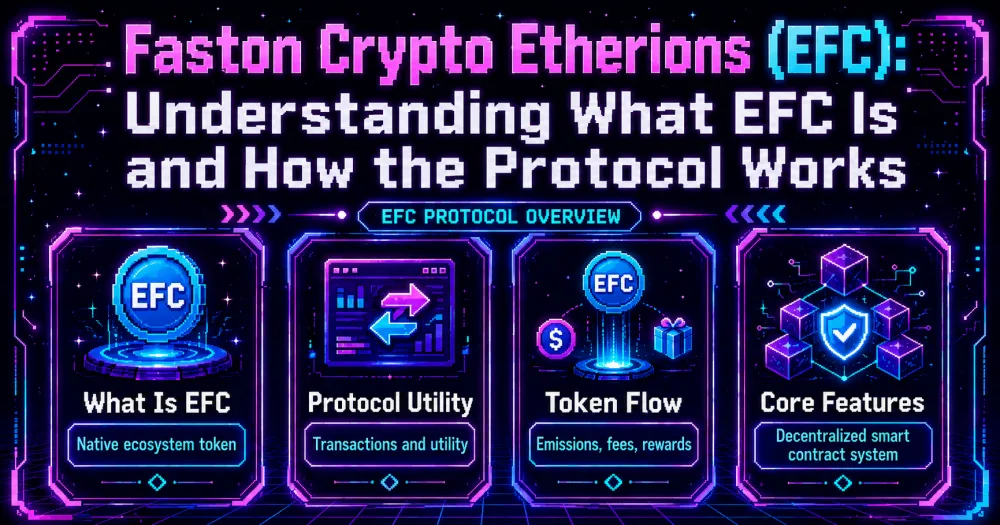
Faston Crypto Etherions goes by EFC, a setup using blockchain tech centered on its own coin, items named Etherions, along with speed-focused transaction networks. One take labels it Web3 gaming; another views it as broader – handling money moves and decentralized finance tools. Sorting out what’s claimed from what’s shown matters when explaining EFC crypto clearly.
Related: Is SpaceXCoin Crypto Dead? The Real Reason SPXC Is Crashing in 2026
Overview of the EFC Token and Ecosystem
Some call it a digital playground, others just see code. Inside lives something named EFC – its heartbeat. Not built on dreams but blocks, one connects to another, forming what they name Faston. Picture rare items, unique like fingerprints, these are the so-called Etherions. Ownership shows up on screen as proof, not paper. Moving between actions happens through tokens, not cash. Hold them, lock them away, earn more that way possibly. Voting might come later, who knows? Structure holds pieces together quietly, without noise.
Core Idea Behind Faston Crypto Etherions
Inside the system, EFC acts like digital cash. People might pay with it – shop, trade, cover costs. Stash it to earn rewards or take part in decisions down the line. Should things unfold as planned, gameplay moves could run on EFC, too. Think leveling up, shifting NFTs around, cycling through bonuses – all tied to this one token.
Faston Crypto Etherions Basic Concept
Here’s how Faston Etherions work, spelled out clearly. Think of a blockchain setup where digital items shift fast, hook into code-driven agreements, one while feeding an ecosystem that feels like a living game. These Etherions? They’re digital beings you can claim as yours, unique entities in the system. Running beneath it all, EFC fuels activity, keeps things moving, sort of like energy for trade and play.
Why EFC Is Gaining Attention in 2026
In 2026, EFC starts turning heads – traders dig up fresh stories once more. When investors feel bold, gaming grabs focus, followed by NFTs, lean blockchains with tiny fees, staking plays, and crowd-driven coins. Right where these paths meet, you’ll find Faston Crypto Etherions waiting.
Curiosity often follows confusion. When something feels unclear, questions pop up – like what Faston Crypto Etherions actually are, how EFC runs behind the scenes, whether it holds any real ground – all because clarity is missing. Just because people type queries doesn’t mean they’re convinced. Popularity of search isn’t proof.
How EFC Works Inside the Protocol
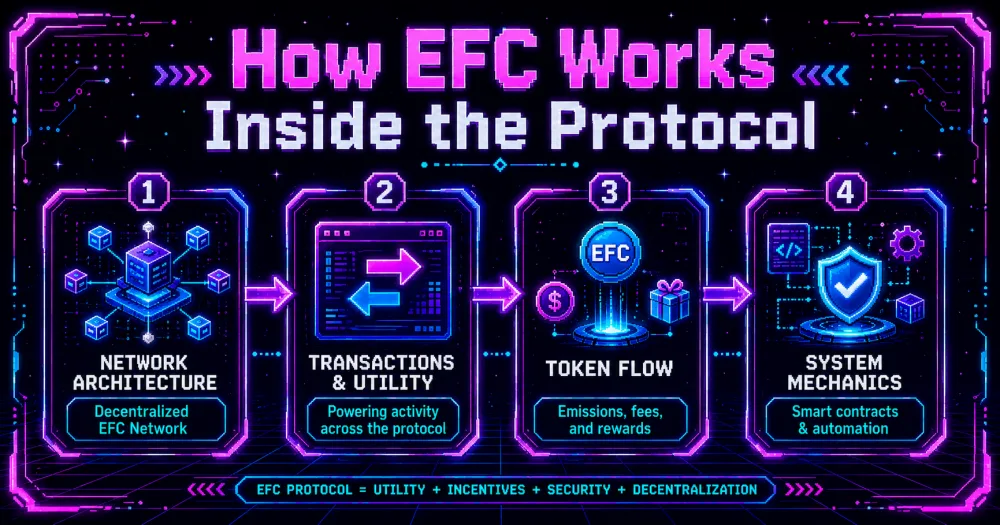
One way to look at the EFC protocol? It passes tokens through players, apps, checkers, and code rules. When grown up, it handles costs, shifts value, gives back to helpers, while linking play zones with money systems.
Basic Architecture of the Faston Network
A web of connections might start with a foundation that handles exchanges. Following that, code scripts manage markets, holding assets, and program functions. On top sits what people interact with – tools for access, visual reports, play spaces, and digital collectibles displays.
Most systems look like this one. Getting it right means nailing the details – validators that hold up, code checked by experts, performance that matches promises.
Read now: Why Is America 250 Coin Going Viral? Legit Crypto Trend or Just Hype?
Role of EFC in Transactions and Utility
Inside this system, what role does the EFC token play? It serves as a means for payments and coordination tasks. To obtain digital items, people might use it instead of a standard currency. Transaction costs can be covered using these tokens. Participation in staking groups opens up when tokens are committed. Rewards become accessible once they’re claimed through the network. Should governance launch, voting power arrives alongside holdings.
What holds up EFC the most? Real use. When folks rely on it to run things, interest follows naturally through action. Not just ads or talk – those fade fast.
Token Flow and System Mechanics Explained
Picture the EFC setup like a circle that keeps turning. Inside this flow, someone joins the system, then gets hold of EFC – either by purchase or receipt. Once they have it, they spend it across different apps doing what they need. To make things happen, small charges apply each time something is done. These bits of value might move toward those who verify activity, get locked into staking deals, feed rewards, fill funding reserves, or simply land with whoever sold the service.
The cycle only starts to make sense when users can clearly see where the tokens go and why. The system becomes easier to trust when users can see where fees go, how rewards are funded, and whether emissions dilute holders. Transparency shapes trust inside the motion.
Table: Key EFC Factors To Check Before Trusting The Project
| Factor | Why It Matters | What Users Should Look For |
|---|---|---|
| Token Contract | Confirms which EFC token is real | Verified contract address and active chain data |
| Tokenomics | Shows dilution and insider risk | Total supply, vesting, emissions, treasury allocation |
| Smart Contracts | Reveals technical risk | Public code, audits, bug reports, upgrade rules |
| Liquidity | Affects buying, selling, and slippage | Real trading volume, deep pools, reliable exchanges |
| Team Transparency | Helps assess accountability | Named team, public roadmap, regular updates |
| Real Utility | Separates product from hype | Working app, payments, staking, marketplace, user activity |
Key Features of Faston Crypto Etherions
What stands out about Etherions crypto? In a decentralized setup, backed by smart contracts, settlements happen quickly. Fees stay small, ownership of digital items is clear, earning through staking is possible, and people shape direction together. Fancy terms pull attention. Numbers tell a clearer story.
Decentralization and Network Structure
One person alone cannot steer things behind closed doors. Open validators need to show up clearly for EFC, along with code anyone can inspect. Governance has to be out in the open, not hidden away somewhere. Token ownership spread widely matters just as much as upgrade paths spelled out plainly. Rules must stand in daylight, not shadows.
One site might hold it all together, even when a project says it’s spread out. Running on just a single team doesn’t fit the claim of being widely shared. An admin wallet controlling everything? That’s centralization wearing different clothes. Liquidity from only one place pulls strings behind the scenes. Saying distributed means little if pieces stay locked in one spot.
Smart Contract Integration (If Applicable)
When EFC works with smart contracts, these handle tasks like creating NFTs, trading on marketplaces, rewarding stakers, processing votes, managing pool liquidity, and activity inside games. Verification starts by checking official contract addresses, third-party audit reports, guides from developers, and code shared openly. Missing any of that? Then the whole idea of using smart contracts remains unproven.
Speed, Scalability, and Efficiency Claims
Speed shapes Faston’s tale since quick transfers define its identity. Because it settles trades swiftly, costs stay low – helpful when handling game actions or digital collectibles. Transactions slip through fast, which matters most during busy moments online. Small payments move without delay, fitting how people spend now. Efficiency shows up where it counts, especially with frequent, tiny exchanges.
Reality checks matter more than fast promises. Some systems boast big numbers on paper. When actual people show up – along with automated tools and trading bursts – the results often shrink. True pace only appears once traffic arrives.
Related: Is UATF Crypto Worth Buying in 2026? Risks, Potential and Price Forecast
Use Cases of EFC Token
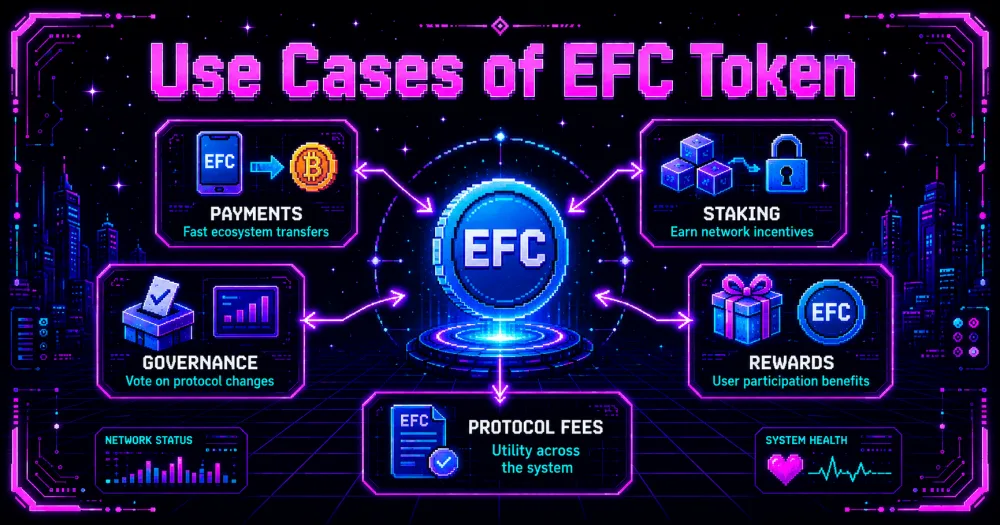
Most times, EFC applications fit into one of four groups: payments tied to daily spending, actions within digital environments, locking up tokens for rewards, and decision-making roles in networks. Gaming might stand out more than others – especially if Etherions turns into the main platform people interact with. What really matters is whether any of these actually pull in users who care about function, not just price swings.
Payments and Ecosystem Utility
Inside the ecosystem, EFC can work like cash. Users might send it to one another. It could buy things on marketplaces. Minting or improving digital items may require it. Some services running on the protocol take it, too. Payments only work if EFC has a steady cash flow, plus clear expense patterns.
Staking and Incentive Mechanisms
Most times, people talk about staking as if it helps protect the system while giving something back to those who hold tokens. When the setup relies on validators, folks with EFC might choose to lock up their coins and get paid in return.
In cases where there’s just a simple pool handing out incentives, putting tokens in could mean getting pieces of the newly released supply. Payments that come from actual user charges tend to carry more weight compared to payouts made mostly from printing extra tokens.
Governance or Community Functions
Should EFC link to governance, it depends on the setup. A strong version lets token owners decide on updates, fund moves, rule shifts, and even project funding. When it is weak, voting feels more like a show – actual power stays behind closed doors.
Clear rules matter most when building fair systems. Transparency inside the treasury keeps trust alive over time. Whale dominance? That gets blocked by strong safeguards automatically.
Is Faston Crypto Etherions Legit or Risky?
Truthfully, answering whether EFC is legit isn’t straightforward. While the core idea could hold value in theory, evidence seen by regular people remains thin so far. Without clearer records, verified agreements, open team details, plus solid platform facts, taking part feels uncertain at best right now.
Transparency of the EFC Project
Truth comes first in any real cryptocurrency effort. Start by asking who actually runs the thing. The whitepaper ought to be visible right away. Find the token address without a scavenger hunt. Check which blockchain hosts it today. Look up whether trusted teams reviewed the code. See where it trades – known platforms matter. Wallet compatibility helps confirm legitimacy. Relying on blog summaries and social resharing misses the point entirely.
Red Flags to Watch in EFC Ecosystem
Most warning signs feel like déjà vu. Missing a confirmed contract address shows up first. Audits that aren’t public tend to raise eyebrows. Teams hiding identities never sit right. Poor or missing docs add doubt. A product that doesn’t actually run is hard to ignore. Tokens floating around without clarity cause pauses. Promises of lightning-fast results stretch users’ trust. Urgency pushed on buyers always lingers wrong.
Watch out for mix-ups with names. When checking into EFC, make sure it’s actually Faston Crypto Etherions you’re seeing, since a different coin might share that symbol.
Related: Could Project Oasis Coin (PXR) Be The Next 100x Solana Crypto? Here’s What You Need To Know
Community Feedback and Early Signals
Most times, people jumping into chats give energy. Yet that rush might come from fake accounts or reward seekers hiding behind screens. Watch how coders talk about problems online. Notice if real users post fixes they found themselves.
See who points out flaws without being paid. Noise fills many channels daily. Truth slips through when nobody’s selling something. Right now, patience matters more than hype: EFC still has to prove its next move.
EFC Tokenomics Explained
One way to look at EFC tokens is through how many of them exist overall. Another piece comes from seeing how many are actually moving in markets. Locked holdings matter because they show when big amounts might appear later. The speed at which new coins enter play with shapes long-term value shifts.
Where funds sit after launch tells part of the story, too. Some go to backers early on, which affects fairness. People earn more by locking up their stake over time. Taking certain coins out of circulation plays a role as well. Pools that help trades happen smoothly need steady backing. Missing any of these parts makes it hard to know who really controls supply. Hidden risks can often be found where numbers stay unclear.
Total Supply and Distribution Model
So, who gets what from EFC? The breakdown must include shares for the team, backers, ecosystem perks, staking payouts, liquid markets, reserve funds, mentors, plus public pools. Timing matters – release schedules need clarity. When too few hold too much, prices wobble easily.
Inflation / Deflation Mechanics
When new coins show up – that is inflation. When coins disappear – that is deflation. Certain systems do both at once: they hand out coins to protectors, yet destroy a slice of what users pay. Growth might ride on new coin creation, so long as it pays for safety and spread. Trouble brews when payouts grow fat but actual earnings stay thin.
Holder Incentives and Rewards Structure
Getting something back for holding tokens might come through earning extra on stakes, splitting fees, having voting rights, saving money when buying things online, or using special tools inside the system. Only works well when there is real support behind it. Paying people mostly in fresh tokens gives a short-lived feeling of gain.
Future Outlook of Faston Crypto Etherions
What lies ahead for Faston Crypto Etherions rests far more on evidence than promotion. Proof comes through working systems, people actually using the platform, trading activity you can see, code reviews by experts, resources for builders, plus how clearly the token functions. Without these elements showing up, it could stay just another buzz-fueled story chasing attention online.
Roadmap Highlights
Check out progress through testnet checkpoints before touching mainnet targets. Wallet links appear once the code stabilizes, not sooner. Marketplace access opens after real-world trials confirm function.
Staking begins on set dates – no delays masked by promises. Independent audits verify safety before public exposure. Governance tools emerge only when community feedback shapes their design. Exchange visibility follows strict readiness checks, never speculation. Developer guides are published alongside live features, not months later. Action beats planning every time it delivers.
Adoption Potential and Market Position
Who really needs EFC? Gamers chase enjoyment above all else. Meanwhile, those into crypto care about movement and gains. Building things matters most to coders. After the noise settles, investors watch closely – will people still show up? Holding attention later is tougher than grabbing it early. Balancing these wants often feels like juggling fire.
Key Factors That Could Impact EFC Growth
Product delivery shapes progress, while token transparency builds trust over time. Audits matter just as much as exchange listings when momentum picks up. Community strength often reflects a project’s health more than metrics do. Wallet integration supports access but depends on actual user demand. Broader market waves pull interest along, yet they fade without any substance underneath. Silence around updates signals likely trouble ahead.
Vague promises tend to collapse under scrutiny later. Fake listings mislead at first glance. Copycat code reveals a lack of original intent quickly. When insiders hold too much, pressure grows behind closed doors. Real usage is absent in projects built on smoke. Fundamentals must stand even if hype disappears suddenly.
FAQ
What Is EFC?
Faston Crypto Etherions introduces EFC as its core digital asset, built into a system meant to handle transactions, collectible tokens, interactive play features, and some internal functions. Before considering any financial interest, confirm every aspect directly through official sources.
How Does EFC Work?
Inside the system, EFC travels via the protocol as a working token. Fees might require it, just like payments or locking value for the network support. Marketplace actions could involve it, along with earning incentives or voting rights. How it behaves ties directly to verified documents and active smart contracts.
Is Faston Crypto Etherions Legit?
Until folks check the team behind Faston Crypto Etherions, it makes sense to stay cautious. Proof comes only when real people review the code, see who’s building, study how the tokens work, spot an audit, track progress on a public timeline, plus watch actual usage on a working network. Belief waits for evidence, nothing before.
What Are the Main EFC Use Cases?
Payments come first when talking about EFC. Fees within the ecosystem follow close behind. Staking shows up as another role it plays. Rewards help keep users involved. How decisions are made ties into its function, too. EFC is also used for buying and selling digital items. Games linked to Etherions might rely on it down the line. Real-world usage will decide how strong these roles really are.
Any Investor Interest in EFC in 2026?
Just because EFC is popular now doesn’t mean anyone ought to rush in. Instead, better to hold back until real proof shows up – like signed deals piling in, cash moving freely, third-party checks completed, trading activity visible, exact token counts known, plus something you can actually test out.
One step at a time, Faston Crypto Etherions might grow into an actual working system – then again, it could just fade like empty noise. Right now, EFC lives mostly in talk: some interest swirls around it, maybe even usefulness down the road, but big gaps remain wide open. Curiosity fits here fine; full belief does not sit so well.